Abdukarimov Nurzhan, Kokabi Kamilya, Kunz Jeannette
Department of Biomedical Sciences, School of Medicine, Nazarbayev University, Astana 010000, Kazakhstan.
Antioxidants (Basel). 2025 Apr 28;14(5):527. doi: 10.3390/antiox14050527.
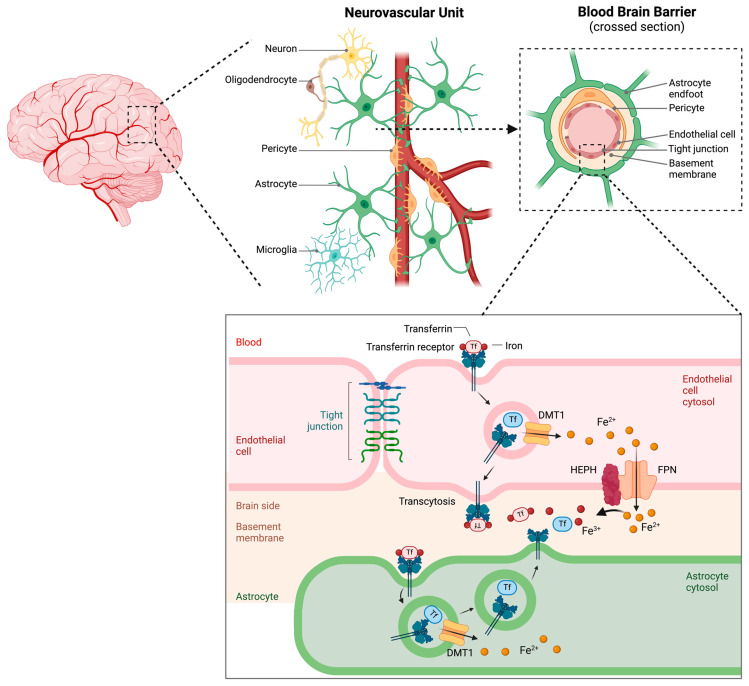
Iron dysregulation has emerged as a pivotal factor in neurodegenerative pathologies, especially through its capacity to promote ferroptosis, a unique form of regulated cell death driven by iron-catalyzed lipid peroxidation. This review synthesizes current evidence on the molecular underpinnings of ferroptosis, focusing on how disruptions in iron homeostasis interact with key antioxidant defenses, such as the system Xc-glutathione-GPX4 axis, to tip neurons toward lethal oxidative damage. Building on these mechanistic foundations, we explore how ferroptosis intersects with hallmark pathologies in Alzheimer's disease (AD) and Parkinson's disease (PD) and examine how iron accumulation in vulnerable brain regions may fuel disease-specific protein aggregation and neurodegeneration. We further surveyed the distinct components of ferroptosis, highlighting the role of lipid peroxidation enzymes, mitochondrial dysfunction, and recently discovered parallel pathways that either exacerbate or mitigate neuronal death. Finally, we discuss how these insights open new avenues for neuroprotective strategies, including iron chelation and lipid peroxidation inhibitors. By highlighting open questions, this review seeks to clarify the current state of knowledge and proposes directions to harness ferroptosis modulation for disease intervention.
铁调节异常已成为神经退行性病变中的一个关键因素,特别是通过其促进铁死亡的能力,铁死亡是一种由铁催化的脂质过氧化驱动的独特形式的程序性细胞死亡。本综述综合了目前关于铁死亡分子基础的证据,重点关注铁稳态的破坏如何与关键的抗氧化防御机制相互作用,如系统Xc-谷胱甘肽-GPX4轴,从而使神经元走向致命的氧化损伤。基于这些机制基础,我们探讨了铁死亡如何与阿尔茨海默病(AD)和帕金森病(PD)的标志性病理特征相互交织,并研究了脆弱脑区中铁的积累如何助长疾病特异性的蛋白质聚集和神经退行性变。我们还进一步审视了铁死亡的不同组成部分,强调了脂质过氧化酶、线粒体功能障碍以及最近发现的加剧或减轻神经元死亡的平行途径的作用。最后,我们讨论了这些见解如何为神经保护策略开辟新途径,包括铁螯合和脂质过氧化抑制剂。通过突出未解决的问题,本综述旨在阐明当前的知识状态,并提出利用铁死亡调节进行疾病干预的方向。