Kaim Muhammet, Kır Muhammet Bahattin, Uzun Feyzahan, Findik Hüseyin
Department of Ophthalmology, School of Medicine, Recep Tayyip Erdogan University, 53100 Rize, Turkey.
Department of Ophthalmology, Trabzon Imperial Hospital, 61200 Trabzon, Turkey.
Diagnostics (Basel). 2025 May 9;15(10):1195. doi: 10.3390/diagnostics15101195.
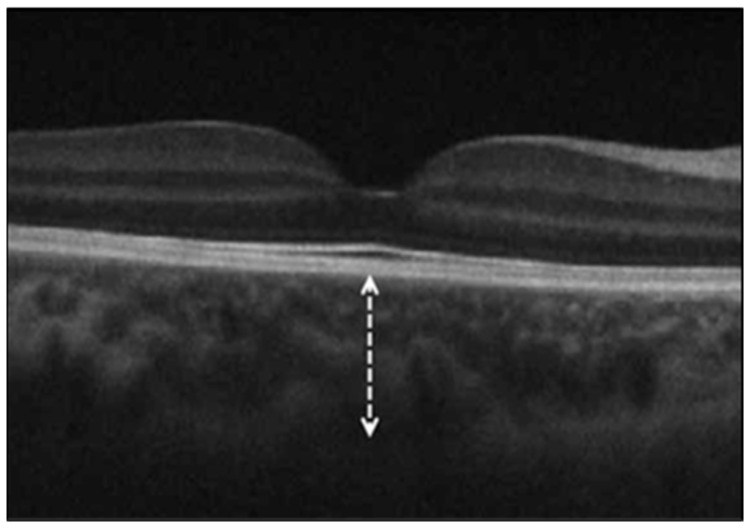
This study aimed to analyze optic nerve parameters, retinal nerve fiber layer thickness (RNFLT), ganglion cell layer thickness (GCLT), and subfoveal choroidal thickness (ChT) in patients who have recovered from coronavirus disease 2019 (COVID-19). This comparative study included 78 recovered COVID-19 patients (16 men, 62 women) and 56 age- and sex-matched healthy controls (18 men, 38 women). COVID-19 was confirmed in all patients, either through the detection of viral RNA in nasopharyngeal swabs via reverse transcriptase polymerase chain reaction or by serological testing for SARS-CoV-2 antibodies. Spectral-domain optical coherence tomography (SD-OCT) was used to assess optic nerve parameters, RNFLT, GCLT, and ChT. The mean age was 35.0 ± 8.3 years in the COVID-19 group and 31.5 ± 8.3 years in the control group, with no statistically significant differences in age or sex distribution between groups ( = 0.41 and = 0.16, respectively). Optic nerve parameters and RNFLT (overall and across the four peripapillary quadrants) did not differ significantly between the COVID-19 and control groups. However, the mean ganglion cell-inner plexiform layer (GC-IPL) thickness was significantly reduced in all quadrants in the COVID-19 group compared to the controls. No significant difference was observed in mean subfoveal ChT between groups. A significant reduction in ganglion GCLT was observed in recovered COVID-19 patients compared to healthy controls, suggesting a potential neurodegenerative effect of the disease on the optic nerve.
本研究旨在分析2019冠状病毒病(COVID-19)康复患者的视神经参数、视网膜神经纤维层厚度(RNFLT)、神经节细胞层厚度(GCLT)和黄斑中心凹下脉络膜厚度(ChT)。这项比较研究纳入了78例COVID-19康复患者(16例男性,62例女性)和56例年龄及性别匹配的健康对照者(18例男性,38例女性)。所有患者均通过逆转录聚合酶链反应检测鼻咽拭子中的病毒RNA或进行SARS-CoV-2抗体血清学检测确诊为COVID-19。采用光谱域光学相干断层扫描(SD-OCT)评估视神经参数、RNFLT、GCLT和ChT。COVID-19组的平均年龄为35.0±8.3岁,对照组为31.5±8.3岁,两组间年龄或性别分布无统计学显著差异(分别为 = 0.41和 = 0.16)。COVID-19组和对照组之间的视神经参数和RNFLT(总体及四个视乳头周围象限)无显著差异。然而,与对照组相比,COVID-19组所有象限的神经节细胞-内丛状层(GC-IPL)平均厚度均显著降低。两组间黄斑中心凹下ChT平均值无显著差异。与健康对照者相比,COVID-19康复患者的神经节GCLT显著降低,提示该疾病对视神经可能存在神经退行性影响。