Romadanova Natalya V, Zemtsova Alina S, Altayeva Nazira A, Artimovich Natalya A, Alexandrova Alyona M, Kushnarenko Svetlana V, Bettoni Jean Carlos
Institute of Plant Biology and Biotechnology, 45 Timiryazev St., Almaty 050040, Kazakhstan.
M. A. Aitkhozhin Institute of Molecular Biology and Biochemistry, Almaty 050012, Kazakhstan.
Plants (Basel). 2025 May 19;14(10):1526. doi: 10.3390/plants14101526.
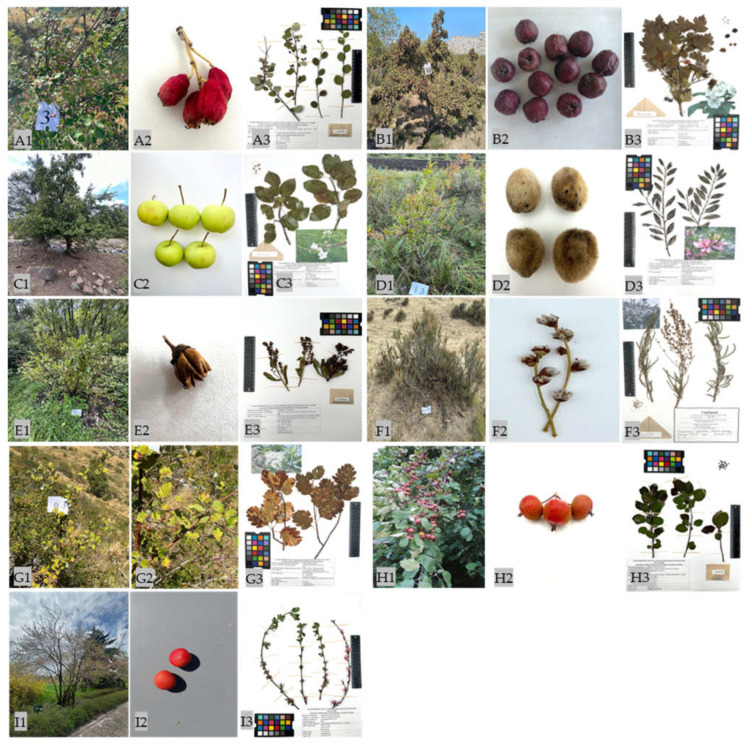
The loss of plant species, especially endangered and endemic ones, poses a significant threat to global biodiversity. These species cannot easily be replaced when their populations decline or become extinct, which makes their loss particularly devastating. This study focuses on the geobotanical study of nine Rosaceae species (, , , , , , , , and ) and the development of ex situ approaches for the conservation of Rosaceae species listed in the Red Book of Kazakhstan. The geobotanical study revealed an alarming trend of biodiversity loss in five regions of Kazakhstan. This loss is driven by threats from diseases and pests, as well as the aging of plants, small population sizes, weak in situ fruiting, and other factors, such as climate change. We have established an in vitro collection for the short- and medium-term conservation of seeds, embryos and shoots taken either directly from field-grown plants or from budwood cuttings forced indoors. We also use long-term sexual conservation methods, such as the cryopreservation of seed and embryonic axes, alongside conventional seed banking at -20 °C. Ex situ conservation efforts that use multiple propagules and storage methods for the same species are well-suited to a diverse genebank facility. These efforts enable future generations to use this valuable reservoir of genetic diversity for crop improvement and may also serve as a basis for propagating planting material to restore degraded populations.
植物物种的丧失,尤其是濒危和特有物种的丧失,对全球生物多样性构成了重大威胁。当这些物种的种群数量下降或灭绝时,它们很难被轻易取代,这使得它们的丧失尤其具有毁灭性。本研究聚焦于对九种蔷薇科物种(,,,,,,,,和)的地植物学研究,以及为保护哈萨克斯坦红皮书中列出的蔷薇科物种而开发迁地保护方法。地植物学研究揭示了哈萨克斯坦五个地区生物多样性丧失的惊人趋势。这种丧失是由病虫害威胁、植物老化、种群规模小、原地结实能力弱以及气候变化等其他因素驱动的。我们建立了一个离体收集库,用于对直接从田间种植的植物或室内催芽的接穗上采集的种子、胚和芽进行短期和中期保存。我们还采用长期有性保存方法,如种子和胚轴的冷冻保存,以及在-20°C下的传统种子库保存。针对同一物种使用多种繁殖体和保存方法的迁地保护措施非常适合多样化的基因库设施。这些措施使后代能够利用这一宝贵的遗传多样性库来改良作物,也可为繁殖种植材料以恢复退化种群提供基础。