
唾液诊断技术在活动性肺结核筛查中的作用:一项系统评价与荟萃分析
The Role of Salivary Diagnostic Techniques in Screening for Active Pulmonary Tuberculosis: A Systematic Review and Meta-Analysis.
作者信息
Darwish Radwan, Tama Maya, Sharief Sidra, Zeidan Osama, Rady Sara Mohammed Ahmed, Chacko Kareeza Selby, Nair Bindhu, Bhojaraja Vijayalakshmi S, Shetty Jeevan K
机构信息
School of Medicine, Royal College of Surgeons in Ireland-Bahrain (RCSI-Bahrain), Busaiteen P.O. Box 15503, Bahrain.
Library and Learning Resource Centre, Royal College of Surgeons in Ireland-Bahrain (RCSI-Bahrain), Busaiteen P.O. Box 15503, Bahrain.
出版信息
Microorganisms. 2025 Apr 24;13(5):973. doi: 10.3390/microorganisms13050973.
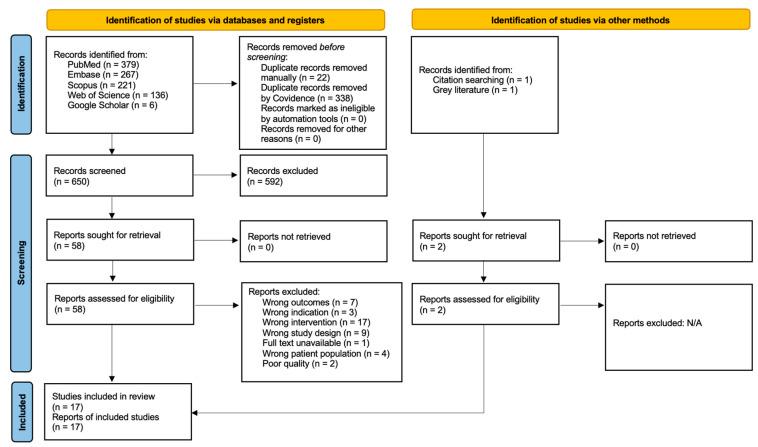
Since the World Health Organization (WHO) issued guidelines for developing a non-sputum test for active tuberculosis (TB) diagnosis that exhibits similar performance characteristics to sputum-based diagnosis, salivary diagnostic techniques have gained prominence as potential screening tools or adjuncts to existing diagnostics. We searched online databases for studies that looked at salivary diagnostic techniques. Afterwards, duplicates were removed, titles and abstracts were screened, and full-text studies were assessed for eligibility based on inclusion and exclusion criteria. The studies chosen for final analysis underwent a rigorous quality assessment following a QUADAS-2 template, and data were extracted. The primary outcome assessed the difference in mean levels of interleukins between TB+ patients and TB-controls (Hedges' g). We then conducted two subgroup analyses: the first segregated the control group into healthy patients, and those with other respiratory diseases (ORD), and the second addressed three different interleukins separately (IL-6, IL-5, IL-17). The secondary outcome involved comparing salivary molecular diagnostic assays to WHO guidelines. This study is registered with PROSPERO, CRD42024536884. A total of 17 studies, out of an initial 1010, were chosen for the final analysis, but one was then excluded for being of poor quality. Our meta-analyses for the primary outcome revealed minimal diagnostic potential for interleukins. Our first subgroup analysis showed that interleukins were incapable of differentiating active TB patients from both healthy controls and ORD patients. Our second subgroup analysis showed that IL-17 was reduced in active TB patients. Assessment of the secondary outcome revealed that most studies relied on a GeneXpert MTB/RIF assay on saliva, but none fulfilled WHO guidelines for a non-sputum test. Individual biomarkers currently lack sufficient discriminatory power to definitively distinguish active tuberculosis from healthy individuals or those with other respiratory diseases (ORD), reinforcing the need for multi-biomarker panels. Interleukins may be alternatively used as markers for prognosis, severity, or treatment response. Our findings also suggest that assays are unable to meet WHO guidelines.
自从世界卫生组织(WHO)发布了关于开发用于活动性结核病(TB)诊断的非痰检方法的指南,该方法需具备与基于痰液诊断相似的性能特征以来,唾液诊断技术作为潜在的筛查工具或现有诊断方法的辅助手段而备受关注。我们在在线数据库中搜索了有关唾液诊断技术的研究。之后,去除重复项,筛选标题和摘要,并根据纳入和排除标准评估全文研究的 eligibility。最终分析所选的研究按照QUADAS - 2模板进行了严格的质量评估,并提取了数据。主要结局评估了TB +患者与TB对照之间白细胞介素平均水平的差异(Hedges' g)。然后我们进行了两项亚组分析:第一项将对照组分为健康患者和患有其他呼吸道疾病(ORD)的患者,第二项分别针对三种不同的白细胞介素(IL - 6、IL - 5、IL - 17)进行分析。次要结局涉及将唾液分子诊断检测与WHO指南进行比较。本研究已在PROSPERO注册,注册号为CRD42024536884。在最初的1010项研究中,共有17项被选入最终分析,但其中一项因质量较差而被排除。我们对主要结局的荟萃分析显示白细胞介素的诊断潜力极小。我们的第一项亚组分析表明,白细胞介素无法区分活动性结核病患者与健康对照和ORD患者。我们的第二项亚组分析表明,活动性结核病患者的IL - 17水平降低。对次要结局的评估表明,大多数研究依赖于对唾液进行GeneXpert MTB/RIF检测,但没有一项符合WHO关于非痰检的指南。目前,单个生物标志物缺乏足够的鉴别能力来明确区分活动性结核病患者与健康个体或患有其他呼吸道疾病(ORD)的患者,这进一步凸显了对多生物标志物组合的需求。白细胞介素可作为预后、严重程度或治疗反应的标志物。我们的研究结果还表明,检测方法无法满足WHO指南的要求。 (注:原文中“eligibility”未明确含义,可能是“合格性”之类的意思,此处按原样翻译)




 Zotero 插件