• 文献检索
  • 文档翻译
  • 深度研究
  • 学术资讯
  • Suppr Zotero 插件Zotero 插件
  • 邀请有礼
  • 套餐&价格
  • 历史记录
应用&插件
Suppr Zotero 插件Zotero 插件浏览器插件Mac 客户端Windows 客户端微信小程序
定价
高级版会员购买积分包购买API积分包
服务
文献检索文档翻译深度研究API 文档MCP 服务
关于我们
关于 Suppr公司介绍联系我们用户协议隐私条款
关注我们

Suppr 超能文献

核心技术专利:CN118964589B侵权必究
粤ICP备2023148730 号-1Suppr @ 2026

文献检索

告别复杂PubMed语法,用中文像聊天一样搜索,搜遍4000万医学文献。AI智能推荐,让科研检索更轻松。

立即免费搜索

文件翻译

保留排版,准确专业,支持PDF/Word/PPT等文件格式,支持 12+语言互译。

免费翻译文档

深度研究

AI帮你快速写综述,25分钟生成高质量综述,智能提取关键信息,辅助科研写作。

立即免费体验

刑事司法系统中使用攻击性行为基因预测的伦理问题:一项系统综述

Ethical issues in the use of genetic predictions of aggressive behavior in the criminal justice system: a systematic review.

作者信息

Refolo Pietro, Ferracuti Stefano, Grassi Simone, Raimondi Costanza, Mercuri Giulia, Zedda Massimo, Aulino Giovanni, Spagnolo Antonio Gioacchino, Oliva Antonio

机构信息

Department of Health Care Surveillance and Bioethics, Section of Bioethics and Medical Humanities, Università Cattolica del Sacro Cuore, Rome, Italy.

Research Centre for Clinical Bioethics and Medical Humanities, Università Cattolica del Sacro Cuore, Rome, Italy.

出版信息

Front Genet. 2025 May 13;16:1599750. doi: 10.3389/fgene.2025.1599750. eCollection 2025.

DOI:10.3389/fgene.2025.1599750
PMID:40432882
原文链接:https://pmc.ncbi.nlm.nih.gov/articles/PMC12106298/
Abstract

BACKGROUND

The use of genetic predictions of aggressive behavior in the criminal justice system remains a subject of ongoing debate. Since behavioral genetic evidence is often used in criminal defense arguments, it is crucial to critically examine the ethical challenges associated with its application.

OBJECTIVE

This article seeks to identify and analyze these ethical concerns to ensure the responsible and equitable integration of genetic testing, when deemed necessary, into the judiciary system.

METHODS

A systematic review was conducted using PubMed, Web of Science, and Scopus, supplemented by manual searches of reference lists to identify additional relevant studies.

RESULTS

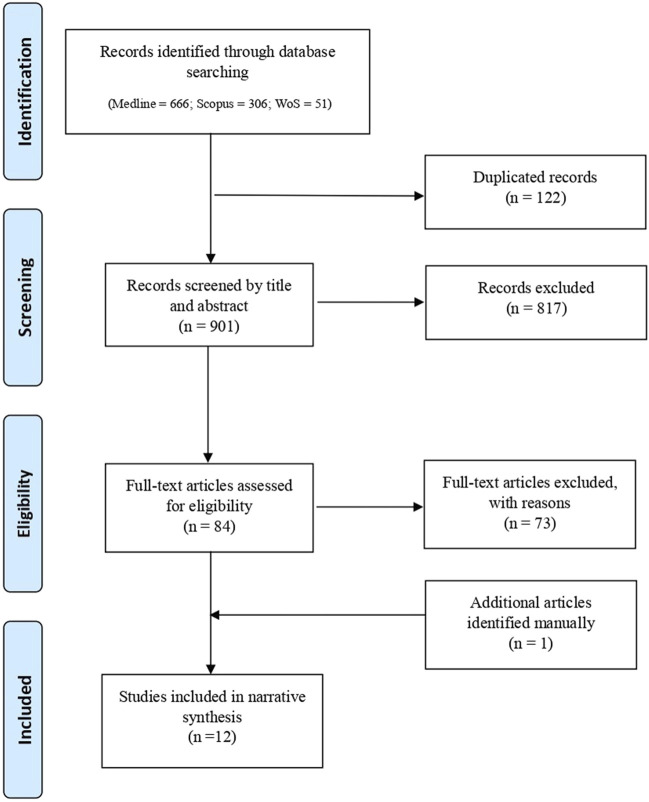
The search yielded 1,023 publications, 12 of which met the inclusion criteria. Seven key ethical concerns were identified: the risks of discrimination, stigmatization, eugenic reasoning, deterministic interpretations, overestimation of dangerousness, privacy violations, and medicalization, along with the risks posed by limited scientific literacy among legal professionals.

CONCLUSION

The ethical challenges associated with genetic predictions of aggressive behavior underscore the need for a critical and multidisciplinary approach to their use in the criminal justice system. Collaboration among bioethicists, legal scholars, scientists, and communication experts is crucial to prevent misuse and reduce potential biases. Such an approach will help ensure that genetic insights are ethically applied, accurately interpreted, and used to promote justice rather than exacerbate systemic inequalities.

摘要

背景

在刑事司法系统中使用攻击性行为的基因预测仍是一个持续争论的话题。由于行为遗传学证据常被用于刑事辩护论证,审慎审视其应用所带来的伦理挑战至关重要。

目的

本文旨在识别并分析这些伦理问题,以确保在必要时将基因检测以负责任且公平的方式纳入司法系统。

方法

使用PubMed、科学网和Scopus进行系统综述,并辅以手动检索参考文献列表以识别其他相关研究。

结果

检索共得到1023篇出版物,其中12篇符合纳入标准。确定了七个关键的伦理问题:歧视风险、污名化、优生学推理、决定论解释、对危险性的高估、侵犯隐私、医学化,以及法律专业人员科学素养有限所带来的风险。

结论

与攻击性行为基因预测相关的伦理挑战凸显了在刑事司法系统中对其使用采取批判性和多学科方法的必要性。生物伦理学家、法律学者、科学家和传播专家之间的合作对于防止滥用和减少潜在偏见至关重要。这种方法将有助于确保基因见解在伦理上得到应用、准确解释,并用于促进正义而非加剧系统性不平等。
https://cdn.ncbi.nlm.nih.gov/pmc/blobs/e6eb/12106298/48fc8441a794/fgene-16-1599750-g001.jpg

相似文献

1
Ethical issues in the use of genetic predictions of aggressive behavior in the criminal justice system: a systematic review.刑事司法系统中使用攻击性行为基因预测的伦理问题:一项系统综述
Front Genet. 2025 May 13;16:1599750. doi: 10.3389/fgene.2025.1599750. eCollection 2025.
2
Folic acid supplementation and malaria susceptibility and severity among people taking antifolate antimalarial drugs in endemic areas.在流行地区,服用抗叶酸抗疟药物的人群中,叶酸补充剂与疟疾易感性和严重程度的关系。
Cochrane Database Syst Rev. 2022 Feb 1;2(2022):CD014217. doi: 10.1002/14651858.CD014217.
3
Ethics of Procuring and Using Organs or Tissue from Infants and Newborns for Transplantation, Research, or Commercial Purposes: Protocol for a Bioethics Scoping Review.从婴儿和新生儿获取器官或组织用于移植、研究或商业目的的伦理问题:生物伦理学范围审查方案
Wellcome Open Res. 2024 Dec 5;9:717. doi: 10.12688/wellcomeopenres.23235.1. eCollection 2024.
4
Impact of summer programmes on the outcomes of disadvantaged or 'at risk' young people: A systematic review.暑期项目对处境不利或“有风险”的年轻人的影响:一项系统综述。
Campbell Syst Rev. 2024 Jun 13;20(2):e1406. doi: 10.1002/cl2.1406. eCollection 2024 Jun.
5
[Neuroscience in the Courtroom: From responsibility to dangerousness, ethical issues raised by the new French law].[法庭上的神经科学:从责任到危险性,法国新法律引发的伦理问题]
Encephale. 2015 Oct;41(5):385-93. doi: 10.1016/j.encep.2014.08.014. Epub 2014 Oct 27.
6
Neuroscience in forensic psychiatry: From responsibility to dangerousness. Ethical and legal implications of using neuroscience for dangerousness assessments.法医精神病学中的神经科学:从责任到危险性。运用神经科学进行危险性评估的伦理和法律影响。
Int J Law Psychiatry. 2016 May-Jun;46:58-67. doi: 10.1016/j.ijlp.2016.02.030. Epub 2016 May 18.
7
Police-initiated diversion for youth to prevent future delinquent behavior: a systematic review.警方发起的青少年分流措施以预防未来的犯罪行为:一项系统综述。
Campbell Syst Rev. 2018 Jun 1;14(1):1-88. doi: 10.4073/csr.2018.5. eCollection 2018.
8
Data stewardship and curation practices in AI-based genomics and automated microscopy image analysis for high-throughput screening studies: promoting robust and ethical AI applications.基于人工智能的基因组学和用于高通量筛选研究的自动显微镜图像分析中的数据管理与整理实践:推动可靠且符合伦理的人工智能应用。
Hum Genomics. 2025 Feb 23;19(1):16. doi: 10.1186/s40246-025-00716-x.
9
Substance use disorder genetic research: investigators and participants grapple with the ethical issues.物质使用障碍基因研究:研究者和参与者应对伦理问题。
Psychiatr Genet. 2009 Apr;19(2):83-90. doi: 10.1097/YPG.0b013e328320800e.
10
PROTOCOL: Opioid-specific medication-assisted therapy and its impact on criminal justice and overdose outcomes.方案:阿片类药物特异性药物辅助治疗及其对刑事司法和过量用药结果的影响。
Campbell Syst Rev. 2021 Mar 9;17(1):e1138. doi: 10.1002/cl2.1138. eCollection 2021 Mar.

本文引用的文献

1
Genetics of child aggression, a systematic review.儿童攻击行为的遗传学:系统综述。
Transl Psychiatry. 2024 Jun 11;14(1):252. doi: 10.1038/s41398-024-02870-7.
2
Forensic Value of Genetic Variants Associated with Anti-Social Behavior.与反社会行为相关的基因变异的法医学价值
Diagnostics (Basel). 2021 Dec 17;11(12):2386. doi: 10.3390/diagnostics11122386.
3
The end of the 'Bad seed' Era? Epigenetics' contribution to violence prevention initiatives in public health.“坏种子”时代的终结?表观遗传学对公共卫生中暴力预防措施的贡献。
New Bioeth. 2021 Jun;27(2):159-175. doi: 10.1080/20502877.2021.1877450. Epub 2021 Jan 29.
4
Gene-Environment Interactions in Psychiatry: Recent Evidence and Clinical Implications.精神医学中的基因-环境交互作用:最新证据与临床意义。
Curr Psychiatry Rep. 2019 Aug 13;21(9):81. doi: 10.1007/s11920-019-1065-5.
5
Behavioral Genetics in Criminal and Civil Courts.刑事和民事法庭中的行为遗传学。
Harv Rev Psychiatry. 2017 Nov/Dec;25(6):289-301. doi: 10.1097/HRP.0000000000000141.
6
Gene-environment interaction and psychiatric disorders: Review and future directions.基因-环境相互作用与精神障碍:综述与未来方向。
Semin Cell Dev Biol. 2018 May;77:133-143. doi: 10.1016/j.semcdb.2017.10.016. Epub 2017 Oct 18.
7
The use of behavioural genetics in the criminal justice system: A disability & human rights perspective.行为遗传学在刑事司法系统中的应用:残疾与人权视角
Int J Law Psychiatry. 2017 Sep-Oct;54:16-25. doi: 10.1016/j.ijlp.2017.07.002. Epub 2017 Aug 12.
8
The forensic use of behavioral genetics in criminal proceedings: Case of the MAOA-L genotype.行为遗传学在刑事诉讼中的法医应用:MAOA-L基因型案例
Int J Law Psychiatry. 2017 Jan-Feb;50:17-23. doi: 10.1016/j.ijlp.2016.09.005. Epub 2016 Nov 4.
9
The inclination to evil and the punishment of crime - from the bible to behavioral genetics.邪恶的倾向与犯罪的惩罚——从《圣经》到行为遗传学
Isr J Psychiatry Relat Sci. 2014;51(3):162-8.
10
Ethical, Legal and Social Issues Surrounding Research on Genetic Contributions to Anti-Social Behavior.围绕基因对反社会行为影响的研究的伦理、法律和社会问题。
Aggress Violent Behav. 2013 Nov;18(6). doi: 10.1016/j.avb.2013.07.011.