Grauberger Jennifer, Larson Dirk R, Stans Anthony A, Shaughnessy William J, Larson A Noelle, Milbrandt Todd A
Division of Plastic and Reconstructive Surgery, UMass Chan Medical School, Worcester, MN.
Department of Biomedical Statistics & Informatics, Mayo Clinic, Rochester, MN.
J Pediatr Soc North Am. 2024 Feb 12;5(3):663. doi: 10.55275/JPOSNA-2023-663. eCollection 2023 Aug.
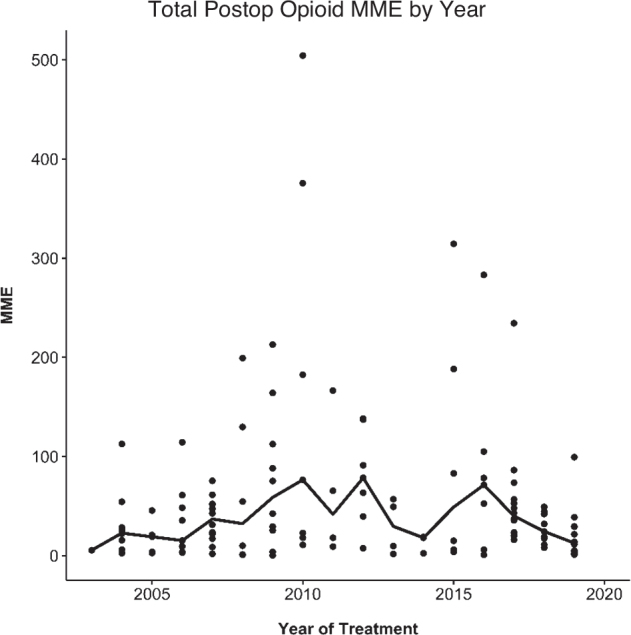
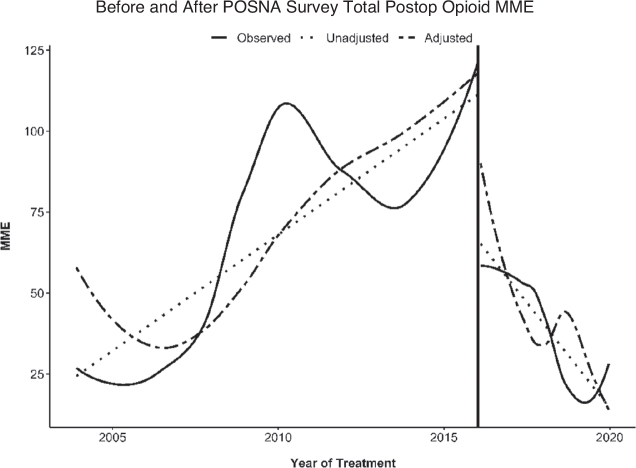
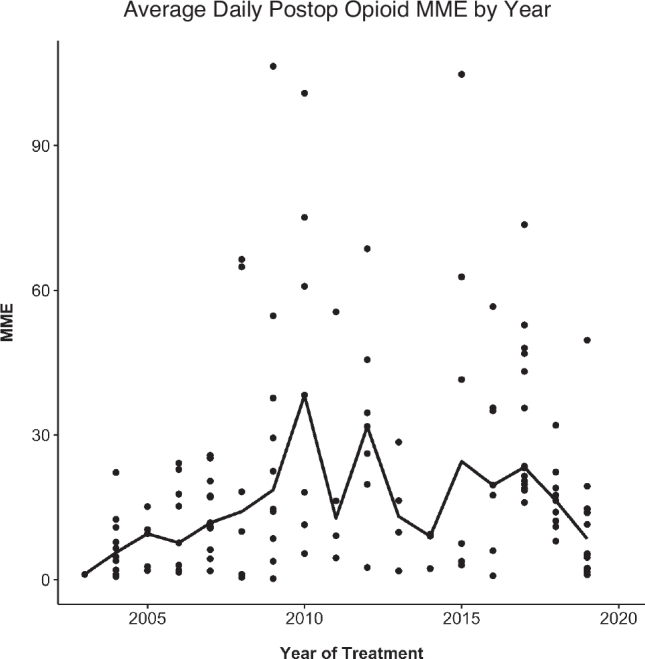
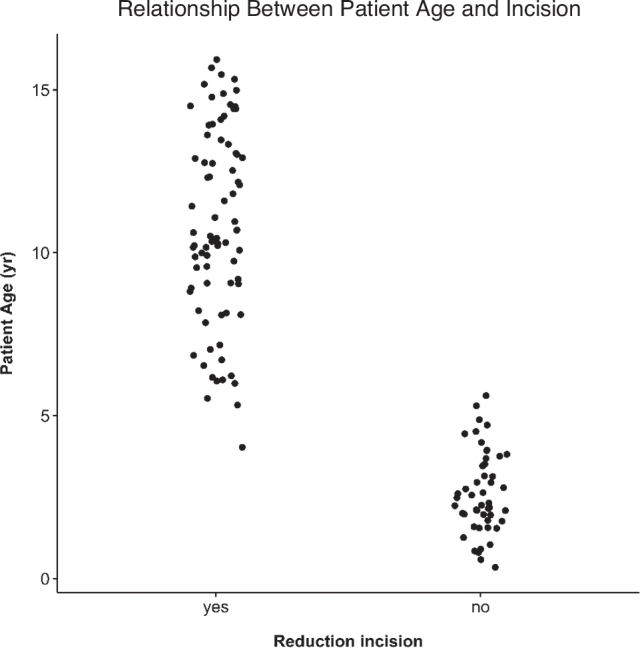
Despite the ongoing opioid epidemic, there is a lack of research on narcotic prescribing in the pediatric orthopaedic population. The Pediatric Orthopaedic Society of North America (POSNA) therefore published a survey on pain management to provide recommendations for opioid dosing. The goal of this study was to characterize opioid prescribing patterns for pediatric femur fractures in the context of the opioid epidemic and emerging national studies/guidelines. A retrospective review of 128 pediatric patients (age < 16) with isolated diaphyseal femur fractures was conducted between 2003-2019 at a level I pediatric trauma center. Comparison groups included before distribution of the POSNA survey (pre-POSNA = 01/01/2016 or earlier, N = 85) and after the survey (post-POSNA, N = 43). Median total hospital postoperative opioids prescribed was 27.2 morphine milligram equivalents (MME). The two groups differed in age (pre-POSNA = 9.0 years, post-POSNA = 3.7 years, P = 0.0381), hospital length of stay (LOS) (pre-POSNA = 2 days, post-POSNA = 1 day, P < 0.0001), and procedural incision required for fracture reduction (pre-POSNA = 28.3%, post-POSNA = 58.1%, P = 0.0019). Adjusted postoperative opioid dosing was significantly lower post-POSNA (median reduction of 18.351 MME per year, P = 0.0408). The period following the POSNA survey was associated with a significant decline in postoperative narcotic prescriptions for pediatric femur fractures. The timing of the survey likely represents an increased concern for pediatric opioid use and a shift in clinical practice. Further work is needed to optimize injury and patient-specific narcotic prescribing. Therapeutic Level III.
•The 2016 POSNA survey identified a lack of consensus on opioid prescribing practices for common orthopaedic procedures in the United States.•The 2016 POSNA survey and subsequent 2019 published narcotic prescription recommendations represent a shift in the specialty of orthopaedic surgery regarding opioid usage in the pediatric population.•Postoperative morphine milligram equivalents significantly decreased for the treatment of pediatric diaphyseal femur fractures at a single-level I pediatric trauma center following administration of the 2016 POSNA survey.
尽管阿片类药物流行仍在持续,但针对儿科骨科人群的麻醉处方研究却很匮乏。因此,北美儿科骨科学会(POSNA)发布了一项疼痛管理调查,以提供阿片类药物剂量的建议。本研究的目的是在阿片类药物流行以及新出现的全国性研究/指南的背景下,描述小儿股骨骨折的阿片类药物处方模式。2003年至2019年期间,在一家一级儿科创伤中心对128例(年龄<16岁)单纯股骨干骨折的儿科患者进行了回顾性研究。比较组包括POSNA调查发布之前(POSNA前=2016年1月1日或更早,N = 85)和调查之后(POSNA后,N = 43)。术后医院开具的阿片类药物总量中位数为27.2吗啡毫克当量(MME)。两组在年龄(POSNA前=9.0岁,POSNA后=3.7岁,P = 0.0381)、住院时间(LOS)(POSNA前=2天,POSNA后=1天,P<0.0001)以及骨折复位所需的手术切口(POSNA前=28.3%,POSNA后=58.1%,P = 0.0019)方面存在差异。POSNA后调整后的术后阿片类药物剂量显著降低(每年中位数减少18.351 MME,P = 0.0408)。POSNA调查之后的时期与小儿股骨骨折术后麻醉处方的显著下降相关。调查时间可能代表了对儿科阿片类药物使用的日益关注以及临床实践的转变。需要进一步开展工作以优化针对损伤和患者个体的麻醉处方。治疗水平III。
•2016年POSNA调查发现,美国普通骨科手术的阿片类药物处方实践缺乏共识。•2016年POSNA调查及随后2019年发布的麻醉处方建议代表了骨科手术专业在儿科人群阿片类药物使用方面的转变。•在一家一级儿科创伤中心,2016年POSNA调查实施后,小儿股骨干骨折治疗的术后吗啡毫克当量显著下降。