Zhao Xinqi, Zhang Shi, Zhang Fan, Wu Xinyu, Zhang Zhe, Liu Yue, Jiang Junwen, Li Zheng, Li Siqi, Zheng Sicheng, Yang Xiao, Ju Xing, Li Hang, Gong Lihong, Kong DeZhao
Liaoning University of Traditional Chinese Medicine, Shenyang, Liaoning, People's Republic of China.
Affiliated Hospital of Liaoning University of Traditional Chinese Medicine, Shenyang, Liaoning, People's Republic of China.
J Multidiscip Healthc. 2025 May 22;18:2825-2844. doi: 10.2147/JMDH.S511196. eCollection 2025.
Exercise-based Cardiac Rehabilitation (EBCR) is widely recognized as a crucial intervention for improving the health outcomes of patients with coronary artery disease (CAD). However, its implementation remains insufficient in many regions, and patient adherence to EBCR is generally low. This limitation hinders the full potential of rehabilitation, necessitating a deeper exploration of the factors influencing exercise adherence and the development of targeted intervention strategies.
This study aims to identify the barriers and facilitators affecting ERCR adherence among CAD patients and provide intervention recommendations for clinical practice.
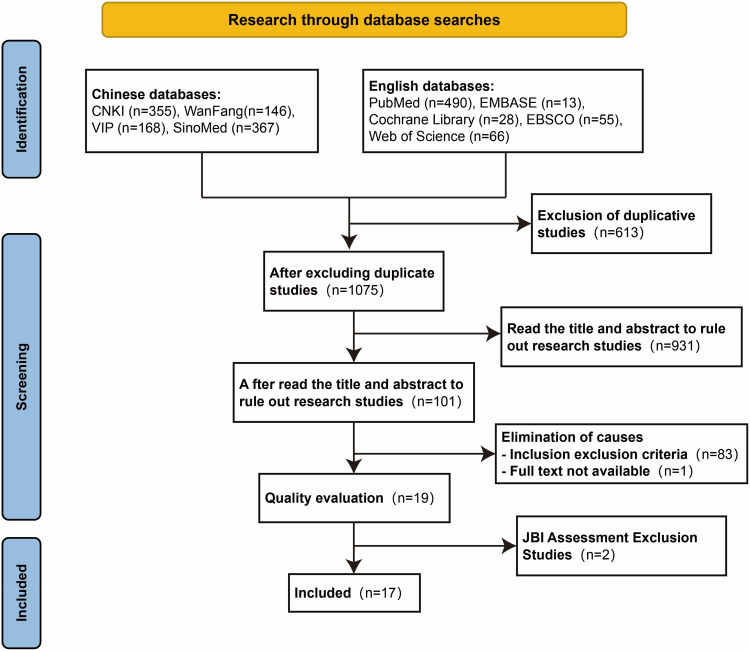
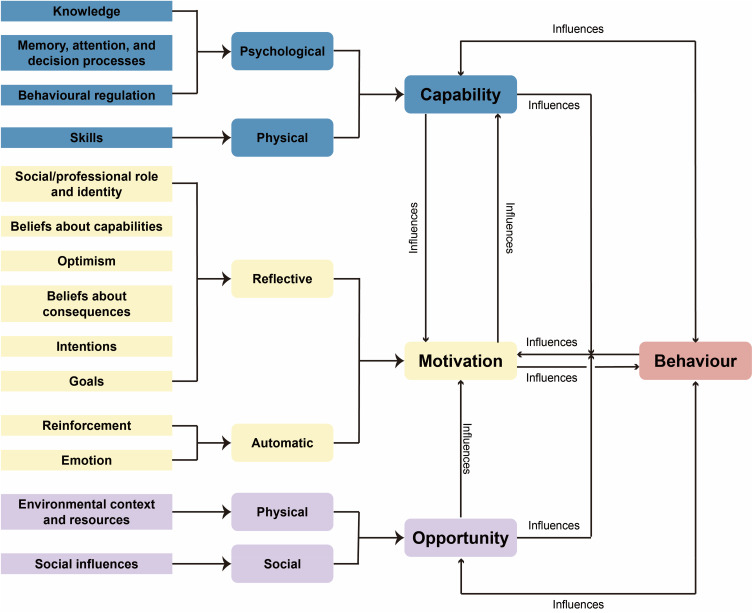
A systematic search was conducted across nine databases, including PubMed, Cochrane Library, Embase, Web of Science, EBSCO, CNKI, Wanfang, VIP, and CBM. Using the Theoretical Domains Framework and the COM-B model, a thematic analysis was performed to categorize influencing factors identified in the included studies. These factors were mapped onto the Behaviour Change Wheel, and the APEASE criteria were applied to determine appropriate intervention functions. Finally, Behaviour Change Techniques were matched to these intervention functions.
Seventeen studies were included, identifying multiple core domains of the Theoretical Domains Framework influencing EBCR adherence. The most significant domains were social influences, beliefs about consequences, and environmental context and resources. The primary barrier was patients' negative attitudes toward EBCR, whereas the most prominent facilitator was a strong social support network.
This study systematically analyzed the determinants of EBCR adherence based on the Theoretical Domains Framework and COM-B model, constructing theoretically supported intervention strategies and providing new insights for optimizing EBCR implementation. Through precise Behaviour Change Techniques mapping, the proposed personalized interventions can enhance patients' motivation for rehabilitation, improve EBCR adherence, and offer empirical support for future EBCR intervention design and implementation.
基于运动的心脏康复(EBCR)被广泛认为是改善冠状动脉疾病(CAD)患者健康结局的关键干预措施。然而,在许多地区其实施仍然不足,并且患者对EBCR的依从性普遍较低。这一限制阻碍了康复的全部潜力,需要更深入地探索影响运动依从性的因素并制定有针对性的干预策略。
本研究旨在确定影响CAD患者EBCR依从性的障碍和促进因素,并为临床实践提供干预建议。
对九个数据库进行了系统检索,包括PubMed、Cochrane图书馆、Embase、科学网、EBSCO、中国知网、万方、维普和中国生物医学文献数据库。使用理论领域框架和COM-B模型,进行主题分析以对纳入研究中确定的影响因素进行分类。将这些因素映射到行为改变轮上,并应用APEASE标准来确定适当的干预功能。最后,将行为改变技术与这些干预功能相匹配。
纳入了17项研究,确定了理论领域框架中影响EBCR依从性的多个核心领域。最显著的领域是社会影响、对后果的信念以及环境背景和资源。主要障碍是患者对EBCR的消极态度,而最突出的促进因素是强大的社会支持网络。
本研究基于理论领域框架和COM-B模型系统地分析了EBCR依从性的决定因素,构建了理论支持的干预策略,并为优化EBCR实施提供了新见解。通过精确的行为改变技术映射,所提出的个性化干预措施可以增强患者的康复动机,提高EBCR依从性,并为未来EBCR干预设计和实施提供实证支持。