Ding Yongfeng, Chen Yiran, Zhang Jing, Wang Qingrui, Zhu Songting, Jiang Junjie, He Chao, Wang Jincheng, Tou Laizhen, Zheng Jingwei, Chen Bicheng, Hu Sizhe, Yu Xiongfei, Wang Haohao, Lu Yimin, Kong Mei, Chen Yanyan, Wang Haiyong, Zhang Haibin, Xu Hongxia, Teng Fei, Shen Xian, Xu Nong, Ruan Jian, Zhou Zhan, Lu Jun, Teng Lisong
Department of Medical Oncology, The First Affiliated Hospital, School of Medicine, Zhejiang University, Hangzhou, 310000, China.
Department of Surgical Oncology, The First Affiliated Hospital, School of Medicine, Zhejiang University, Hangzhou, 310000, China.
Adv Sci (Weinh). 2025 Jul;12(28):e03499. doi: 10.1002/advs.202503499. Epub 2025 May 28.
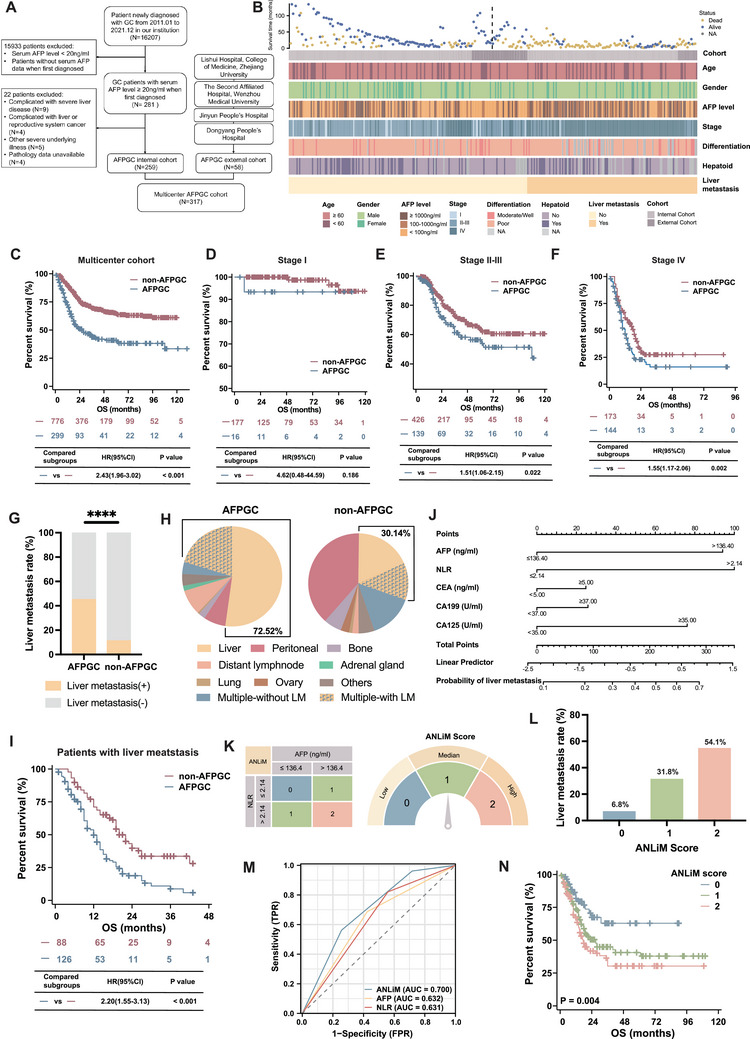
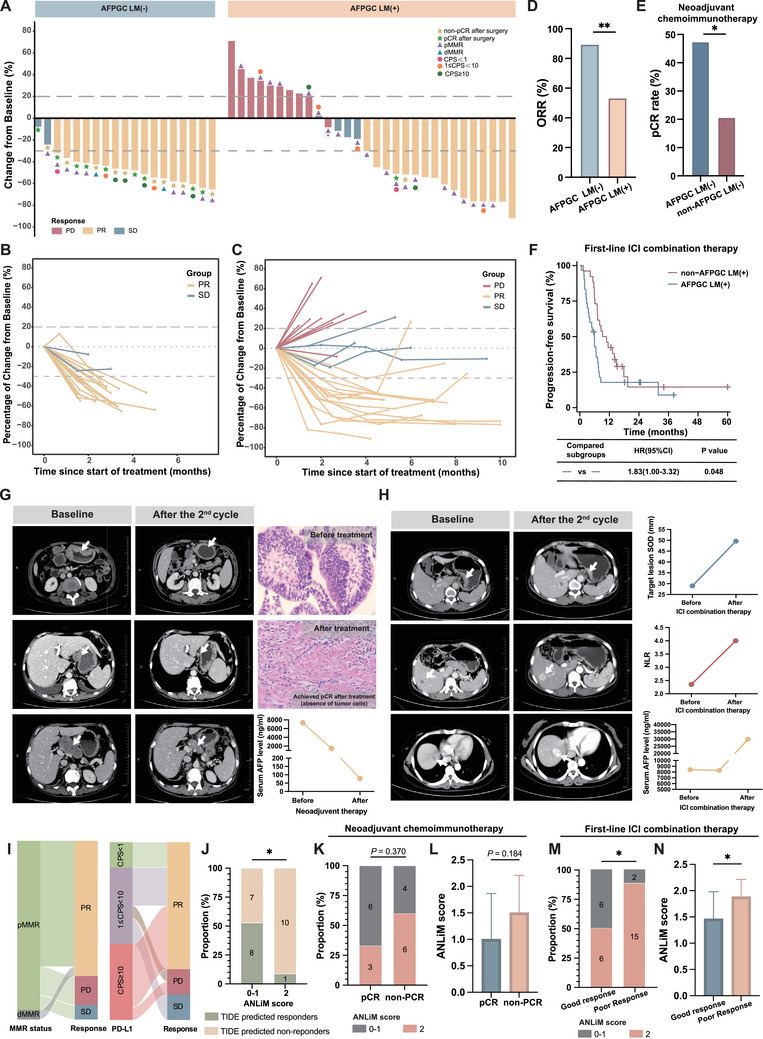
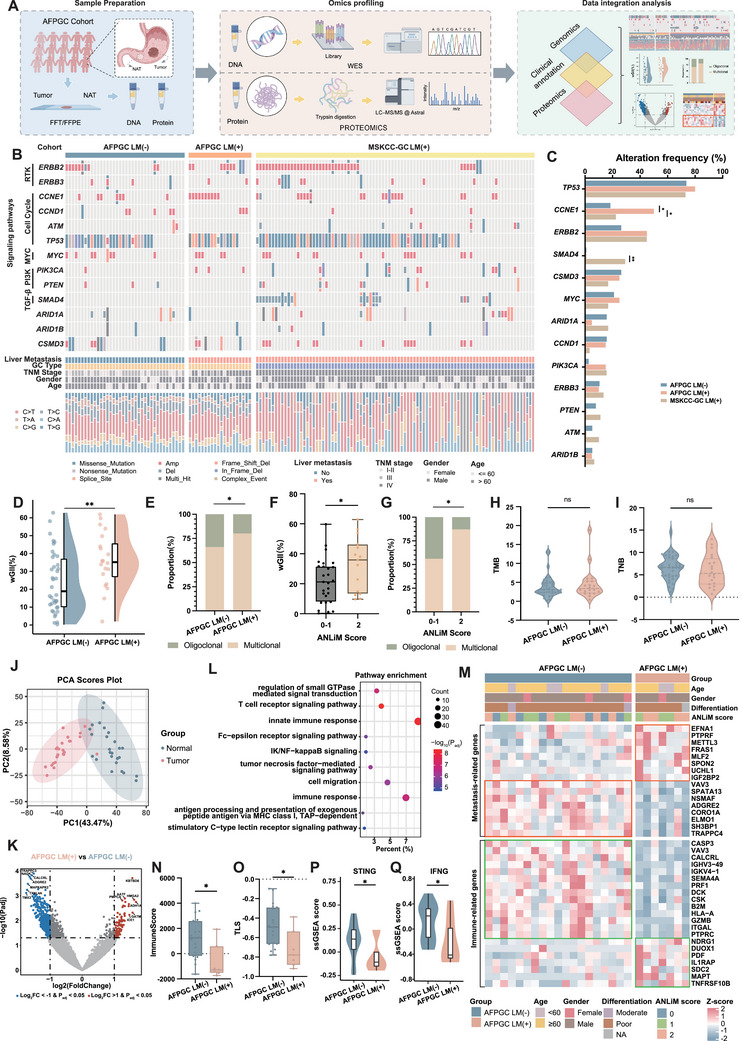
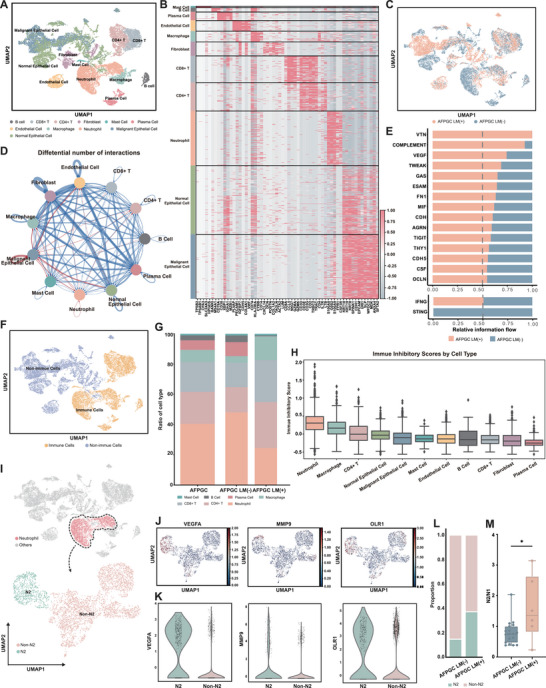
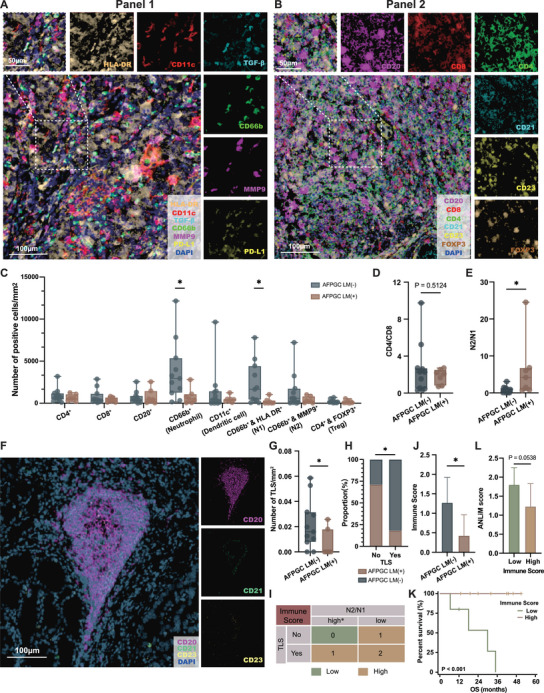
Alpha-fetoprotein-producing gastric cancer (AFPGC) is a rare but highly aggressive subtype of gastric cancer. Patients with AFPGC are at high risk of liver metastasis, and the tumor microenvironment (TME) is complex. A multicenter retrospective study is conducted from January 2011 to December 2021 and included 317 AFPGC patients. Using a multivariable logistic regression model, a nomogram for predicting liver metastasis is built. By combining AFP and the neutrophil-lymphocyte ratio (NLR), we developed a novel and easily applicable predictive indicator, termed ANLiM score, for liver metastasis in AFPGC. An integrated multi-omics analysis, including whole-exome sequencing and proteomic analysis, is conducted and revealed an immunosuppressive TME in AFPGC with liver metastasis. Single-cell RNA sequencing and multiplex immunofluorescence identified the potential roles of tumor-associated neutrophils and tertiary lymphoid structures in shaping the immune microenvironment. These findings are validated in a real-world cohort receiving anti-programmed cell death 1 (anti-PD-1) therapy, which showed concordant effectiveness. In addition, the ANLiM score is also identified as a promising biomarker for predicting immunotherapy efficacy. Overall, a blood biomarker-based predictive indicator is developed for liver metastasis and immunotherapy response in AFPGC. The findings on immune microenvironmental alterations for AFPGC with liver metastasis provide new insights for optimizing immunotherapy strategies.
甲胎蛋白产生型胃癌(AFPGC)是一种罕见但侵袭性很强的胃癌亚型。AFPGC患者发生肝转移的风险很高,且肿瘤微环境(TME)复杂。本研究对2011年1月至2021年12月期间的317例AFPGC患者进行了一项多中心回顾性研究。使用多变量逻辑回归模型构建了一个预测肝转移的列线图。通过结合甲胎蛋白(AFP)和中性粒细胞与淋巴细胞比值(NLR),我们开发了一种新的、易于应用的预测指标,称为ANLiM评分,用于预测AFPGC患者的肝转移。进行了一项综合多组学分析,包括全外显子组测序和蛋白质组分析,结果显示发生肝转移的AFPGC存在免疫抑制性TME。单细胞RNA测序和多重免疫荧光确定了肿瘤相关中性粒细胞和三级淋巴结构在塑造免疫微环境中的潜在作用。这些发现在接受抗程序性细胞死亡蛋白1(抗PD-1)治疗的真实世界队列中得到了验证,显示出一致的疗效。此外,ANLiM评分也被确定为预测免疫治疗疗效的一个有前景的生物标志物。总体而言,我们为AFPGC患者的肝转移和免疫治疗反应开发了一种基于血液生物标志物的预测指标。对发生肝转移的AFPGC免疫微环境改变的研究结果为优化免疫治疗策略提供了新的见解。