O'Sullivan Coyne Geraldine, Kummar Shivaani, Rubinstein Larry V, Wilsker Deborah, Moore Nancy, Hogu Murielle, Piekarz Richard, Covey Joe, Beumer Jan H, Ferry-Galow Katherine V, Villaruz Liza C, Hollingshead Melinda G, Holleran Julianne L, Deppas Joshua J, Pommier Yves, Ko Brian, Johnson Barry C, Parchhment Ralph E, Ivy Percy, Doroshow James H, Chen Alice P
Division of Cancer Treatment and Diagnosis, National Cancer Institute, National Institutes of Health, 31 Center Drive, Building 31, Room 3A44, Bethesda, MD, 20892, USA.
Knight Cancer Institute, Oregon Health and Science University, Portland, OR, USA.
Cancer Chemother Pharmacol. 2025 May 29;95(1):58. doi: 10.1007/s00280-025-04778-5.
Indenoisoquinolines are a class of topoisomerase I (TOP1) inhibitors designed to overcome clinical limitations of camptothecins. Three indenoisoquinolines (LMP400, LMP776, and LMP744) demonstrated activity in murine models and a comparative canine lymphoma study. Clinical data for LMP400 were previously reported (NCT01051635). The maximum tolerated dose (MTD), safety, and clinical data from phase 1 studies of LMP776 (NCT01051635) and LMP744 (NCT03030417) are reported herein.
Patients ≥ 18 years of age with advanced, refractory solid tumors or lymphomas received either LMP776 (n = 34) or LMP744 (n = 35) intravenously following a Simon accelerated titration design. Both LMP776 and LMP744 were administered daily for 5 days (QDx5) in 28-day cycles. Adverse events and clinical responses were evaluated according to CTCAE and RECIST v1.1 criteria, respectively. Pharmacokinetic and pharmacodynamic changes were evaluated.
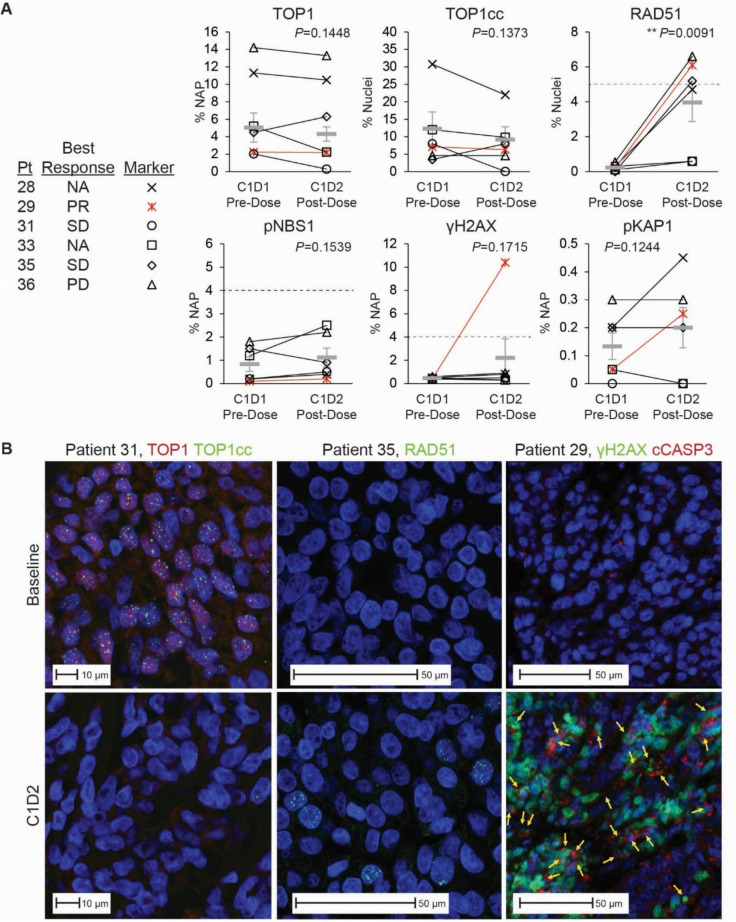
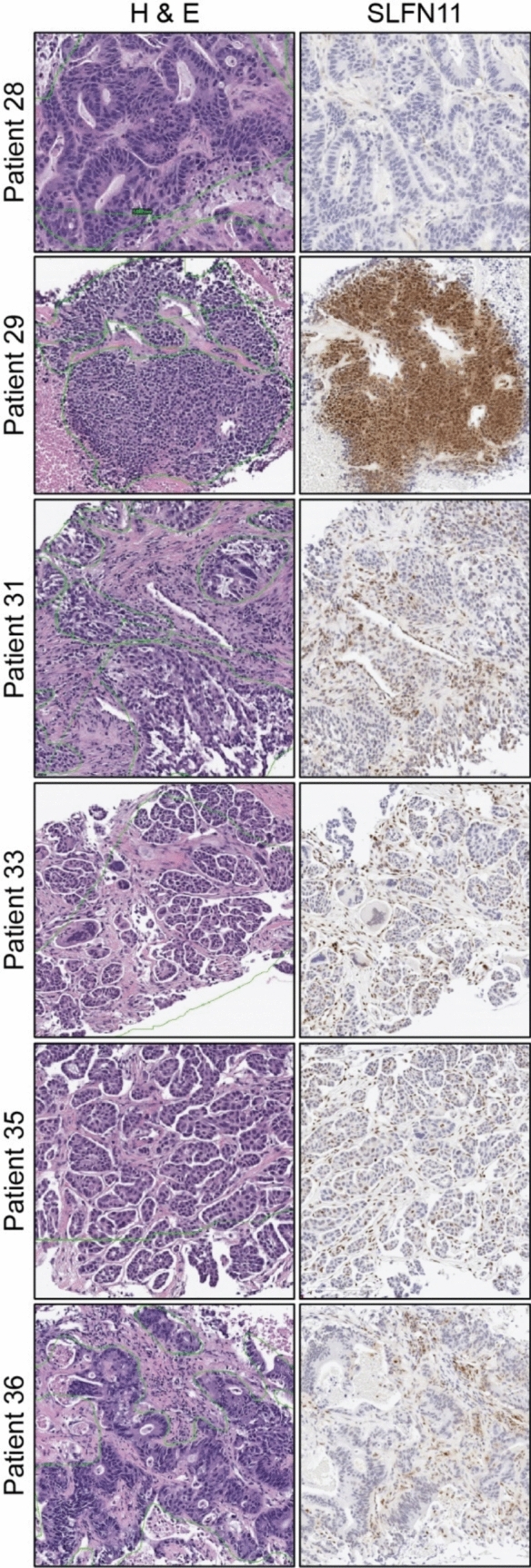
The MTD of LMP776 was 12 mg/m/day and that of LMP744 was 190 mg/m/day. Dose-limiting toxicities (DLTs) for LMP776 included hypercalcemia, anemia, and hyponatremia; DLTs for LMP744 included hypokalemia, anemia, and weight loss. There was 1 confirmed partial response (cPR) among 35 patients receiving LMP744 (overall response rate 3%) and no objective responses in patients receiving LMP776. Tumor biopsies from the patient with cPR demonstrated high baseline expression of SLFN11 and a unique pattern of pharmacodynamic responses, including increased RAD51, phosphorylated KAP1 (pKAP1), γH2AX, and cleaved caspase-3 (cCasp3).
MTDs and safety profiles are reported for LMP776 and LMP744. Target engagement by an indenoisoquinoline was measured for the first time in human samples.
茚并异喹啉是一类拓扑异构酶I(TOP1)抑制剂,旨在克服喜树碱类药物的临床局限性。三种茚并异喹啉(LMP400、LMP776和LMP744)在小鼠模型和一项比较性犬淋巴瘤研究中显示出活性。LMP400的临床数据此前已有报道(NCT01051635)。本文报告了LMP776(NCT01051635)和LMP744(NCT03030417)1期研究的最大耐受剂量(MTD)、安全性和临床数据。
年龄≥18岁的晚期难治性实体瘤或淋巴瘤患者按照西蒙加速滴定设计静脉给予LMP776(n = 34)或LMP744(n = 35)。LMP776和LMP744均在28天周期内每日给药5天(QDx5)。分别根据CTCAE和RECIST v1.1标准评估不良事件和临床反应。评估药代动力学和药效学变化。
LMP776的MTD为12mg/m²/天,LMP744的MTD为190mg/m²/天。LMP776的剂量限制性毒性(DLT)包括高钙血症、贫血和低钠血症;LMP744的DLT包括低钾血症、贫血和体重减轻。在接受LMP744的35例患者中有1例确认部分缓解(cPR)(总缓解率3%),接受LMP776的患者无客观缓解。来自cPR患者的肿瘤活检显示SLFN11基线高表达以及独特的药效学反应模式,包括RAD51、磷酸化KAP1(pKAP1)、γH2AX和裂解的半胱天冬酶-3(cCasp3)增加。
报告了LMP776和LMP744的MTD和安全性概况。首次在人体样本中检测到茚并异喹啉对靶点的作用。