Du Jianhui, Wei Luyao, He Jinxian, Xu Xia, Hu Lihong
Department of Anesthesiology, Lihuili Hospital Affiliated to Ningbo University, Ningbo, China.
Department of Thoracic Surgery, Lihuili Hospital Affiliated to Ningbo University, Ningbo, China.
Front Med (Lausanne). 2025 May 15;12:1554515. doi: 10.3389/fmed.2025.1554515. eCollection 2025.
Patients often experience persistent, intense pain following uniportal thoracoscopic pulmonary wedge resection (UTPWR). This pain is usually intervened with patient-controlled intravenous analgesia (PCIA) or thoracoscopic-guided thoracic paravertebral block (TG-TPB), a novel peripheral nerve block technique. Herein, we compared the analgesic effects of TG-TPB and PCIA post-UTPWR.
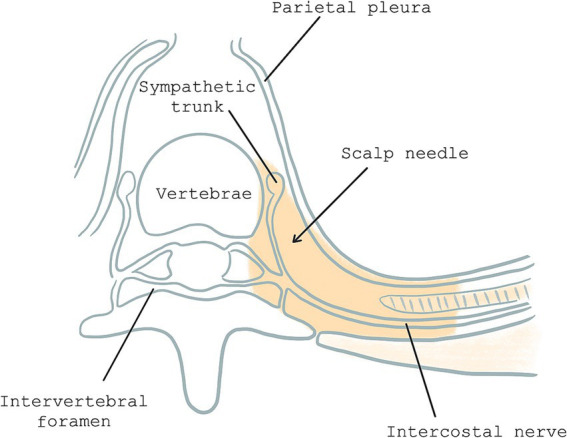
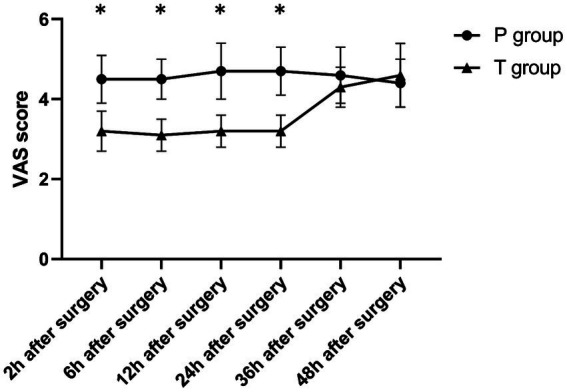
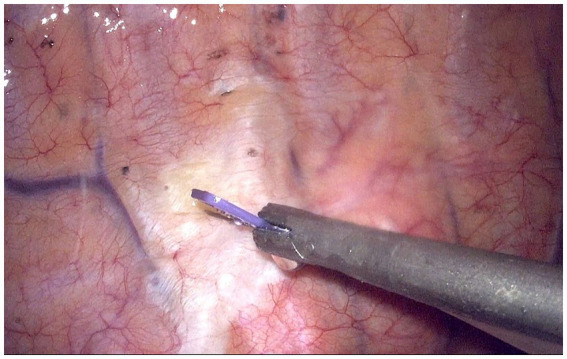
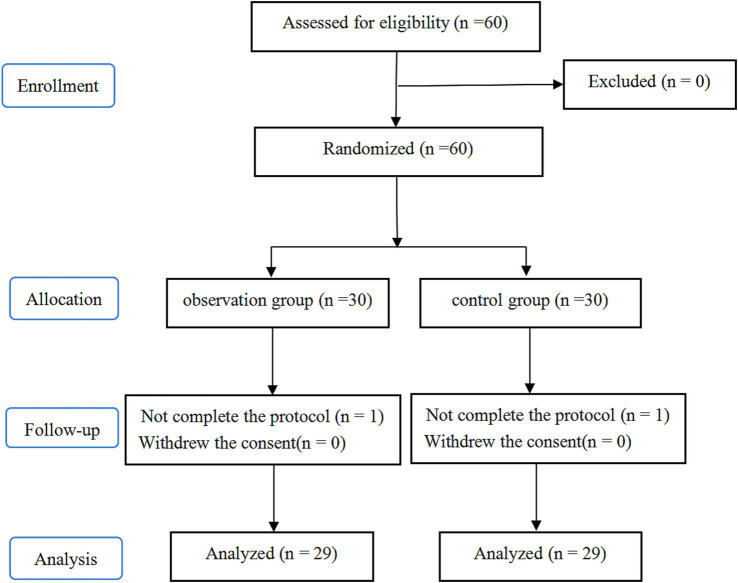
Sixty patients allocated into two groups: T and P. Group T patients were administered TG-TPB with 20 mL 0.375% ropivacaine at the fourth intercostal plane before sealing the chest, and connected to a PCIA pump containing 0.9% sodium chloride (NaCl). Group P patients received TG-TPB with 20 mL 0.9% NaCl and were connected to a PCIA pump containing sufentanil. The Visual Analogue Scale (VAS) scores were recorded at 2, 6, 12, 24, 36, and 48 h postoperatively. Data on sufentanil consumption, number of PCIA presses, number of rescue analgesia interventions, adverse reactions (ARs), and the 15-item Quality of Recovery Scale (QoR-15) scores were also recorded within 24 h postoperatively.
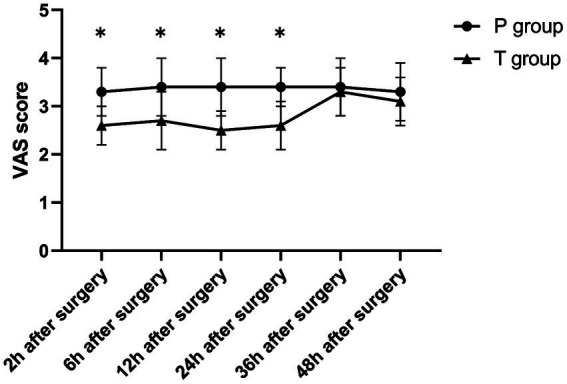
Compared to the P group, the T group showed lower VAS scores at 2, 6, 12, and 24 h postoperatively, as well as lower sufentanil consumption levels, number of PCIA presses, number of rescue analgesia interventions, and ARs incidences within 24 h postoperatively (all < 0.05). Furthermore, the T group showed higher QoR-15 scores within 24 h postoperatively than the P group (90.5 ± 7.3 vs. 76.6 ± 6.2; < 0.001).
Compared to PCIA, TG-TPB exerted a better analgesic effect post-UTPWR, with less opioid drug use, fewer ARs, and a significantly better recovery quality within 24 h postoperatively.
https://www.chictr.org.cn/, ChiCTR2000034726.
患者在单孔胸腔镜肺楔形切除术(UTPWR)后常经历持续、强烈的疼痛。这种疼痛通常采用患者自控静脉镇痛(PCIA)或胸腔镜引导下胸椎旁神经阻滞(TG-TPB,一种新型外周神经阻滞技术)进行干预。在此,我们比较了UTPWR后TG-TPB和PCIA的镇痛效果。
60例患者分为两组:T组和P组。T组患者在关胸前于第4肋间平面给予20ml 0.375%罗哌卡因进行TG-TPB,并连接至含0.9%氯化钠(NaCl)的PCIA泵。P组患者接受20ml 0.9% NaCl的TG-TPB,并连接至含舒芬太尼的PCIA泵。术后2、6、12、24、36和48小时记录视觉模拟评分(VAS)。术后24小时内还记录舒芬太尼用量、PCIA按压次数、补救镇痛干预次数、不良反应(ARs)以及15项恢复质量量表(QoR-15)评分。
与P组相比,T组术后2、6、12和24小时VAS评分更低,术后24小时内舒芬太尼用量、PCIA按压次数、补救镇痛干预次数及ARs发生率也更低(均<0.05)。此外,T组术后24小时内QoR-15评分高于P组(90.5±7.3 vs. 76.6±6.2;<0.001)。
与PCIA相比,TG-TPB在UTPWR后镇痛效果更好,阿片类药物使用更少,ARs更少,术后24小时内恢复质量明显更好。