Bielskė Karolina, Petraitytė-Burneikienė Rasa, Avižinienė Aliona, Dapkūnas Justas, Plikusienė Ieva, Juciutė Silvija, Stančiauskaitė Miglė, Žvirblienė Aurelija, Kučinskaitė-Kodzė Indrė
Institute of Biotechnology, Life Sciences Center, Vilnius University, Saulėtekio av. 7, Vilnius, LT-10257, Lithuania.
Faculty of Chemistry and Geosciences, Institute of Chemistry, Vilnius University, Naugarduko g. 24, Vilnius, LT-03225, Lithuania.
Sci Rep. 2025 May 30;15(1):19094. doi: 10.1038/s41598-025-04603-2.
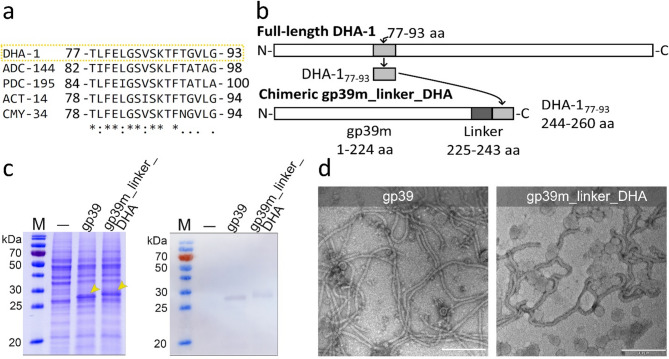
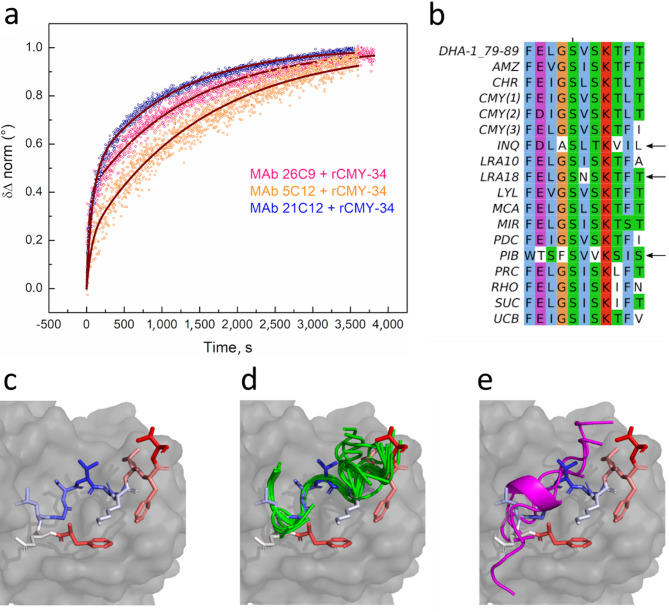
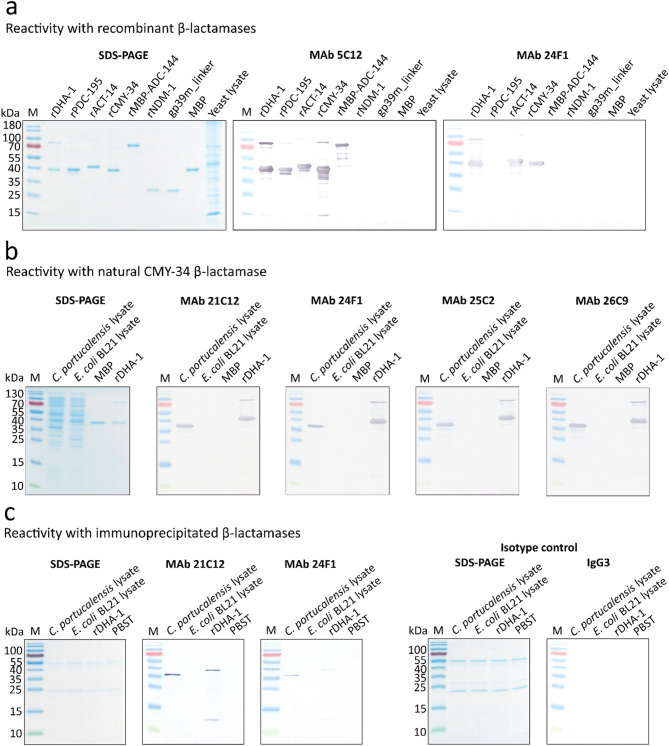
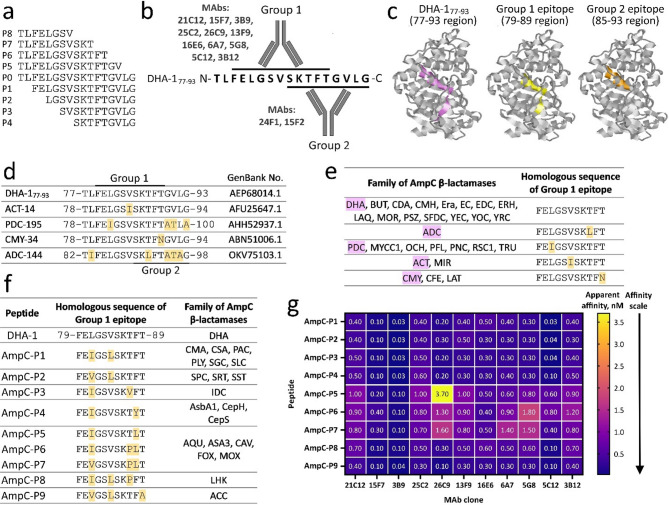
With antibiotic resistance reaching alarming levels globally, rapid detection of resistance determinants is crucial for administering appropriate antimicrobial therapies. This study aimed to develop monoclonal antibodies (MAbs) against bacterial β-lactamases, which are key enzymes in antibiotic resistance, for potential diagnostic use. To generate MAbs capable of recognising a broad range of β-lactamases in bacterial isolates, the bacteriophage vB_EcoS_NBD2 tail tube protein gp39-derived nanotubes, as a scaffold displaying a highly conserved 17-amino acid peptide of AmpC β-lactamases, were produced in yeast and used as an immunogen for generation of MAbs by hybridoma technology. Thirteen hybridoma clones producing peptide-specific MAbs were developed. To assess MAb reactivity with AmpC enzymes, recombinant DHA-1, PDC-195, ACT-14, CMY-34, and ADC-144 β-lactamases were generated. Eleven of thirteen MAbs demonstrated cross-reactivity with all tested β-lactamases in ELISA and Western blot. Immunoprecipitation and Western blot analyses confirmed MAb reactivity with natural CMY-34 in the Citrobacter portucalensis isolate. Epitope analysis revealed that most MAbs recognise a highly conserved epitope of 11 amino acids. The MAbs were comprehensively characterised using different immunoassays, total internal reflection ellipsometry and computational modelling. These novel MAbs, which recognise a wide range of AmpC enzymes, represent a promising tool for immunodetection of antibiotic resistance determinants.
随着全球抗生素耐药性达到惊人水平,快速检测耐药决定因素对于实施适当的抗菌治疗至关重要。本研究旨在开发针对细菌β-内酰胺酶的单克隆抗体(MAb),β-内酰胺酶是抗生素耐药性中的关键酶,用于潜在的诊断用途。为了产生能够识别细菌分离物中广泛β-内酰胺酶的单克隆抗体,在酵母中生产了噬菌体vB_EcoS_NBD2尾管蛋白gp39衍生的纳米管,作为展示AmpCβ-内酰胺酶高度保守的17个氨基酸肽的支架,并用作通过杂交瘤技术产生单克隆抗体的免疫原。开发了13个产生肽特异性单克隆抗体的杂交瘤克隆。为了评估单克隆抗体与AmpC酶的反应性,制备了重组DHA-1、PDC-195、ACT-14、CMY-34和ADC-144β-内酰胺酶。13个单克隆抗体中的11个在ELISA和蛋白质印迹中显示出与所有测试的β-内酰胺酶的交叉反应性。免疫沉淀和蛋白质印迹分析证实了单克隆抗体与葡萄牙柠檬酸杆菌分离物中天然CMY-34的反应性。表位分析表明,大多数单克隆抗体识别11个氨基酸的高度保守表位。使用不同的免疫测定、全内反射椭圆偏振法和计算模型对单克隆抗体进行了全面表征。这些识别广泛AmpC酶的新型单克隆抗体代表了一种用于免疫检测抗生素耐药决定因素的有前途的工具。