
凝溶胶蛋白促进雌激素受体β的核转位以及与阿尔茨海默病相关基因的转录抑制。
Gelsolin Facilitates Estrogen Receptor Beta Nuclear Translocation and Transcriptional Repression of Genes Associated with Alzheimer Disease.
作者信息
Yildiz Yoldas, Fan Angela H S, Hartoun Amanda A, Flury Sarah, Ngai Yan, Pak Toni R
机构信息
Stritch School of Medicine, Loyola University Chicago, Maywood, IL 60153, USA.
出版信息
Receptors (Basel). 2025 Jun;4(2). doi: 10.3390/receptors4020010. Epub 2025 May 1.
BACKGROUND/OBJECTIVES: Gelsolin (GSN) is an actin-binding protein that helps maintain neuronal structure and shape, regulates neuronal growth, and apoptosis. Our previous work demonstrated that GSN associated with estrogen receptor beta (ERβ1) in the brains of female rats, but this association was lost in advanced age. GSN was also required for ERβ1-mediated transcriptional repression at activator protein-1 (AP-1) motifs upstream of a minimal gene promoter. However, the consequences of the loss of GSN:ERβ1 protein interaction on ERβ1 nuclear translocation and transcriptional repression at AP-1 sites located within complex endogenous gene promoters remained unclear.
METHODS
We used immunofluorescent super resolution microscopy and luciferase reporter assays to test the hypothesis that GSN facilitates ERβ1 nuclear translocation and transcriptional repression of two genes relevant for Alzheimer Disease: APP (amyloid-beta precursor protein) and ITPKB (inositol-1,4,5-trisphosphate 3-kinase B).
RESULTS
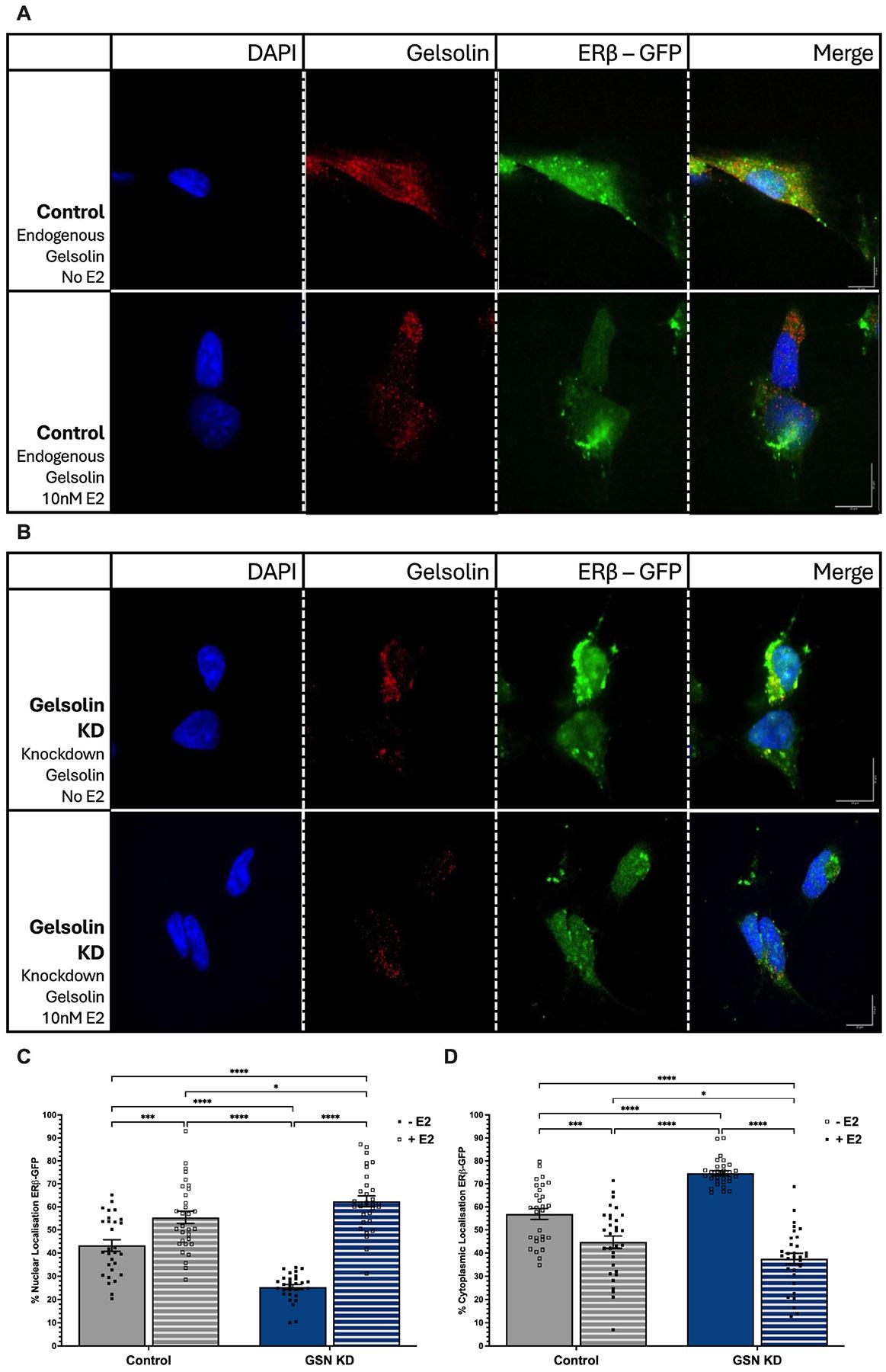
Our results revealed the novel finding that GSN is required for ERβ1 ligand-independent nuclear translocation in neuronal cells. Moreover, we show that GSN increased APP and ITPKB promoter activity, which was repressed by ERβ1.
CONCLUSIONS
Together, these data revealed the importance of the cytoskeletal protein, GSN, in regulating intracellular trafficking of nuclear receptors and demonstrate the first evidence of ERβ1 directly regulating two genes that are implicated in the progression of AD.
背景/目的:凝溶胶蛋白(GSN)是一种肌动蛋白结合蛋白,有助于维持神经元结构和形态,调节神经元生长及细胞凋亡。我们之前的研究表明,在雌性大鼠大脑中,GSN与雌激素受体β(ERβ1)相关联,但在老龄大鼠中这种关联消失。在最小基因启动子上游的激活蛋白-1(AP-1)基序处,ERβ1介导的转录抑制也需要GSN。然而,GSN与ERβ1蛋白相互作用的丧失对ERβ1核转位以及位于复杂内源性基因启动子内的AP-1位点处的转录抑制的影响仍不清楚。
方法
我们使用免疫荧光超分辨率显微镜和荧光素酶报告基因测定法来检验以下假设:GSN促进ERβ1核转位以及对与阿尔茨海默病相关的两个基因——淀粉样前体蛋白(APP)和肌醇-1,4,5-三磷酸3-激酶B(ITPKB)的转录抑制。
结果
我们的结果揭示了一个新发现,即GSN是神经元细胞中ERβ1非配体依赖性核转位所必需的。此外,我们表明GSN增加了APP和ITPKB启动子活性,而这种活性被ERβ1所抑制。
结论
总之,这些数据揭示了细胞骨架蛋白GSN在调节核受体细胞内运输中的重要性,并证明了ERβ1直接调节与AD进展相关的两个基因的首个证据。




 Zotero 插件