Muthiah Annapoorani, Lee Loch Kith, Koh John, Liu Ashly, Tan Aidan
School of Clinical Medicine, Faculty of Medicine and Health University of New South Wales Sydney New South Wales Australia.
Cochrane Evid Synth Methods. 2024 May 2;2(5):e12056. doi: 10.1002/cesm.12056. eCollection 2024 May.
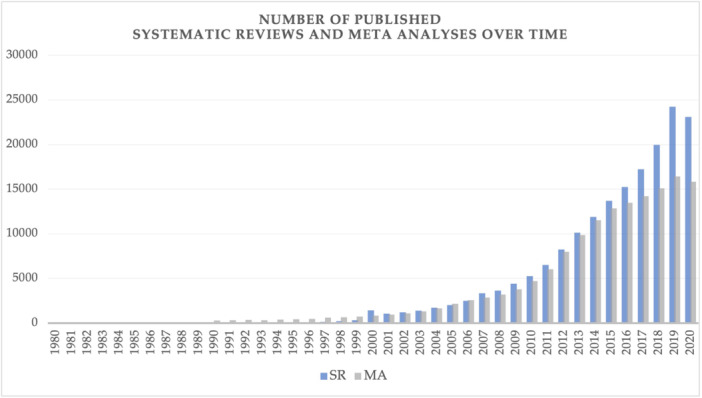
Although the number of published systematic reviews and meta-analyses in dermatology has increased over the past decade, their quality is unknown.
The objective of this study was to determine the change in risk of bias, methodological quality and reporting quality of systematic reviews and meta-analyses in dermatology between 2010 and 2019.
We conducted a comparative study of systematic reviews and meta-analyses published in the 10 highest-ranked dermatology journals in 2010 and 2019. Studies were identified through electronic searches of MEDLINE, Embase, and eight other bibliographic databases. Risk of bias and methodological quality were assessed in duplicate with the risk of bias in systematic reviews (ROBIS) and A MeaSurement Tool to Assess systematic Reviews-2 (AMSTAR-2) tools, respectively, with the latter only applied to studies of interventions. Reporting quality was assessed with the Preferred Reporting Items of systematic reviews and Meta-Analyses (PRISMA) 2009 and PRISMA for abstracts (PRISMA-A) 2013 statements.
We included 27 systematic reviews and meta-analyses published in 2010 and 127 published in 2019. There was no evidence of a difference in the proportion of systematic reviews and meta-analyses at high/unclear risk of bias with ROBIS (Fisher's exact test = 1.00) or critically low methodological quality using AMSTAR-2 (Fisher's exact test = 0.456), between 2010 and 2019. There was evidence of a difference in proportion of PRISMA ((26) = 2.7, = 0.01), and very strong evidence of a difference in proportion of PRISMA-A ((26) = 4.2, < 0.001) checklist items adequately reported between 2010 and 2019. The difference in mean proportion of PRISMA checklist items adequately reported was 3.6 items more (95% confidence interval [CI]: 1.8-5.4 items more) in 2019 (mean = 10.7 items, SD = 2.4 items) than in 2010 (mean = 7.1 items, SD = 2.9 items), and of PRISMA-A checklist items adequately reported was 1.1 items more (95% CI: 0.2-2.0 items more) in 2019 (mean = 5.6 items, SD = 1.5 items) than in 2010 (mean = 4.4 items, SD = 1.7 items).
No improvement was observed in the overall methodological quality of included systematic reviews and meta-analyses; however, there was strong evidence of improvement in the overall reporting quality.
尽管在过去十年中,皮肤科领域发表的系统评价和荟萃分析数量有所增加,但其质量尚不清楚。
本研究的目的是确定2010年至2019年间皮肤科系统评价和荟萃分析的偏倚风险、方法学质量和报告质量的变化。
我们对2010年和2019年在排名前十的皮肤科期刊上发表的系统评价和荟萃分析进行了比较研究。通过对MEDLINE、Embase和其他八个文献数据库进行电子检索来识别研究。分别使用系统评价中的偏倚风险(ROBIS)工具和评估系统评价的测量工具-2(AMSTAR-2)工具对偏倚风险和方法学质量进行双人评估,后者仅应用于干预性研究。使用系统评价和荟萃分析的首选报告项目(PRISMA)2009声明和2013年摘要的PRISMA(PRISMA-A)声明评估报告质量。
我们纳入了2010年发表的27篇系统评价和荟萃分析以及2019年发表的127篇。没有证据表明2010年和2019年间,使用ROBIS评估的处于高/偏倚风险不明确的系统评价和荟萃分析比例存在差异(Fisher精确检验=1.00),或者使用AMSTAR-2评估的方法学质量极低的比例存在差异(Fisher精确检验=0.456)。有证据表明PRISMA((26)=2.7,=0.01)比例存在差异,并且有非常有力的证据表明2010年和2019年间PRISMA-A((26)=4.2,<0.001)清单项目充分报告比例存在差异。2019年(均值=10.7项,标准差=2.4项)充分报告的PRISMA清单项目平均比例比2010年(均值=7.1项,标准差=2.9项)多3.6项(95%置信区间[CI]:多1.8 - 5.4项),2019年(均值=5.6项,标准差=1.5项)充分报告的PRISMA-A清单项目平均比例比2010年(均值=4.4项,标准差=1.7项)多1.1项(95%CI:多0.2 - 2.0项)。
纳入的系统评价和荟萃分析的整体方法学质量没有改善;然而,有强有力的证据表明整体报告质量有所提高。