Nathaniel Upasana, Wick Tracey V, Ling Josef L, McQuaid Jessica R, Sasi Kumar Divyasree, Miller Samuel D, Wu Jingshu, Zotev Vadim, Meier Timothy B, van der Horn Harm J, Phillips John P, Campbell Richard A, Sapien Robert E, Keskin Rahsan, Vakhtin Andrei A, Mayer Andrew R
The Mind Research Network/Lovelace Biomedical Research Institute, Albuquerque, NM, USA.
Department of Neurosurgery, Medical College of Wisconsin, Milwaukee, WI, USA.
Ann Neurol. 2025 Jun 6. doi: 10.1002/ana.27259.
Despite the high prevalence of pediatric "mild" traumatic brain injury (pmTBI), very little is known about the long-term effects of injury on brain structure and how injuries manifest in the context of dynamic and regionally specific neurodevelopmental changes.
Prospective study design characterizing long-term effects of pmTBI on both global (brain age) and regional (hippocampal volume, hippocampal subfields, and cortical thickness) brain structure at approximately 7 days, 4 months, and 1-year post-injury. A large sample of age- and sex-matched healthy controls was imaged at identical temporal intervals to account for typical neurodevelopmental changes, and to assess how trauma potentially affects developmental trajectories.
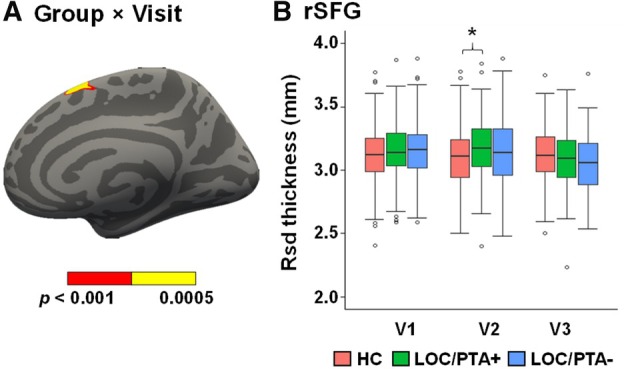
A total of 269 pmTBI (age = 14.4 ± 2.9; 41.6% female) and 232 healthy controls (age = 14.1 ± 2.9; 44.8% female) were included in the final analyses (>70% 1-year retention). Results demonstrated that the presence of loss of consciousness and/or post-traumatic amnesia was associated with increased brain age up to 1-year post-injury, increased frontal cortical thickness at 4 months, as well as hippocampal atrophy across all time points relative to controls. "Mild" head trauma also interfered with hippocampal neurodevelopment in a dose-dependent fashion, including within the CA1 subfield. In contrast, post-concussive symptom burden was not associated with any structural abnormalities or alterations to neurodevelopment.
Current findings suggest a dose-dependent relationship between injury severity and alterations in both global and regional brain structure within the spectrum of pmTBI. Our results emphasize the importance of using objective biomarkers rather than subjective self-reported symptoms to better understand the long-term effects of injury. ANN NEUROL 2025.
尽管小儿“轻度”创伤性脑损伤(pmTBI)的患病率很高,但对于损伤对脑结构的长期影响以及损伤在动态和区域特异性神经发育变化背景下如何表现,人们知之甚少。
前瞻性研究设计,旨在描述pmTBI在损伤后约7天、4个月和1年对整体(脑龄)和区域(海马体积、海马亚区和皮质厚度)脑结构的长期影响。对大量年龄和性别匹配的健康对照在相同时间间隔进行成像,以考虑典型的神经发育变化,并评估创伤如何潜在影响发育轨迹。
最终分析纳入了269例pmTBI患者(年龄 = 14.4 ± 2.9;41.6%为女性)和232例健康对照(年龄 = 14.1 ± 2.9;44.8%为女性)(1年保留率>70%)。结果表明,意识丧失和/或创伤后遗忘的存在与损伤后1年内脑龄增加、4个月时额叶皮质厚度增加以及相对于对照组在所有时间点的海马萎缩有关。“轻度”头部创伤还以剂量依赖方式干扰海马神经发育,包括在CA1亚区内。相比之下,脑震荡后症状负担与任何结构异常或神经发育改变均无关联。
目前的研究结果表明,在pmTBI范围内,损伤严重程度与整体和区域脑结构改变之间存在剂量依赖关系。我们的结果强调了使用客观生物标志物而非主观自我报告症状来更好地理解损伤长期影响的重要性。《神经病学纪事》2025年。