Xia Qingling, Xu Fujiang, Zhang Lidan, Ding Wenfei, Liu Jiang, Liu Jing, Chen Minhao, Ou Santao, Xu Yong, Wen Li
Department of Nephrology, Sichuan Clinical Research Center for Nephropathy and Metabolic Vascular Diseases Key Laboratory of Sichuan Province, The Affiliated Hospital of Southwest Medical University, Luzhou, China.
Department of Oncology, The Affiliated Hospital of Southwest Medical University, Luzhou, China.
Mol Biomed. 2025 Jun 6;6(1):36. doi: 10.1186/s43556-025-00276-5.
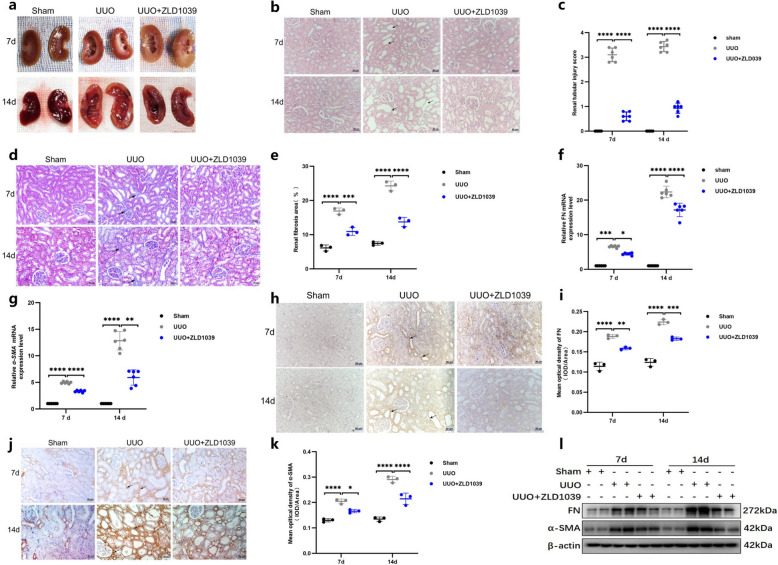
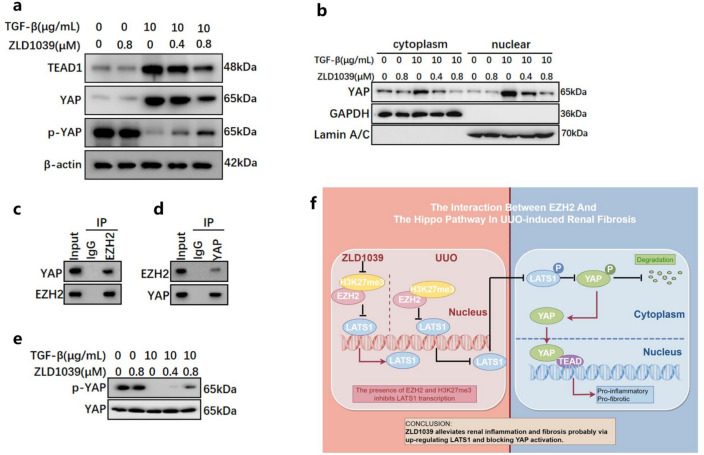
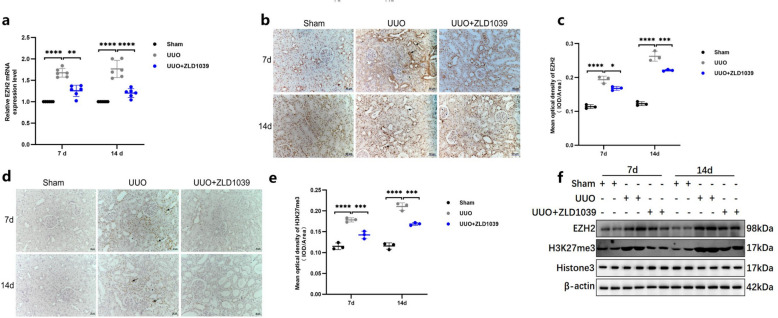
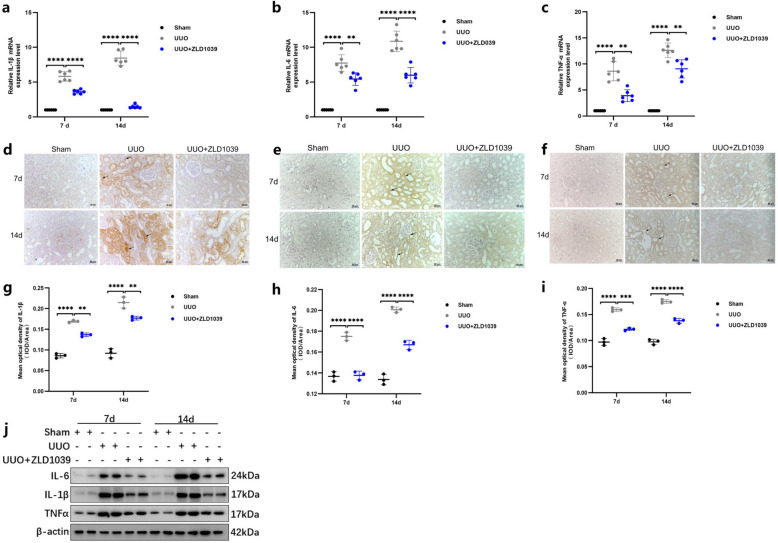
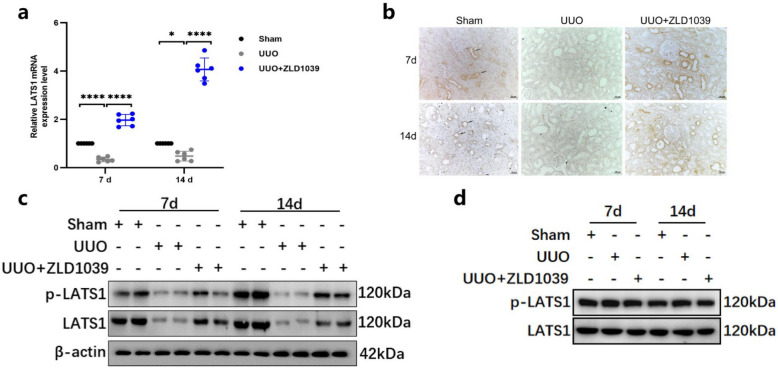
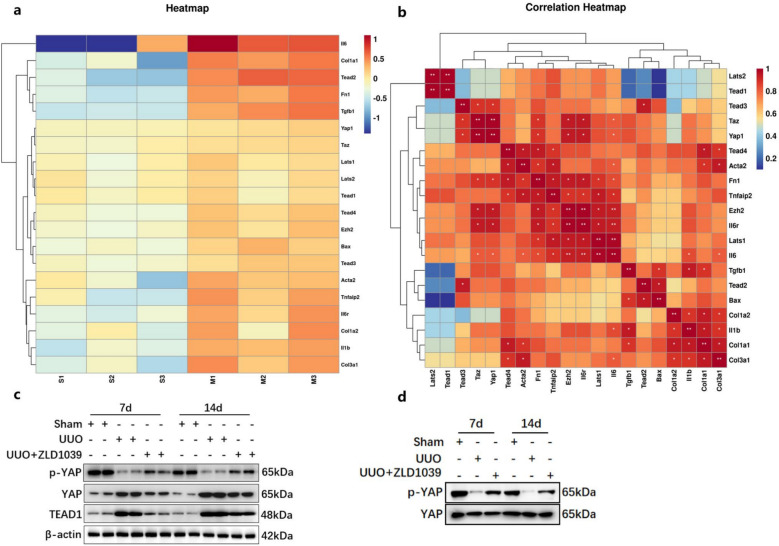
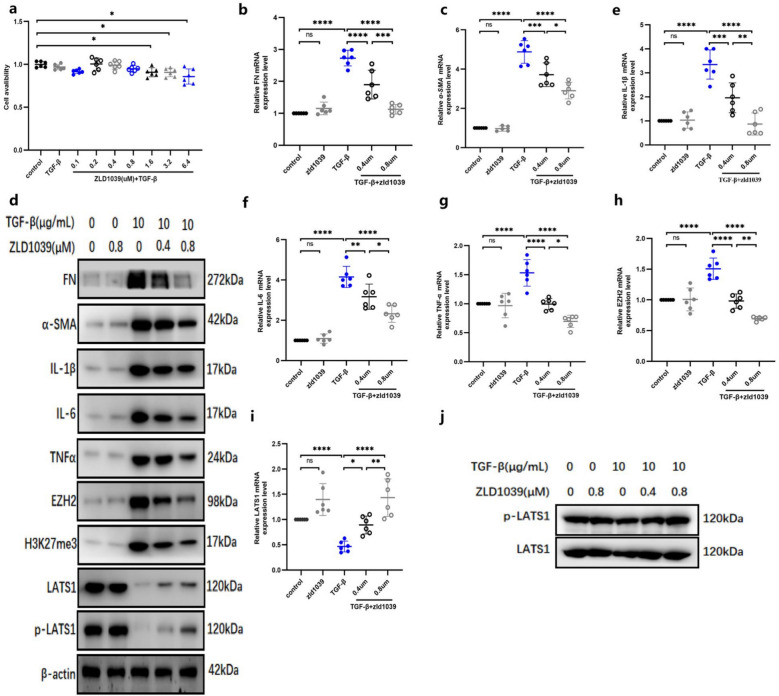
Renal fibrosis is a manifestation of the progression of chronic kidney disease (CKD) and chronic inflammation is a main driver in the development of renal fibrosis. Yes-associated protein (YAP), acting as a transcriptional co-activator within the Hippo signaling pathway, has been implicated in renal fibrosis. Enhancer of zeste homolog 2 (EZH2) exhibits high expression level in renal fibrosis induced by unilateral ureteral obstruction (UUO), yet the interplay between YAP and EZH2 in renal fibrosis remains to be elucidated. ZLD1039, a selective inhibitor of EZH2, has demonstrated protective effects against cancer and acute kidney injury (AKI). In this study, we conducted a systemic pharmacological investigation to determine if ZLD1039 treatment mitigates UUO-induced renal inflammation and fibrosis through modulation of the Hippo-YAP pathway. Our results revealed that UUO triggered renal inflammation and collagen deposition, with significant activation of YAP. Notably, ZLD1039 treatment effectively alleviated renal inflammation and fibrosis, while inhibiting the expression and nuclear translocation of YAP. Mechanically, we observed a notable down-regulation of large tumor suppressor homolog 1 (LATS1) in parallel with the up-regulation of EZH2. Furthermore, inhibition of EZH2 by ZLD1039 was linked to the up-regulation of LATS1 expression and YAP inactivation. Similarly, in vitro pharmacological inhibition of EZH2 by ZLD1039 resulted in elevated LATS1 expression and diminished YAP activation. Collectively, our findings suggest that ZLD1039, a selective inhibitor of EZH2, likely attenuates renal inflammation and fibrosis probably by up-regulating LATS1 and inhibiting YAP activation. This mechanistic link between EZH2 and YAP provides a fresh perspective on treating renal fibrosis.
肾纤维化是慢性肾脏病(CKD)进展的一种表现,慢性炎症是肾纤维化发展的主要驱动因素。Yes相关蛋白(YAP)作为Hippo信号通路中的一种转录共激活因子,已被证实与肾纤维化有关。zeste同源物2增强子(EZH2)在单侧输尿管梗阻(UUO)诱导的肾纤维化中表达水平较高,但YAP与EZH2在肾纤维化中的相互作用仍有待阐明。ZLD1039是一种EZH2选择性抑制剂,已显示出对癌症和急性肾损伤(AKI)的保护作用。在本研究中,我们进行了一项系统的药理学研究,以确定ZLD1039治疗是否通过调节Hippo-YAP通路减轻UUO诱导的肾炎症和纤维化。我们的结果显示,UUO引发了肾炎症和胶原沉积,并显著激活了YAP。值得注意的是,ZLD1039治疗有效减轻了肾炎症和纤维化,同时抑制了YAP的表达和核转位。机制上,我们观察到大型肿瘤抑制同源物1(LATS1)显著下调,同时EZH2上调。此外,ZLD1039对EZH2的抑制与LATS1表达上调和YAP失活有关。同样,ZLD1039在体外对EZH2的药理学抑制导致LATS1表达升高和YAP激活减少。总体而言,我们的研究结果表明,EZH2选择性抑制剂ZLD1039可能通过上调LATS1和抑制YAP激活来减轻肾炎症和纤维化。EZH2与YAP之间的这种机制联系为治疗肾纤维化提供了新的视角。