Huang Yingjie, Yin Zhijie, Han Wei
Department of Pancreatic Surgery, The First Affiliated Hospital of Xinjiang Medical University, Ürümqi, China.
Front Med (Lausanne). 2025 May 23;12:1591096. doi: 10.3389/fmed.2025.1591096. eCollection 2025.
Acute cholangitis, characterized by infection of the bile duct, represents a significant clinical challenge due to its association with heightened morbidity and mortality rates. This condition often culminates in severe complications, including sepsis and multi-organ failure, ultimately leading to increased healthcare burdens. The anion gap (AG) serves as a potential biomarker for systemic inflammation and has been proposed as a prognostic indicator. To evaluate its efficacy in predicting patient outcomes, a closer examination of AG levels and their relationship to mortality in acute cholangitis patients is warranted.
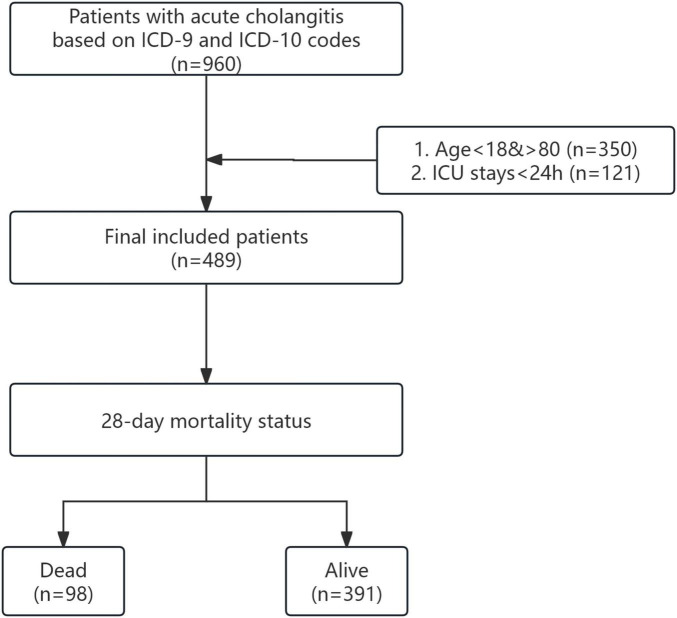
This study employed a retrospective cohort design, utilizing data gleaned from the MIMIC-IV database. A total of 489 patients admitted to the Intensive Care Unit (ICU) with acute cholangitis were analyzed, and participants were stratified into quartiles according to their serum AG levels. Mortality rates, as well as the incidence of acute kidney injury (AKI) and sepsis, were meticulously recorded and analyzed to establish any significant correlations with AG levels.
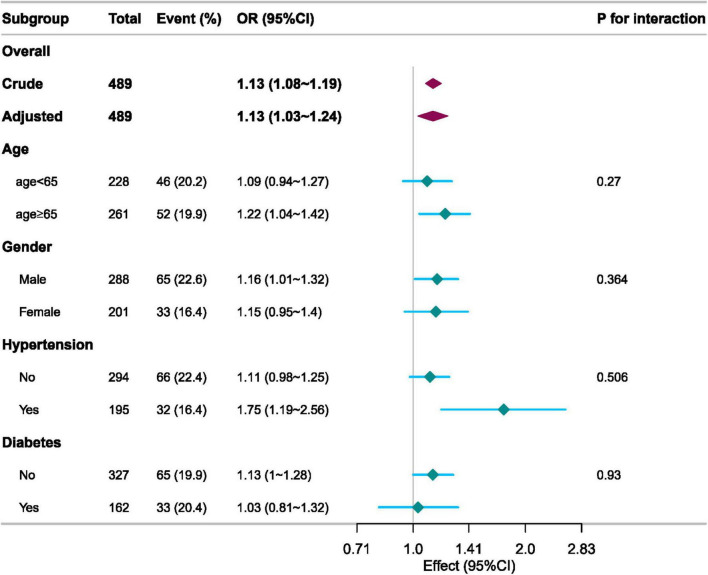
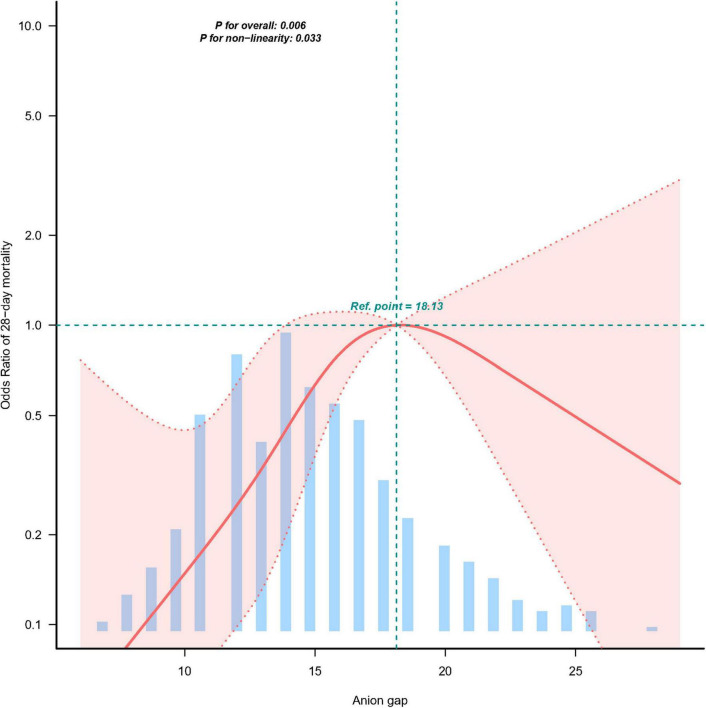
The findings indicated a stark association between elevated AG quartiles and increased rates of AKI, sepsis, and overall mortality. Specifically, the 28-day mortality rate escalated markedly from 8.1% in the lowest AG quartile to 30.9% in the highest quartile ( < 0.001). Furthermore, multivariate logistic regression analysis revealed that each unit increase in AG was associated with a 13% enhancement in mortality risk (OR 1.13, 95%CI 1.03-1.124, = 0.010). An inverted J-shaped correlation between AG levels and mortality was also identified, indicating a potential inflection point at 18.13 mEq/L.
This study elucidates the significant role of AG as a prognostic marker in critically ill patients with acute cholangitis, emphasizing its potential utility in guiding early intervention strategies to mitigate mortality risks. Future research endeavors should aim to explore the therapeutic implications of managing AG levels and assess their relevance in wider clinical contexts to enhance patient outcomes.
急性胆管炎以胆管感染为特征,因其与发病率和死亡率升高相关,是一项重大的临床挑战。这种情况常导致严重并发症,包括脓毒症和多器官功能衰竭,最终增加医疗负担。阴离子间隙(AG)作为全身炎症的潜在生物标志物,已被提议作为预后指标。为评估其预测患者预后的有效性,有必要更深入地研究急性胆管炎患者的AG水平及其与死亡率的关系。
本研究采用回顾性队列设计,利用从MIMIC-IV数据库收集的数据。对489例入住重症监护病房(ICU)的急性胆管炎患者进行分析,并根据其血清AG水平将参与者分为四分位数。仔细记录和分析死亡率以及急性肾损伤(AKI)和脓毒症的发生率,以确定与AG水平的任何显著相关性。
研究结果表明,AG四分位数升高与AKI、脓毒症发生率及总死亡率增加之间存在明显关联。具体而言,28天死亡率从最低AG四分位数的8.1%显著升至最高四分位数的30.9%(P<0.001)。此外,多因素逻辑回归分析显示,AG每升高一个单位,死亡风险增加13%(比值比1.13,95%置信区间1.03-1.124,P=0.010)。还发现AG水平与死亡率之间呈倒J形相关性,表明在18.13 mEq/L处可能存在一个拐点。
本研究阐明了AG作为急性胆管炎重症患者预后标志物的重要作用,强调其在指导早期干预策略以降低死亡风险方面的潜在效用。未来的研究应旨在探索控制AG水平的治疗意义,并评估其在更广泛临床背景下的相关性,以改善患者预后。