Jiao Fang, Zhao Yang, Yue Qiang, Wang Qi, Li Zhongzhi, Lin Wanjing, Han Lingxi, Wei Liangfu
College of Marine Sciences, South China Agricultural University, Guangzhou, 510640, China.
Zhejiang Academy of Agricultural Sciences, Hangzhou, 310058, China.
Environ Sci Ecotechnol. 2025 May 6;25:100567. doi: 10.1016/j.ese.2025.100567. eCollection 2025 May.
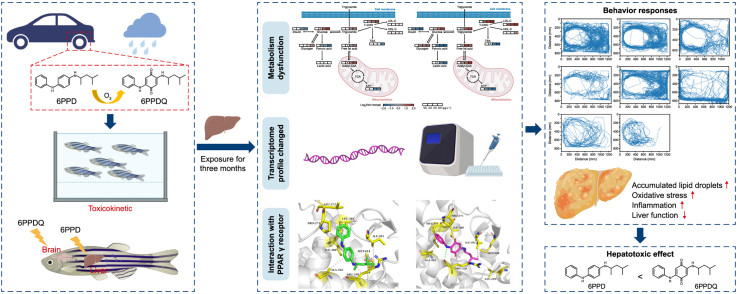
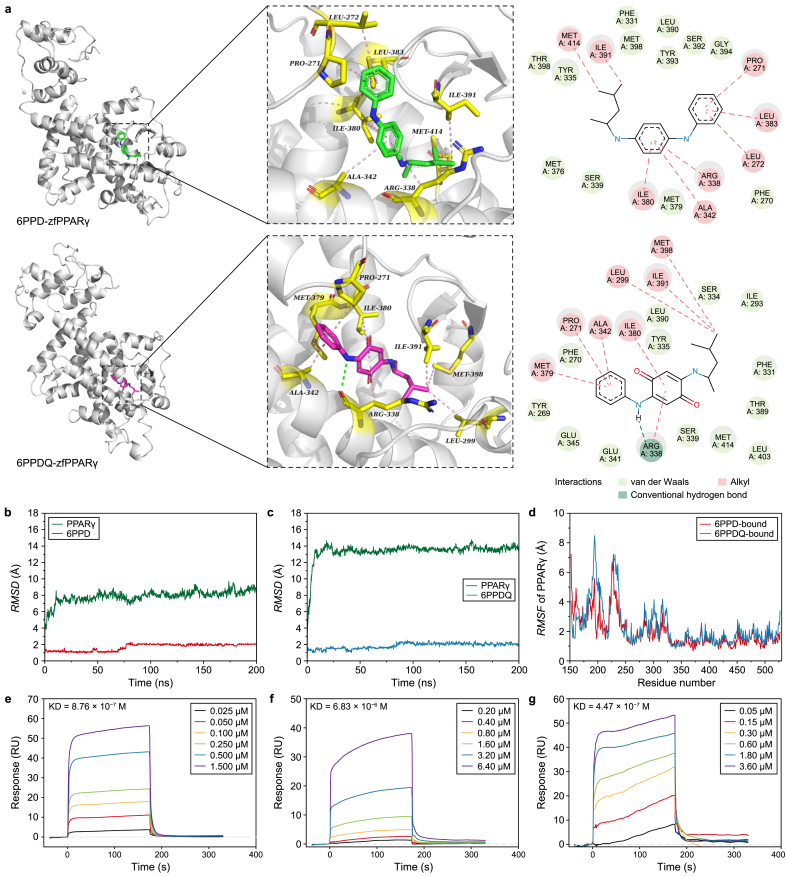
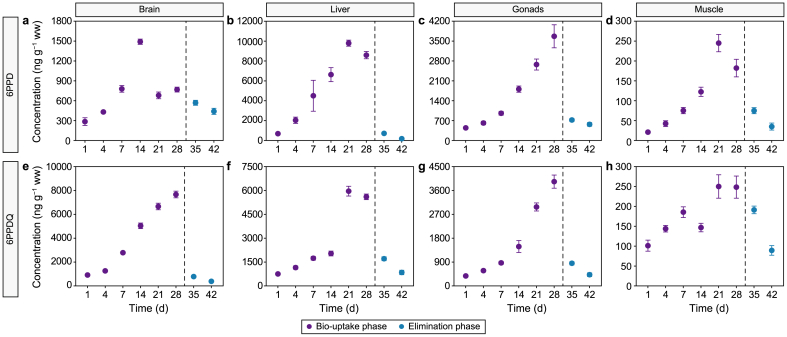
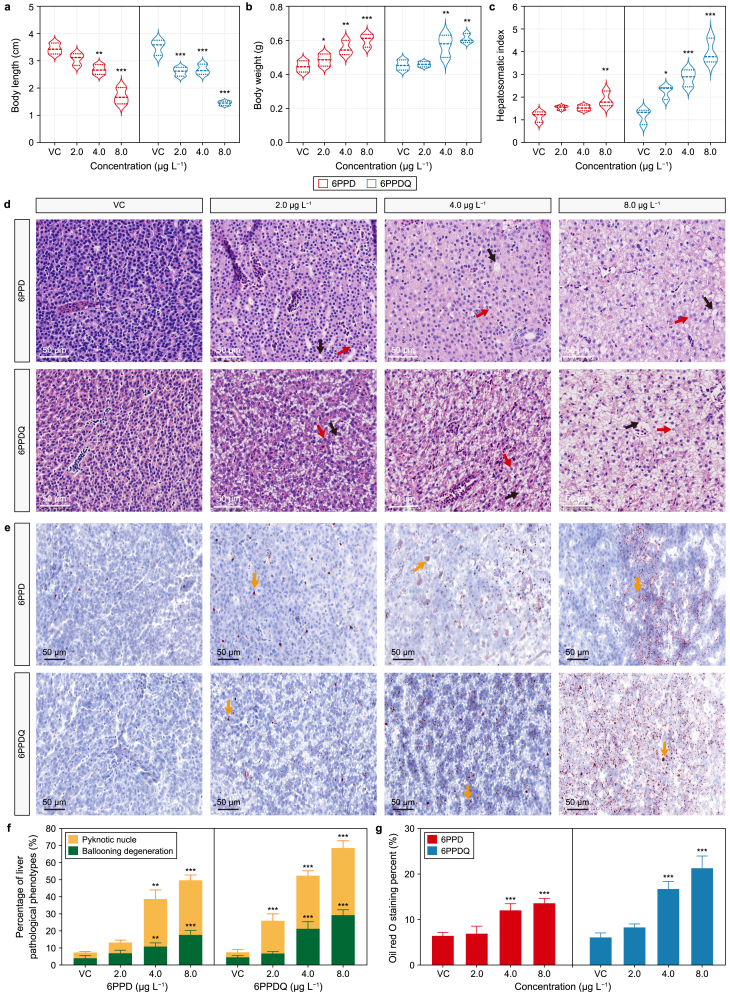
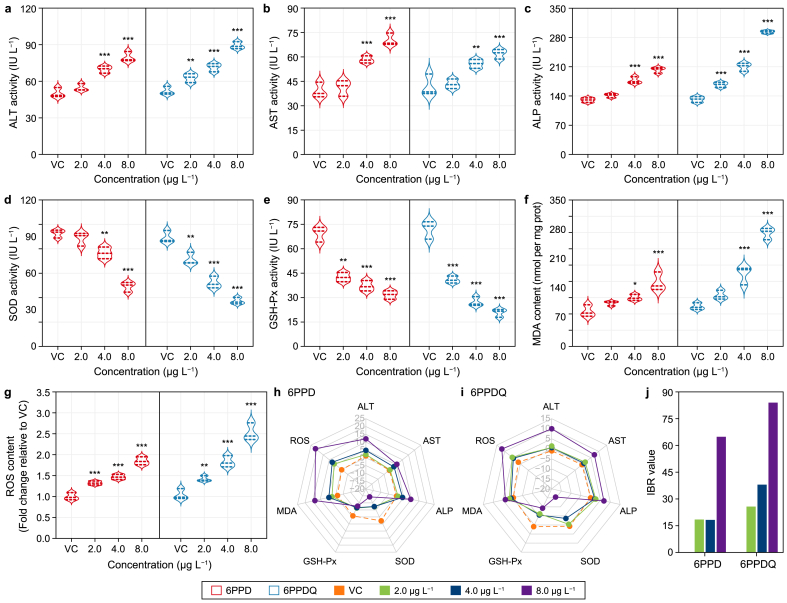
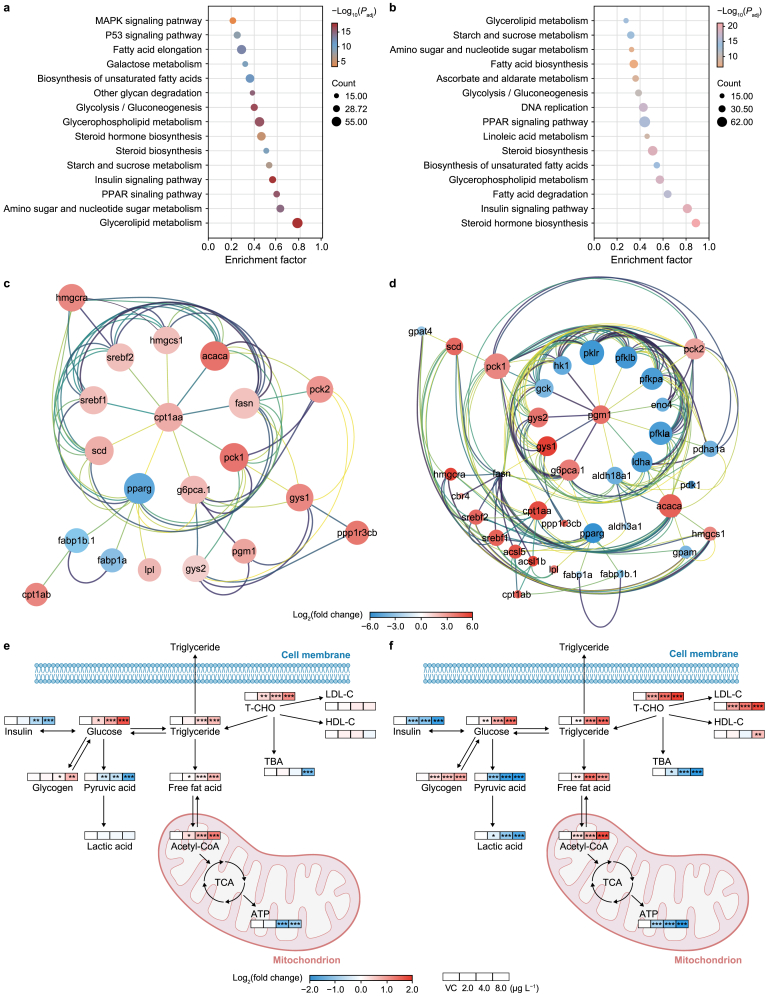
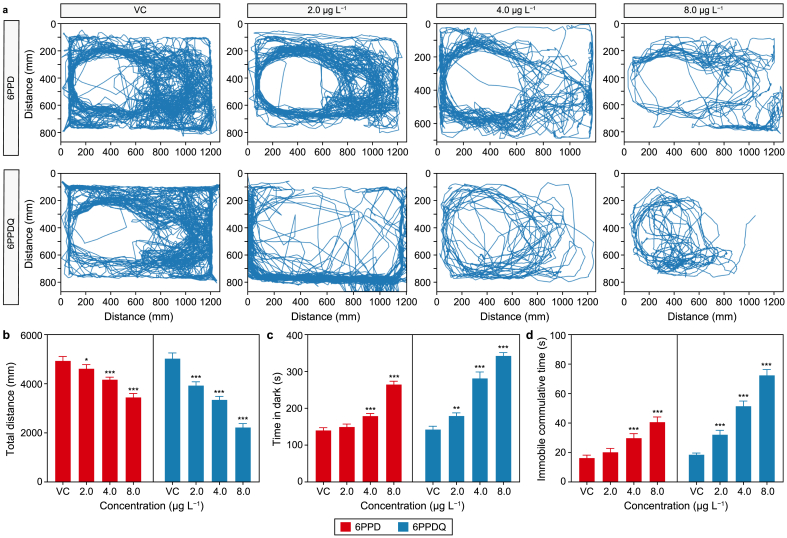
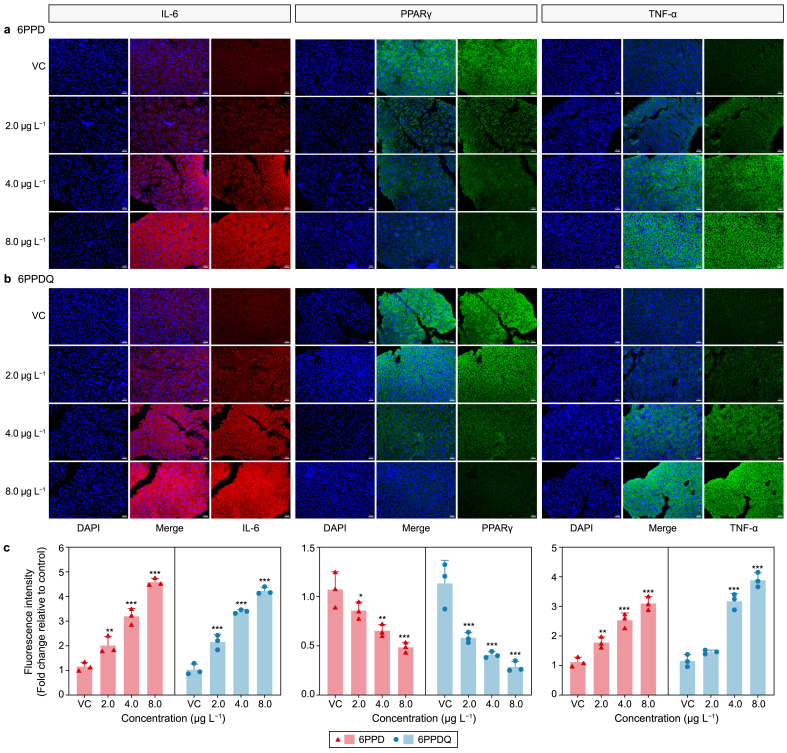
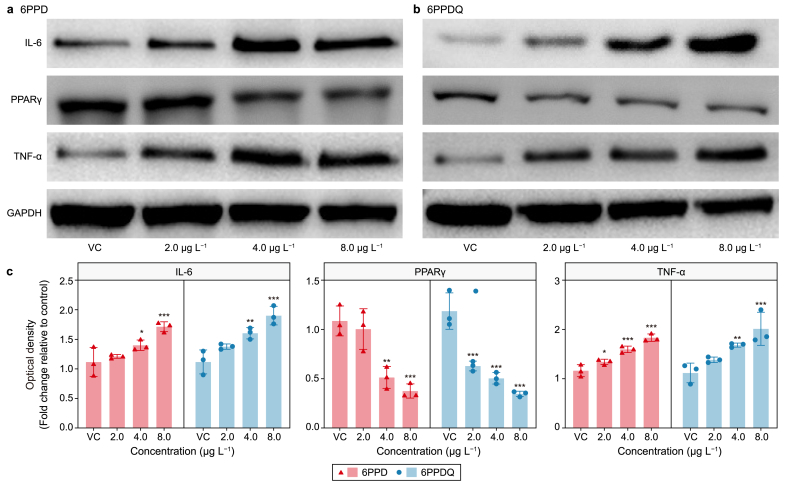
N-(1,3-Dimethylbutyl)-N'-phenyl-p-phenylenediamine (6PPD) and its oxidation derivative, 6PPD-quinone (6PPDQ), have been extensively detected in environmental and biological samples, raising significant concerns regarding their chronic aquatic toxicity at environmentally relevant concentrations. However, the underlying mechanisms driving this chronic toxicity remain largely unexplored. Here we show that zebrafish exposed to 6PPD and 6PPDQ exhibit distinct toxicokinetic profiles, with 6PPD preferentially accumulating in the liver and 6PPDQ predominantly targeting the brain. Exposure to both compounds impaired zebrafish growth, induced hepatic damage, and disrupted locomotor behavior. Transcriptomic analysis of liver tissue revealed disturbances in lipid and carbohydrate metabolic pathways in both treatment groups, with distinct differences in gene expression patterns and biochemical responses between 6PPD and 6PPDQ. Specifically, both compounds downregulated peroxisome proliferator-activated receptor gamma (PPARγ) and elevated the expression of pro-inflammatory cytokines (TNF-α and IL-6). Molecular dynamics simulations and surface plasmon resonance experiments further demonstrated that hepatotoxicity was associated with direct binding of these compounds to PPARγ, a critical regulator of lipid metabolism and inflammation. Our findings highlight the hepatotoxic risks of 6PPD and 6PPDQ to aquatic life. Importantly, 6PPDQ exhibited greater toxicity compared to 6PPD, emphasizing an urgent need for targeted environmental controls and regulatory actions to mitigate ecological harm and potential public health consequences.
N-(1,3-二甲基丁基)-N'-苯基-对苯二胺(6PPD)及其氧化衍生物6PPD-醌(6PPDQ)已在环境和生物样本中被广泛检测到,这引发了人们对其在环境相关浓度下的慢性水生毒性的重大担忧。然而,导致这种慢性毒性的潜在机制在很大程度上仍未得到探索。在此,我们表明,暴露于6PPD和6PPDQ的斑马鱼呈现出不同的毒代动力学特征,6PPD优先在肝脏中积累,而6PPDQ主要靶向大脑。暴露于这两种化合物都会损害斑马鱼的生长,导致肝脏损伤,并扰乱运动行为。对肝脏组织的转录组分析显示,两个处理组的脂质和碳水化合物代谢途径均受到干扰,6PPD和6PPDQ之间在基因表达模式和生化反应方面存在明显差异。具体而言,这两种化合物均下调了过氧化物酶体增殖物激活受体γ(PPARγ),并上调了促炎细胞因子(TNF-α和IL-6)的表达。分子动力学模拟和表面等离子体共振实验进一步证明,肝毒性与这些化合物直接结合脂质代谢和炎症的关键调节因子PPARγ有关。我们的研究结果突出了6PPD和6PPDQ对水生生物的肝毒性风险。重要的是,6PPDQ比6PPD表现出更大的毒性,这强调迫切需要采取有针对性的环境控制和监管行动,以减轻生态危害和潜在的公共卫生后果。