Huang Jeffrey, Ratnayake Jithendra, Dias George J
University of Otago, Faculty of Biomedical Science, Department of Anatomy, New Zealand.
University of Otago, Faculty of Dentistry, Department of Oral Sciences, New Zealand.
MethodsX. 2025 May 9;14:103355. doi: 10.1016/j.mex.2025.103355. eCollection 2025 Jun.
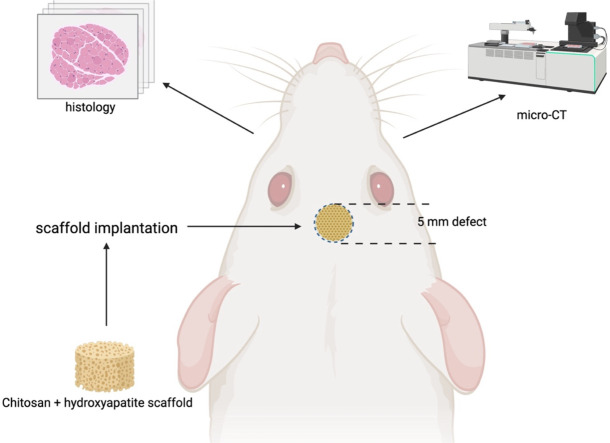
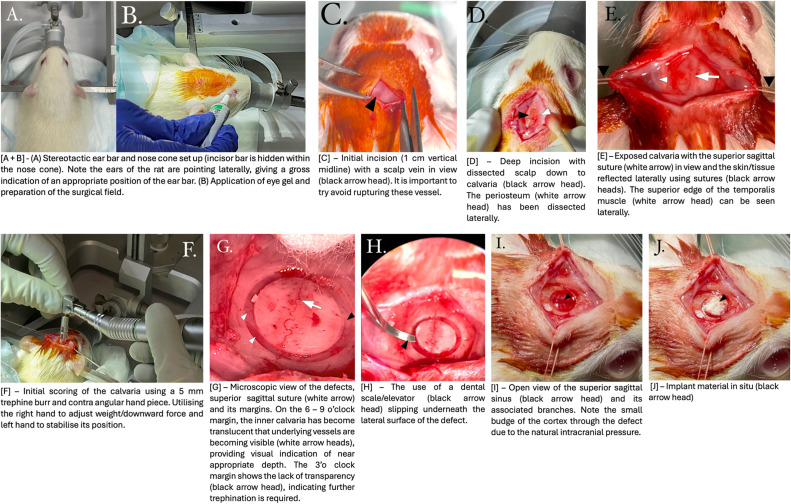
Animal studies have been a key investigation in translating bioregenerative material into human clinical trials. The critical size defect (CSD) in a rat's calvaria is a popular methodology for demonstrating and investigating the regenerative properties of a biomaterial. Various surgical approaches have been discussed in the literature on creating CSD and can vary based on species, age and anatomical location. This paper aims to provide a reliable and reproducible step-by-step guide for creating a critical-size defect on the calvaria of a laboratory rat using trephination. This paper will:•Cover the surgical approaches and management in the pre-, intra- and post-operative phases.•Provide figures to help visually guide readers in carrying out the operation.•Cover basic general anaesthetic issues and resolutions.
动物研究一直是将生物再生材料转化为人体临床试验的关键研究。大鼠颅骨的临界尺寸缺损(CSD)是一种用于证明和研究生物材料再生特性的常用方法。关于创建CSD的各种手术方法在文献中已有讨论,并且可能因物种、年龄和解剖位置而异。本文旨在提供一份可靠且可重复的分步指南,用于使用环钻术在实验大鼠的颅骨上创建临界尺寸缺损。本文将:
•涵盖术前、术中和术后阶段的手术方法及管理。
•提供图表以帮助读者直观地进行手术操作。
•涵盖基本的全身麻醉问题及解决方法。