
慢性阻塞性肺疾病急性加重患者再入院相关危险因素分析
The analysis of risk factors associated with readmission in patients with exacerbation of COPD.
作者信息
Su Haibing, Li Feng, Li Jie
机构信息
Department of Respiratory and Critical Care Medicine, Gong'an County People's Hospital Jingzhou, Hubei, China.
Department of Geriatric Medicine, Gong'an County People's Hospital Jingzhou, Hubei, China.
出版信息
Medicine (Baltimore). 2025 Jun 6;104(23):e41997. doi: 10.1097/MD.0000000000041997.
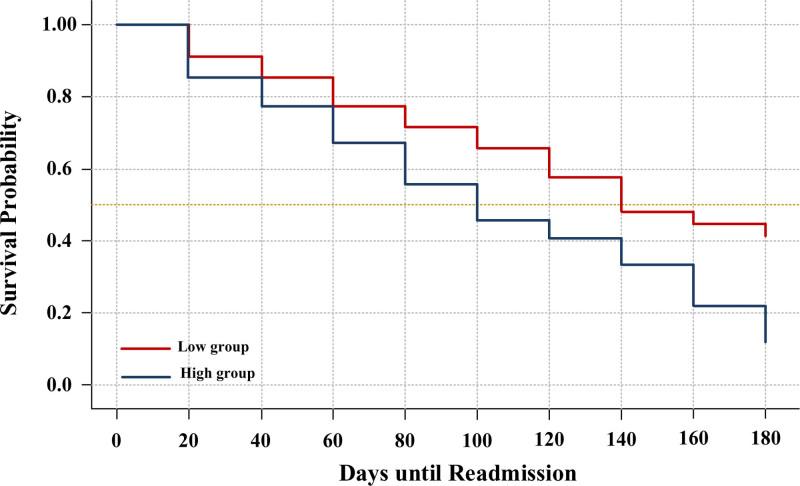
This study aims to evaluate risk factors for readmission within 6 months after acute exacerbation of chronic obstructive pulmonary disease (COPD) and to develop a multifactorial predictive model. A total of 151 patients with acute exacerbation of COPD, admitted to our hospital from October 2021 to December 2023, were included in this retrospective analysis. Data on baseline characteristics, medical history, lung function, lifestyle, comorbidities, inflammatory markers, and treatment adherence were obtained from electronic medical records to identify risk factors associated with readmission. Univariate and multivariate logistic regression analyses were used to identify independent risk factors, construct a predictive model, and assess its predictive efficacy using the receiver operating characteristic (ROC) curve. Patients in the readmission group were older (69.8 ± 9.5 years vs 65.2 ± 8.4 years, P = .048), had a higher proportion of males (76.4% vs 59.5%, P = .032), higher body mass index (25.3 ± 3.8 kg/m2 vs 23.1 ± 3.2 kg/m2, P = .018), more frequent exacerbations (3.2 ± 1.0 episodes vs 1.5 ± 0.8 episodes, P = .009), longer disease duration (12.1 ± 7.3 years vs 8.4 ± 5.7 years, P = .043), and higher GOLD classification (70% in stages III-IV vs 50%, P = .043) and BODE index (5.1 ± 1.4 vs 3.8 ± 1.2, P = .022). Additionally, they had a higher prevalence of cardiovascular comorbidities (55.6% vs 31.6%, P = .015), lower FEV1 levels (45.3 ± 10.1% vs 52.7 ± 8.5%, P = .033), higher levels of C-reactive protein (CRP) (15.2 ± 6.5 mg/L vs 10.4 ± 4.9 mg/L, P = .005), fractional exhaled nitric oxide (FeNO) (32.5 ± 10.4 ppb vs 26.7 ± 8.9 ppb, P = .03), and end-tidal carbon dioxide partial pressure (PetCO2) (40.1 ± 6.3 mm Hg vs 36.2 ± 5.7 mm Hg, P = .028), all of which were significant independent risk factors for readmission. The area under the ROC curve for the multivariate regression model was 0.801, indicating good predictive efficacy. This study evaluates multiple factors affecting readmission risk after acute exacerbation of COPD, highlighting the importance of early identification of high-risk patients and constructing an effective predictive model. Further large-sample, multi-center studies are needed to validate these findings and explore personalized interventions to reduce readmission rates and improve the quality of life for COPD patients.
本研究旨在评估慢性阻塞性肺疾病(COPD)急性加重后6个月内再入院的危险因素,并建立一个多因素预测模型。本回顾性分析纳入了2021年10月至2023年12月期间我院收治的151例COPD急性加重患者。从电子病历中获取了基线特征、病史、肺功能、生活方式、合并症、炎症标志物和治疗依从性等数据,以确定与再入院相关的危险因素。采用单因素和多因素逻辑回归分析来识别独立危险因素、构建预测模型,并使用受试者工作特征(ROC)曲线评估其预测效能。再入院组患者年龄较大(69.8±9.5岁 vs 65.2±8.4岁,P = 0.048),男性比例较高(76.4% vs 59.5%,P = 0.032),体重指数较高(25.3±3.8kg/m² vs 23.1±3.2kg/m²,P = 0.018),急性加重更频繁(3.2±1.0次 vs 1.5±0.8次,P = 0.009),病程更长(12.1±7.3年 vs 8.4±5.7年,P = 0.043),GOLD分级更高(Ⅲ - Ⅳ期为70% vs 50%,P = 0.043)以及BODE指数更高(5.1±1.4 vs 3.8±1.2,P = 0.022)。此外,他们心血管合并症的患病率更高(55.6% vs 31.6%,P = 0.015),第1秒用力呼气容积(FEV1)水平更低(45.3±10.1% vs 52.7±8.5%,P = 0.033),C反应蛋白(CRP)水平更高(15.2±6.5mg/L vs 10.4±4.9mg/L,P = 0.005),呼出一氧化氮分数(FeNO)更高(32.5±10.4ppb vs 26.7±8.9ppb,P = 0.03),以及潮气末二氧化碳分压(PetCO2)更高(40.1±6.3mmHg vs 36.2±5.7mmHg,P = 0.028),所有这些都是再入院的显著独立危险因素。多因素回归模型的ROC曲线下面积为0.801,表明预测效能良好。本研究评估了影响COPD急性加重后再入院风险的多个因素,强调了早期识别高危患者并构建有效预测模型的重要性。需要进一步进行大样本、多中心研究来验证这些发现,并探索个性化干预措施以降低再入院率,提高COPD患者的生活质量。

 Zotero 插件