Abeyawardhane Dinendra L, Sevdalis Spiridon E, Adipietro Kaylin A, Godoy-Ruiz Raquel, Varney Kristen M, Nawaz Izza F, Spittel Alejandro X, Hunter Daniel, Rustandi Richard R, Silin Vitalii I, des Georges Amedee, Cook Mary E, Pozharski Edwin, Weber David J
Department of Biochemistry and Molecular Biology, University of Maryland School of Medicine, Baltimore, MD, USA.
Institute for Bioscience and Biotechnology Research (IBBR), University of Maryland, Rockville, MD, USA.
Commun Biol. 2025 Jun 9;8(1):901. doi: 10.1038/s42003-025-08343-x.
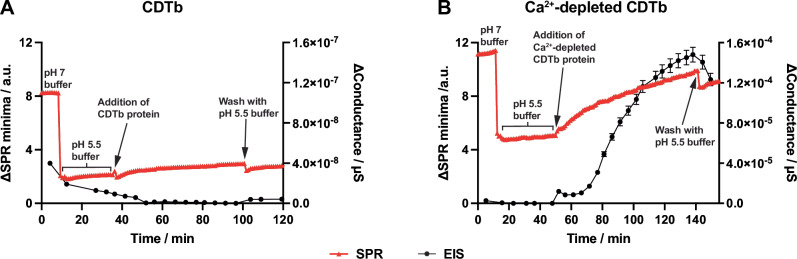
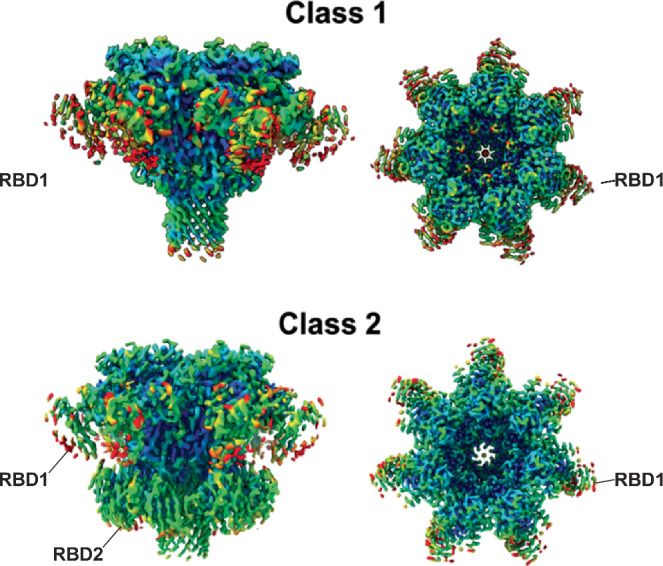
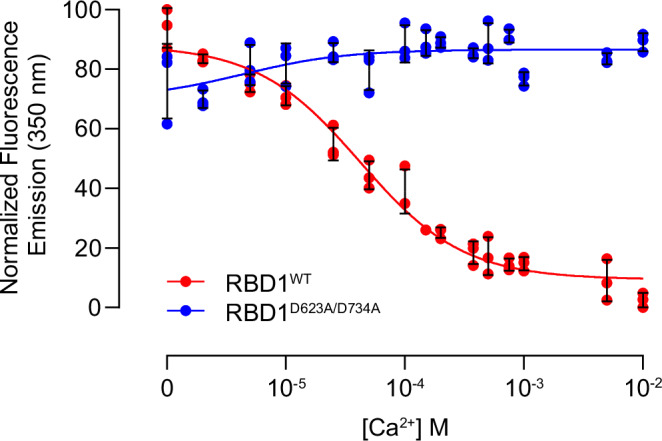
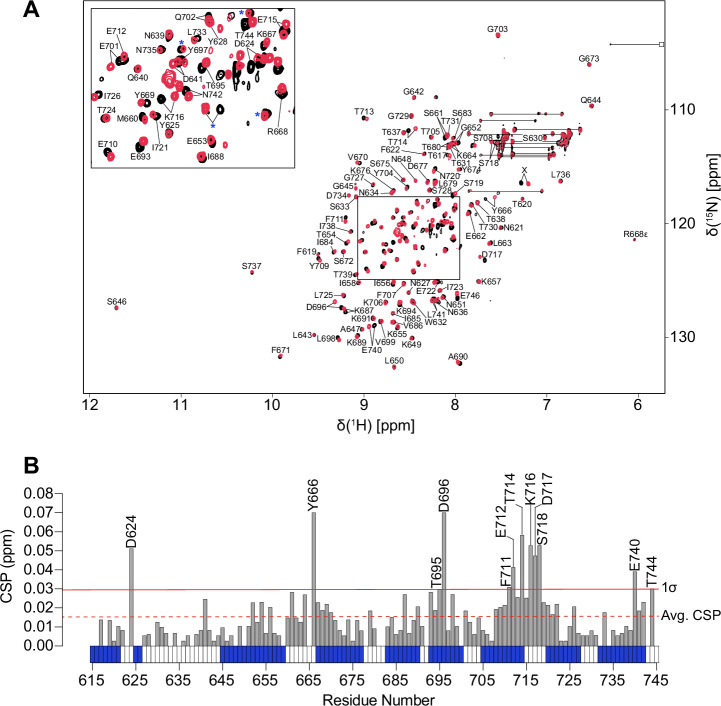
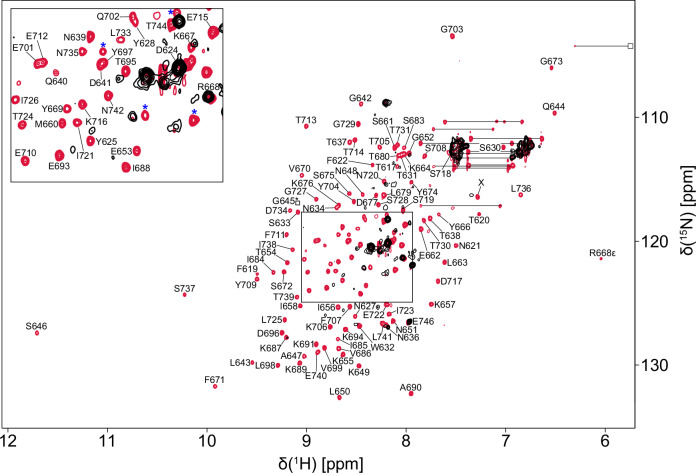
Clostridioides difficile infection (CDI) is one of the five most urgent bacterial threats in the United States. Furthermore, hypervirulent CDI strains express a third toxin termed the C. difficile binary toxin (CDT), and its molecular mechanism for entering host cells is not fully elucidated. Like other AB-type binary toxins, CDT enters host cells via endosomes. Here we show via surface plasmon resonance and electrochemical impedance spectroscopy that the cell-binding component of CDT, termed CDTb, binds and form pores in lipid bilayers in the absence of its enzymatic component, CDTa. This occurs upon lowering free Ca ion concentration, and not by decreasing pH, as found for other binary toxins (i.e., anthrax). Cryogenic electron microscopy (CryoEM), X-ray crystallography, and nuclear magnetic resonance (NMR) studies show that dissociation of Ca from a single site in receptor binding domain 1 (RBD1) of CDTb triggers conformational exchange in CDTb. These and structure/function studies of a Ca-binding double mutant targeting RBD1 (i.e., D623A/D734A) support a model in which dissociation of Ca from RBD1 induces dynamic properties in CDTb that enable it to bind and form pores in lipid bilayers.
艰难梭菌感染(CDI)是美国五大最紧迫的细菌威胁之一。此外,高毒力CDI菌株表达一种名为艰难梭菌二元毒素(CDT)的第三种毒素,其进入宿主细胞的分子机制尚未完全阐明。与其他AB型二元毒素一样,CDT通过内体进入宿主细胞。在这里,我们通过表面等离子体共振和电化学阻抗谱表明,CDT的细胞结合成分CDTb在没有其酶成分CDTa的情况下,能在脂质双层中结合并形成孔。这发生在游离钙离子浓度降低时,而不像其他二元毒素(如炭疽毒素)那样是通过降低pH值。低温电子显微镜(CryoEM)、X射线晶体学和核磁共振(NMR)研究表明,钙离子从CDTb的受体结合域1(RBD1)中的单个位点解离会触发CDTb的构象交换。针对RBD1的钙结合双突变体(即D623A/D734A)的这些以及结构/功能研究支持了一个模型,即钙离子从RBD1解离会诱导CDTb的动态特性,使其能够在脂质双层中结合并形成孔。