Kang Bomi, Lee Sohee, Ko Da-Hyeon, Venkatesh Jelli, Kwon Jin-Kyung, Kim Hyeran, Kang Byoung-Cheorl
Department of Agriculture, Forestry and Bioresources, Research Institute of Agriculture and Life Sciences, Plant Genomics Breeding Institute, College of Agriculture and Life Sciences, Seoul National University, Seoul, 08826, Republic of Korea.
FarmyirehSe Co., Ltd., Seoul, 08826, Republic of Korea.
Plant J. 2025 Jun;122(5):e70257. doi: 10.1111/tpj.70257.
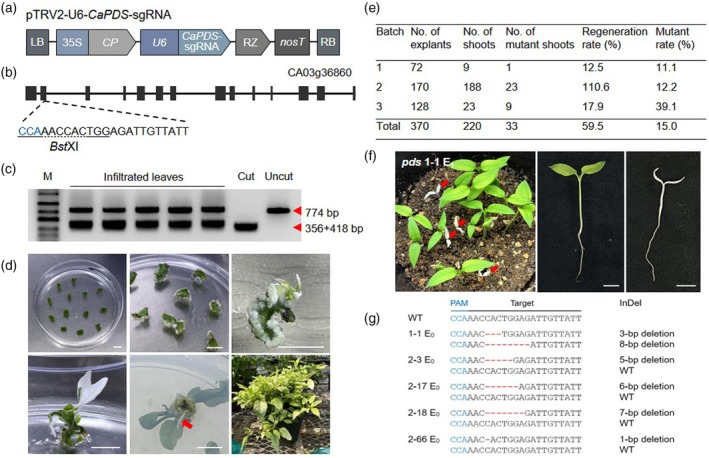
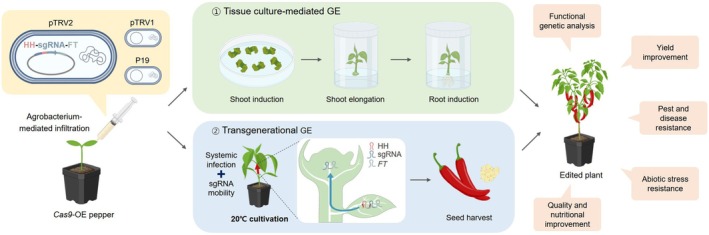
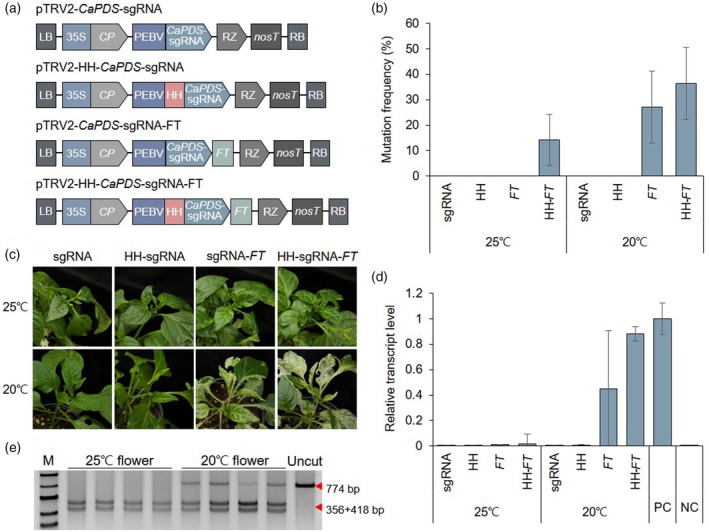
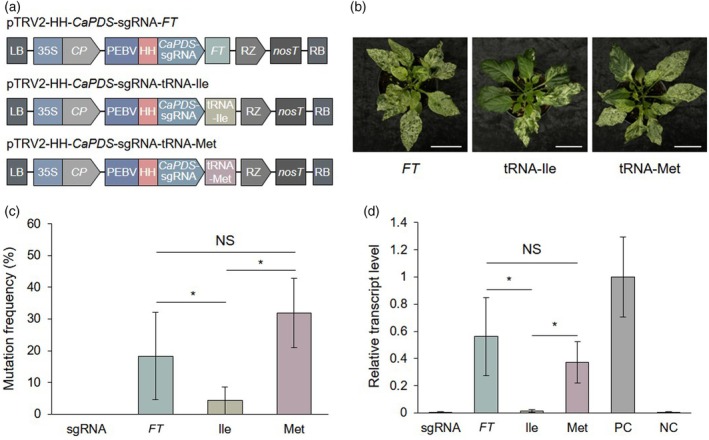
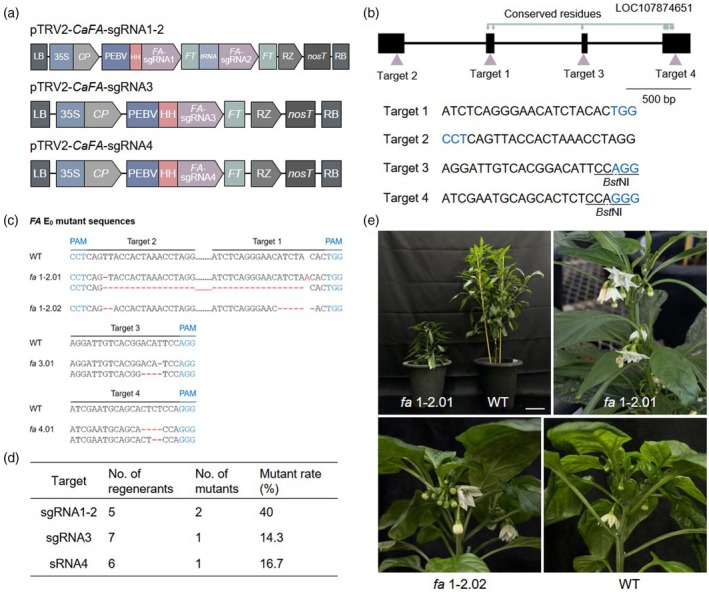
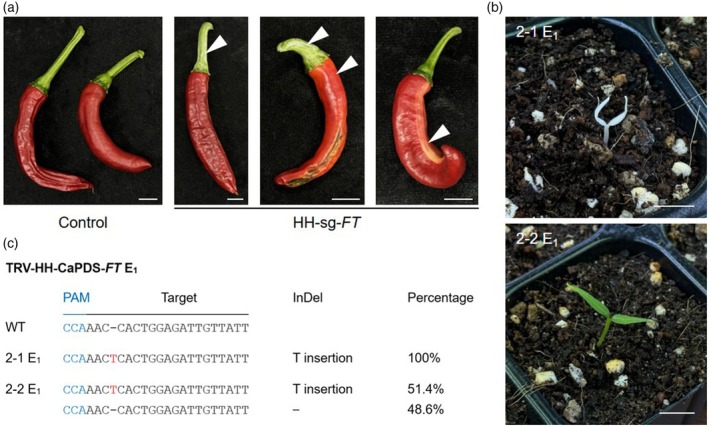
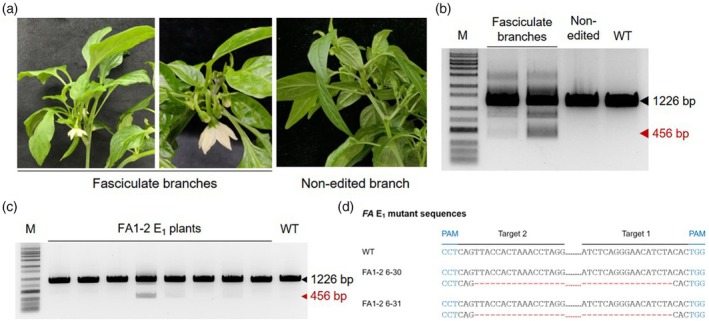
Genome editing using the CRISPR/Cas system enables rapid and efficient plant breeding by directly introducing desired traits into elite lines within a short time frame. However, challenges associated with conventional Agrobacterium tumefaciens-mediated transformation and regeneration have limited gene editing in pepper (Capsicum annuum L.). In this study, we applied and optimized a virus-induced gene editing (VIGE) system to overcome these limitations. We inoculated transgenic pepper seedlings already expressing Cas9 with vectors based on tobacco rattle virus 2 (TRV2) expressing single guide RNAs (sgRNAs) targeting Phytoene desaturase (PDS); shoots regenerated from inoculated cotyledons displayed photobleaching phenotypes. To promote sgRNA mobility and maintain its integrity, we modified the pTRV2-sgRNA vector by incorporating a self-cleaving hammerhead ribozyme (HH) sequence to produce an intact sgRNA fused to part of the mobile RNA of FLOWERING LOCUS T. Additionally, we tested alternative mobile elements, such as tRNA and tRNA. Furthermore, we cultivated plants at the low temperature of 20°C following TRV inoculation to increase TRV persistence and spread. These optimizations, including vector modifications and cultivation conditions, resulted in a systemic editing efficiency of 36.3%, as evidenced by systemic leaves showing photobleaching phenotypes. We determined that 8.5% of progeny from plants inoculated with the pTRV-HH-CaPDS-sgRNA-FT construct were mutated at the CaPDS locus. In addition, we used our VIGE system to successfully edit FASCICULATE, producing mutants whose inflorescences showed a fasciculate phenotype. Direct inoculation with a TRV-based vector expressing a mobile sgRNA to bypass tissue culture, therefore, offers an effective tool for molecular studies and breeding in pepper.
利用CRISPR/Cas系统进行基因组编辑,能够通过在短时间内将所需性状直接导入优良品系,实现快速高效的植物育种。然而,与传统的根癌农杆菌介导的转化和再生相关的挑战限制了辣椒(Capsicum annuum L.)中的基因编辑。在本研究中,我们应用并优化了病毒诱导基因编辑(VIGE)系统以克服这些限制。我们用基于烟草脆裂病毒2(TRV2)的载体接种已表达Cas9的转基因辣椒幼苗,该载体表达靶向八氢番茄红素去饱和酶(PDS)的单向导RNA(sgRNA);从接种的子叶再生的芽表现出光漂白表型。为了促进sgRNA的移动性并保持其完整性,我们通过并入自我切割的锤头状核酶(HH)序列来修饰pTRV2-sgRNA载体,以产生与开花位点T的部分移动RNA融合的完整sgRNA。此外,我们测试了替代的移动元件,如tRNA和tRNA。此外,我们在TRV接种后于20°C的低温下培养植物,以增加TRV的持久性和传播。这些优化,包括载体修饰和培养条件,导致系统编辑效率达到36.3%,表现为系统叶片呈现光漂白表型。我们确定,接种pTRV-HH-CaPDS-sgRNA-FT构建体的植物后代中有8.5%在CaPDS位点发生了突变。此外,我们使用我们的VIGE系统成功编辑了FASCICULATE,产生了花序呈现簇生表型的突变体。因此,直接接种表达移动sgRNA的基于TRV的载体以绕过组织培养,为辣椒的分子研究和育种提供了一种有效的工具。