Zhang Pengwei, Zhang Haotong, Wang Angyang
Xi'an University of Technology, Xi'an, China.
Arch Public Health. 2025 Jun 11;83(1):148. doi: 10.1186/s13690-025-01620-5.
This study seeks to examine the impact of hospital organizational behavior on Physicians' Patient-centered care and aims to offer innovative insights and strategies for enhancing the quality of healthcare services.
A conceptual model was developed based on organizational behavior theory. Data were collected via questionnaires from 10 large public hospitals in China, encompassing eight independent variables, including hospital organizational culture, change behavior, and motivational behavior, as well as moderating variables like physician title and control variables such as personality traits. SPSS software was used for descriptive statistics, correlation analysis, covariance testing, and multiple linear regression analysis.
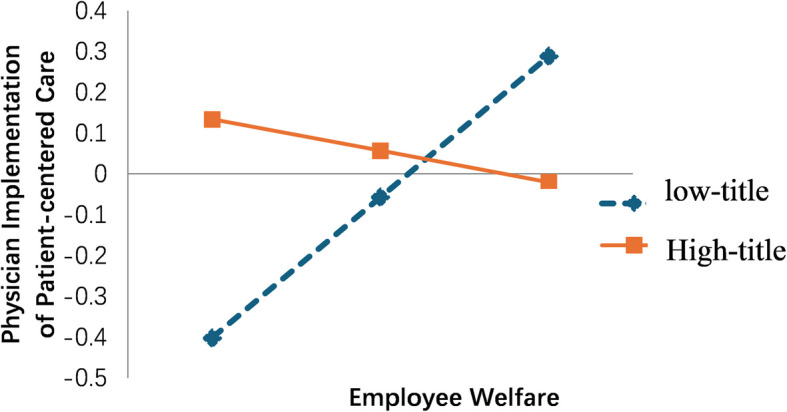
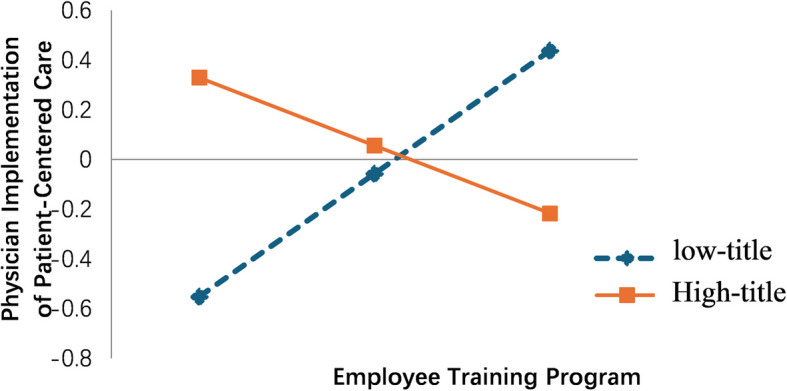
(1) The study of the 10 large public hospitals revealed a coexistence of four types of organizational cultures. Support-oriented and innovation-oriented cultures were dominant, followed by rule-oriented cultures, while goal-oriented cultures scored relatively low. Additionally, these hospitals showed effective organizational change behaviors in technology and resource optimization, as well as inter-professional teamwork. Incentives related to employee welfare systems and development programs also demonstrated high implementation effectiveness. (2) Supportive and innovation-oriented hospital cultures positively influence Physicians' Patient-centered care, while goal-oriented cultures negatively impact Physicians' Patient-centered care. (3) In public hospitals, organizational change behaviors such as technology and resource optimization, along with inter-professional teamwork, positively influence Physicians' Patient-centered care. Additionally, organizational incentives like employee welfare systems and training programs enhance Physicians' Patient-centered care. (4) The moderating variable of physician title negatively affects the relationship between the employee welfare system and Physicians' Patient-centered care, as well as the relationship between the staff development program and Physicians' Patient-centered care.
Hospital organizational behavior significantly impacts Physicians' Patient-centered care. Supportive and innovative cultures, effective change behaviors, and incentives enhance Physicians' Patient-centered care. Addressing limited resources and high demand is essential for optimizing healthcare service quality.
本研究旨在探讨医院组织行为对医生以患者为中心的医疗服务的影响,并旨在提供创新见解和策略以提高医疗服务质量。
基于组织行为理论构建了一个概念模型。通过问卷调查从中国10家大型公立医院收集数据,涵盖8个自变量,包括医院组织文化、变革行为和激励行为,以及诸如医生职称等调节变量和诸如人格特质等控制变量。使用SPSS软件进行描述性统计、相关性分析、协方差检验和多元线性回归分析。
(1)对10家大型公立医院的研究发现存在四种组织文化类型。支持导向型和创新导向型文化占主导,其次是规则导向型文化,而目标导向型文化得分相对较低。此外,这些医院在技术和资源优化以及跨专业团队合作方面表现出有效的组织变革行为。与员工福利制度和发展计划相关的激励措施也显示出较高的实施效果。(2)支持导向型和创新导向型医院文化对医生以患者为中心的医疗服务有积极影响,而目标导向型文化对医生以患者为中心的医疗服务有负面影响。(3)在公立医院中,技术和资源优化等组织变革行为以及跨专业团队合作对医生以患者为中心的医疗服务有积极影响。此外,员工福利制度和培训计划等组织激励措施可增强医生以患者为中心的医疗服务。(4)医生职称这一调节变量对员工福利制度与医生以患者为中心的医疗服务之间的关系以及员工发展计划与医生以患者为中心的医疗服务之间的关系有负面影响。
医院组织行为对医生以患者为中心的医疗服务有显著影响。支持性和创新性文化、有效的变革行为和激励措施可增强医生以患者为中心的医疗服务。解决资源有限和需求高的问题对于优化医疗服务质量至关重要。