Purdy Stephen C, Matlin Kate, Alderman Christopher, Baldwin Amber, Shrivastava Natasha, Dutta Somnath, Webb Kristofor J, Wolin Arthur, Boulton Dillon P, Kapali Jyoti, Landua John D, Lewis Michael T, Caino M Cecilia, Costello James C, Old William, Wang Xiang, Zhao Rui, Ford Heide L, Mukherjee Neelanjan
Department of Pharmacology, University of Colorado Anschutz Medical Campus (AMC), Aurora, CO, USA.
Cancer Biology Program, University of Colorado Anschutz Medical Campus (AMC), Aurora, CO, USA.
bioRxiv. 2025 May 29:2025.05.29.656739. doi: 10.1101/2025.05.29.656739.
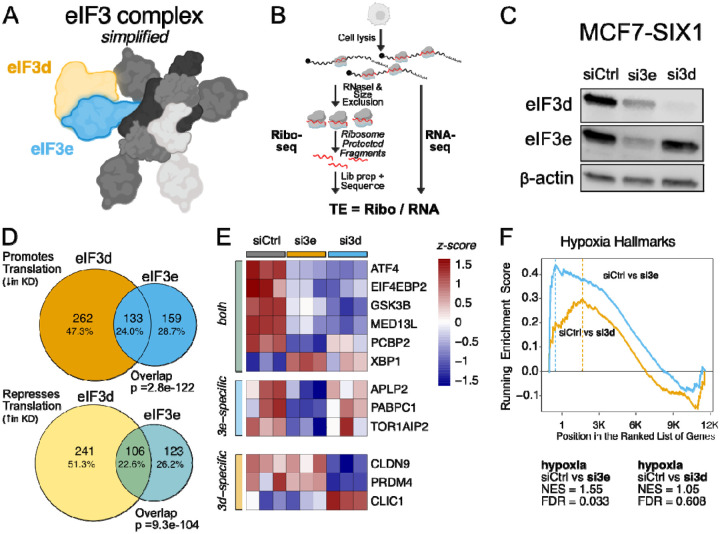
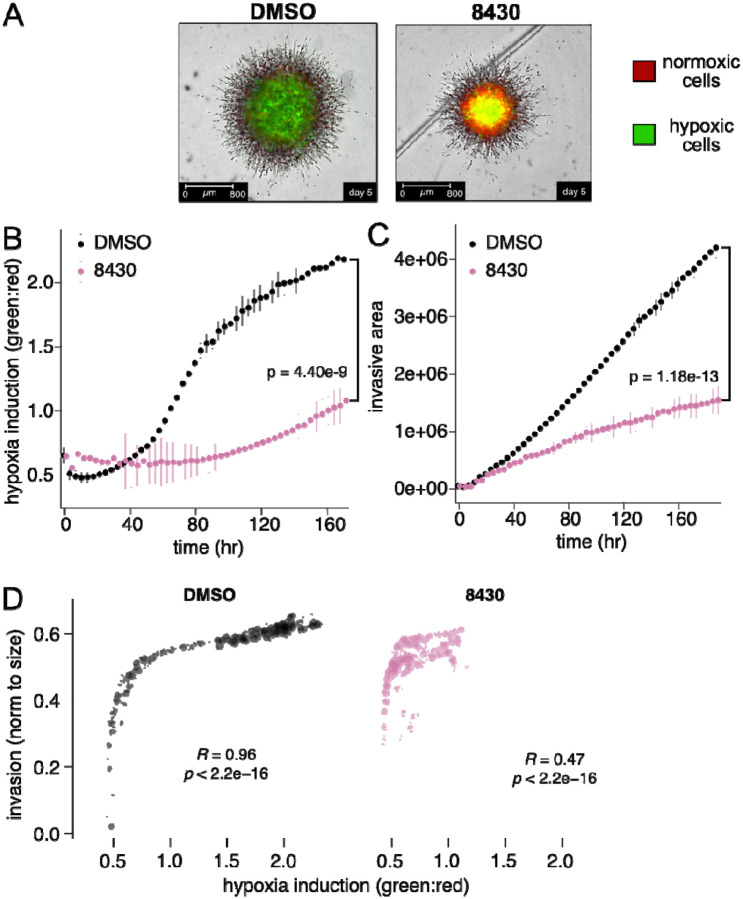
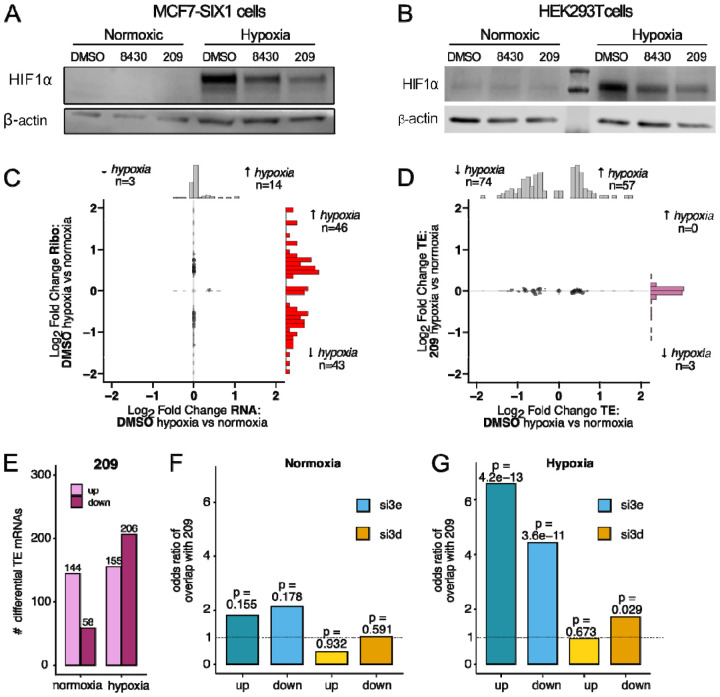
Exposure to hypoxia is linked to increased cellular plasticity and enhanced metastasis; effects which are primarily attributed to the transcriptional activation of large gene programs downstream of hypoxia inducible factors (HIFs). However, translational effects in hypoxia, that likely precede transcriptional effects, have remained largely unexplored. Using ribosome-profiling, we uncovered a selective translational response in acute hypoxia that is eIF3d/eIF3e-dependent and controls downstream hypoxic responses including HIF1a accumulation and cellular invasion. We further demonstrated that eIF3e copy number and an eIF3e-expression signature are associated with worsened outcomes for breast cancer patients. Finally, we identified a class of novel small molecules that target eIF3e specifically, reducing the translational response to hypoxia and to ER stress, another stressor that is dependent on eIF3d/eIF3e-mediated translation. Our data uncover critical functions for eIF3d/eIF3e in the hypoxic response and identify a potential means to inhibit stress-induced translation, and potentially plasticity and metastasis, mediated by eIF3e.
暴露于低氧环境与细胞可塑性增加和转移增强有关;这些效应主要归因于低氧诱导因子(HIFs)下游大型基因程序的转录激活。然而,低氧环境下可能先于转录效应的翻译效应在很大程度上仍未得到探索。通过核糖体分析,我们发现急性低氧环境下存在一种选择性翻译反应,该反应依赖于eIF3d/eIF3e,并控制包括HIF1a积累和细胞侵袭在内的下游低氧反应。我们进一步证明,eIF3e拷贝数和eIF3e表达特征与乳腺癌患者较差的预后相关。最后,我们鉴定出一类新型小分子,它们特异性靶向eIF3e,减少对低氧和内质网应激(另一种依赖于eIF3d/eIF3e介导翻译的应激源)的翻译反应。我们的数据揭示了eIF3d/eIF3e在低氧反应中的关键功能,并确定了一种潜在手段来抑制由eIF3e介导的应激诱导翻译,以及潜在的可塑性和转移。