Zhang Zhenyu, Liu Lulu, Ti Huibo, Chen Minnan, Chen Yuechun, Du Deyan, Zhan Wenjing, Wang Tongtong, Wu Xian, Wu Junjie, Mao Dong, Yuan Zhengdong, Ruan Jingjing, Rong Genxiang, Yuan Feng-Lai
Institute of Integrated Chinese and Western Medicine, Affiliated Hospital of Jiangnan University, Jiangsu, China.
Biomedical engineering facility of National Infrastructures for Translational Medicine, State Key Laboratory of Complex Severe and Rare Diseases in Peking Union Medical College Hospital, Chinese Academy of Medical Science and Peking Union Medical College, Beijing, China.
Bone Res. 2025 Jun 12;13(1):61. doi: 10.1038/s41413-025-00430-3.
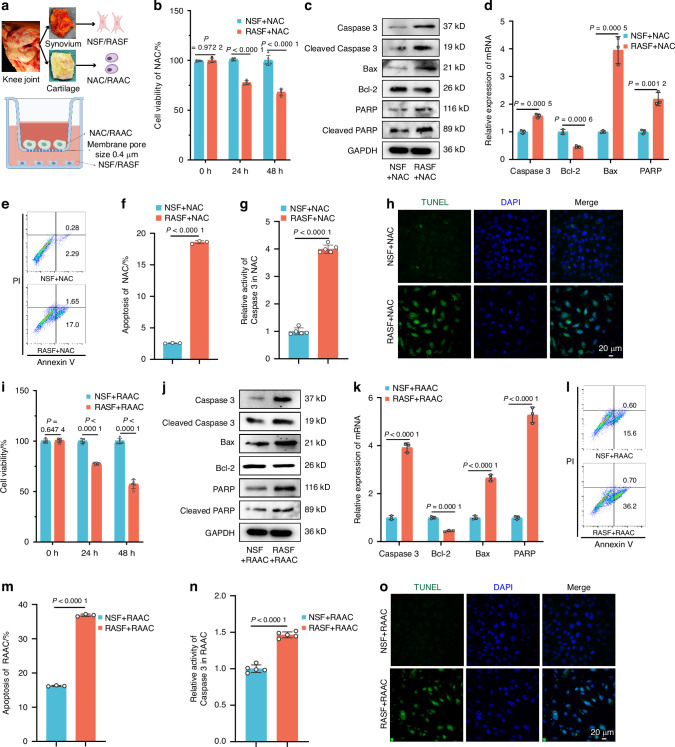
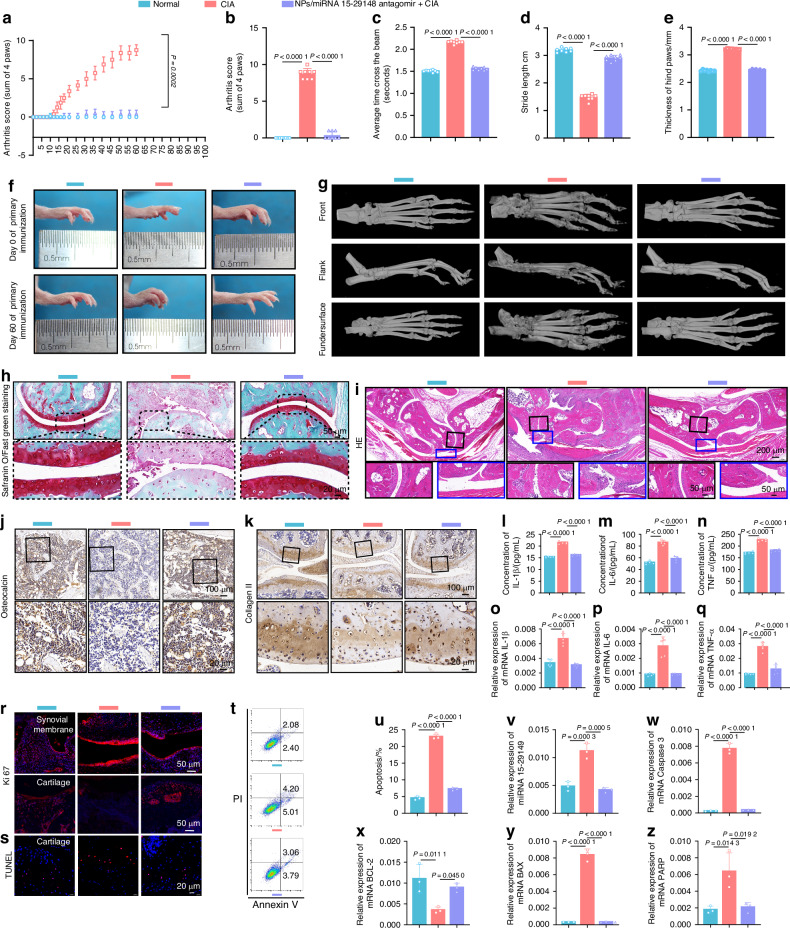
Rheumatoid arthritis (RA) is a systemic autoimmune disease in which synovial fibroblasts (SFs) maintain chronic inflammation by secreting proinflammatory mediators, leading to joint destruction. While the role of proinflammatory mediators in this process is well-established, the contribution of non-inflammatory regulators in SFs to joint pathology remains poorly understood. In this study, we investigated the non-inflammatory role of SFs in RA using a co-culture model, and found that SFs from RA patients promote apoptosis of human chondrocytes. Mechanistic investigations reveal that SFs can secrete small extracellular vesicles (sEVs), which are taken up by chondrocytes and induce chondrocyte apoptosis in both normal chondrocytes and chondrocytes from patients with RA. sEV-derived miRNA 15-29148 are identified as key signaling molecules mediating the apoptosis effects of chondrocytes. Further studies reveal that SF-derived miRNA 15-29148 targeting CIAPIN1 results in increased chondrocyte apoptosis. We further demonstrate that SF-derived miRNA 15-29148 is transferred to chondrocytes, exacerbating cartilage damage in vivo. Moreover, chondrocyte-specific aptamer-modified polyamidoamine nanoparticles not only ameliorated RA but also prevented its onset. This study suggests that, in RA, the secretion of specific sEV-miRNAs from SFs plays a crucial role in promoting chondrocyte apoptosis, potentially through non-inflammatory regulation, and that sEV-miRNA inhibition in SFs may represent an early preventive treatment strategy for cartilage degradation in RA.
类风湿性关节炎(RA)是一种全身性自身免疫性疾病,其中滑膜成纤维细胞(SFs)通过分泌促炎介质维持慢性炎症,导致关节破坏。虽然促炎介质在这一过程中的作用已得到充分证实,但SFs中非炎症调节因子对关节病理的贡献仍知之甚少。在本研究中,我们使用共培养模型研究了SFs在RA中的非炎症作用,发现RA患者的SFs可促进人软骨细胞凋亡。机制研究表明,SFs可分泌小细胞外囊泡(sEVs),软骨细胞会摄取这些囊泡,并在正常软骨细胞和RA患者的软骨细胞中诱导软骨细胞凋亡。源自sEV的miRNA 15-29148被确定为介导软骨细胞凋亡作用的关键信号分子。进一步研究表明,靶向CIAPIN1的源自SF的miRNA 15-29148会导致软骨细胞凋亡增加。我们进一步证明,源自SF的miRNA 15-29148会转移至软骨细胞,加剧体内软骨损伤。此外,软骨细胞特异性适配体修饰的聚酰胺胺纳米颗粒不仅改善了RA,还预防了其发病。本研究表明,在RA中,SFs分泌特定的sEV-miRNAs可能通过非炎症调节在促进软骨细胞凋亡中起关键作用,并且抑制SFs中的sEV-miRNA可能代表一种针对RA中软骨降解的早期预防性治疗策略。