Sun Doudou, Wei Yijun, Han Chunyan, Li Xiaopeng, Zhang Zhen, Wang Shiwei, Zhou Zijian, Gao Jingyang, Chen Jiafa, Wu Jianyu
College of Life Sciences, Henan Agricultural University, Zhengzhou 450046, China.
Postdoctoral Station of Crop Science, Henan Agricultural University, Zhengzhou 450046, China.
Plants (Basel). 2025 May 25;14(11):1614. doi: 10.3390/plants14111614.
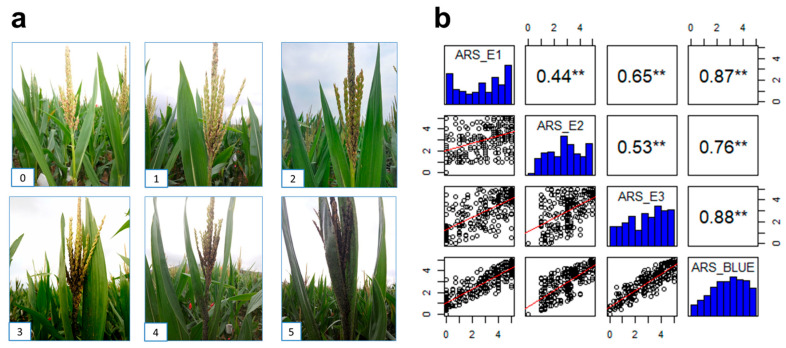
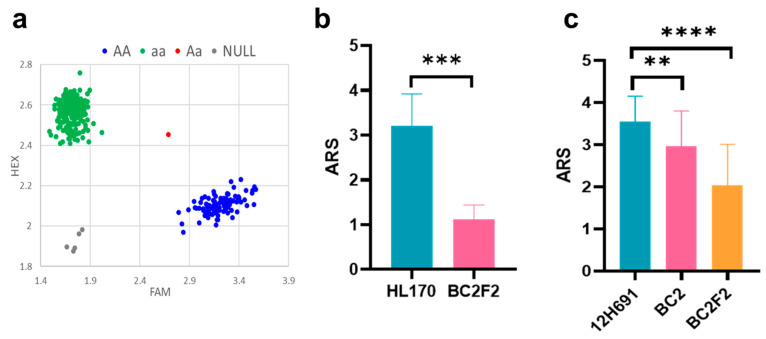
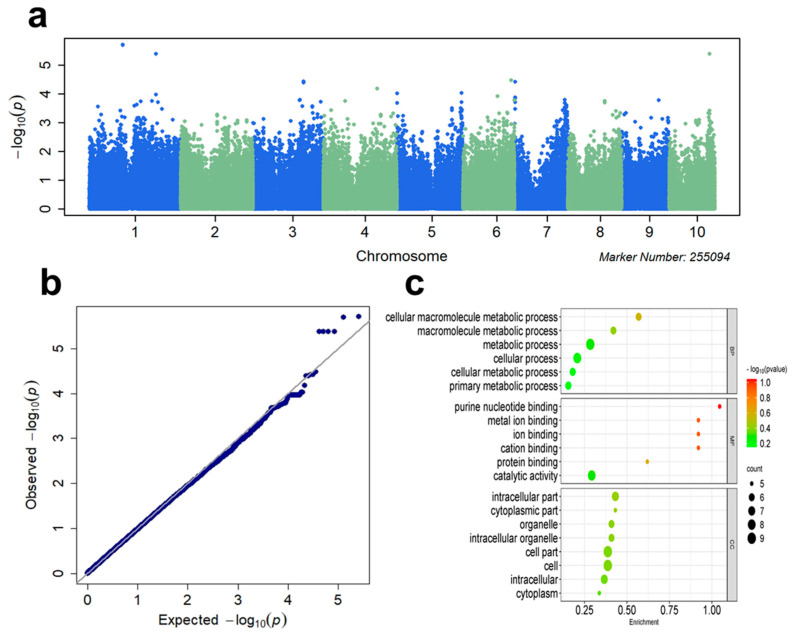
Maize is a crucial food crop and industrial raw material, significantly contributing to national food security. Aphids are one of the most prevalent and destructive pests in maize production, necessitating the exploration of pest-resistant germplasm and the development of resistant varieties as the most fundamental and effective strategy for mitigating aphid-induced damage. This study established an aphid resistance evaluation system and identified 17 elite resistant inbred lines through multi-year screening. A genome-wide association study (GWAS) revealed 22 significant single-nucleotide polymorphisms (SNPs) associated with aphid resistance, including genes involved in benzoxazinoid (Bx) biosynthesis (such as ), insect resistance-related transcription factors (such as ), plant lectins, and other resistance pathways. RNA-seq analysis of the samples before and after aphid infestation detected 1037 differentially expressed genes (DEGs) in response to aphid infestation, with KEGG enrichment highlighting benzoxazinoid biosynthesis and starch/sucrose metabolism as primary response pathways. Integrating GWAS and RNA-seq results revealed the presence of several benzoxazinoid synthesis-related genes on the short arm of chromosome 4 (Chr4S). FMqRrm1, a Kompetitive Allele-Specific PCR (KASP) marker, was derived from the Chr4S region. We subsequently utilized this marker for marker-assisted selection (MAS) to introgress the Chr4S region from the aphid-resistant inbred line into two aphid-susceptible inbred lines. The results demonstrated that the Chr4S favorable allele significantly reduced aphid occurrence by 1.5 to 2.1 grades. This study provides a critical theoretical foundation and practical guidance for understanding the molecular mechanism of aphid resistance in maize and molecular breeding for aphid resistance.
玉米是一种重要的粮食作物和工业原料,对国家粮食安全有重大贡献。蚜虫是玉米生产中最常见且具破坏性的害虫之一,因此探索抗虫种质并培育抗性品种是减轻蚜虫危害最基本、有效的策略。本研究建立了蚜虫抗性评价体系,并通过多年筛选鉴定出17个优良抗性自交系。全基因组关联研究(GWAS)揭示了22个与蚜虫抗性相关的显著单核苷酸多态性(SNP),包括参与苯并恶嗪类化合物(Bx)生物合成的基因(如 )、抗虫相关转录因子(如 )、植物凝集素及其他抗性途径。对蚜虫侵染前后的样本进行RNA测序分析,检测到1037个响应蚜虫侵染的差异表达基因(DEG),KEGG富集分析表明苯并恶嗪类生物合成和淀粉/蔗糖代谢是主要响应途径。整合GWAS和RNA-seq结果发现,4号染色体短臂(Chr4S)上存在几个与苯并恶嗪类合成相关的基因。竞争性等位基因特异性PCR(KASP)标记FMqRrm1源自Chr4S区域。随后,我们利用该标记进行标记辅助选择(MAS),将抗蚜虫自交系的Chr4S区域导入两个感蚜虫自交系。结果表明,Chr4S有利等位基因使蚜虫发生等级显著降低1.5至2.1级。本研究为理解玉米抗蚜虫分子机制及抗蚜虫分子育种提供了关键的理论基础和实践指导。