Liu Jingbao, Zhang Linna, Huang Lu, Yang Tianxiao, Ma Juan, Yu Ting, Zhu Weihong, Zhang Zhanhui, Tang Jihua
Institute of Cereal Crops, Henan Academy of Agricultural Sciences, Zhengzhou 450002, China.
Plant Molecular and Cellular Biology Program, University of Florida, Gainesville, FL 32611, USA.
Plants (Basel). 2022 Mar 1;11(5):677. doi: 10.3390/plants11050677.
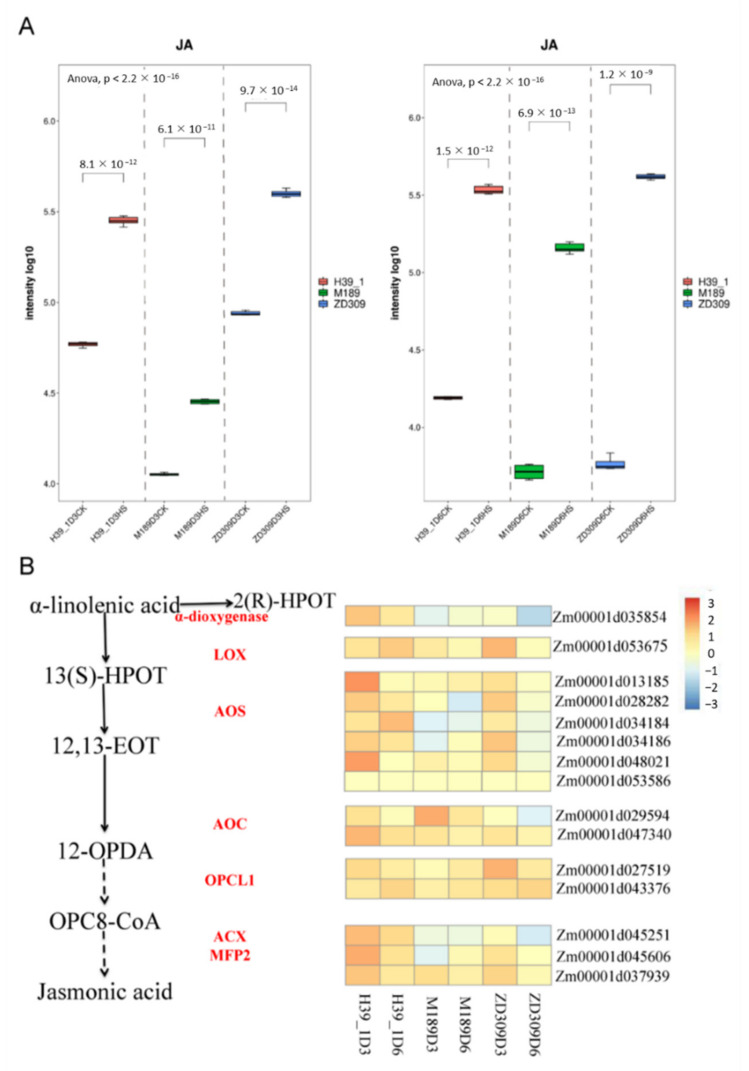
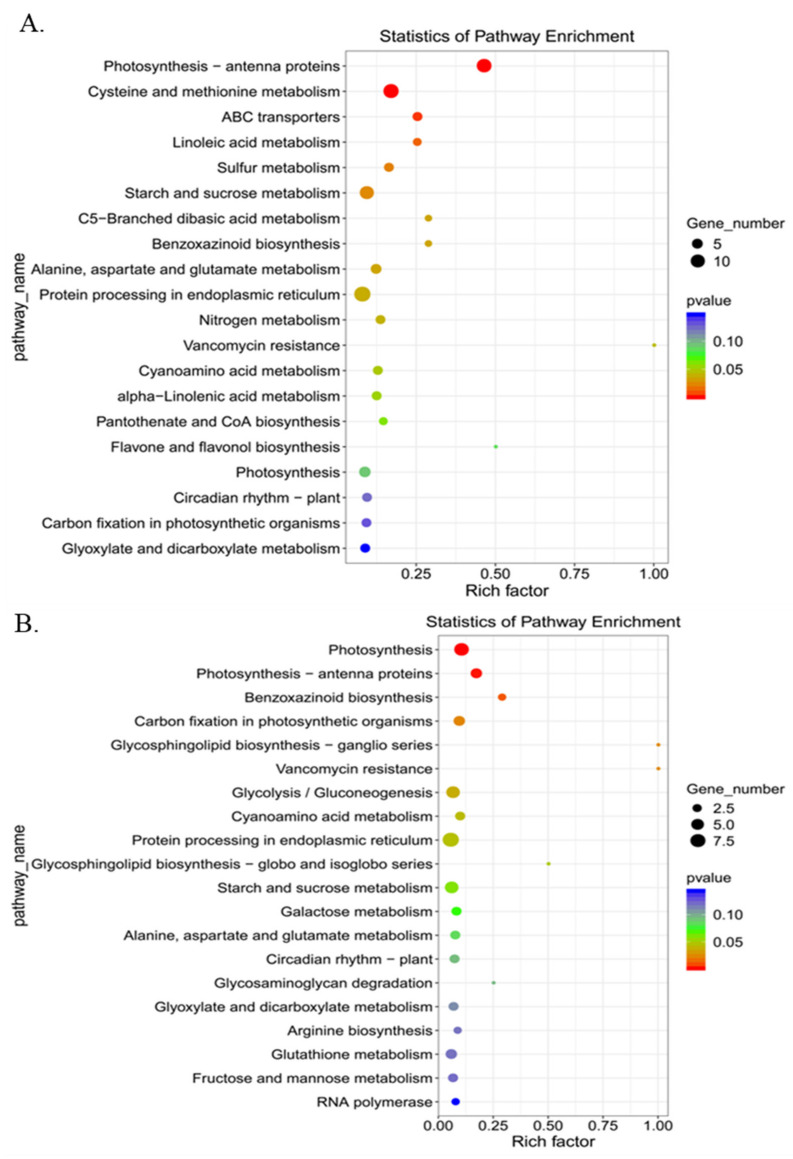
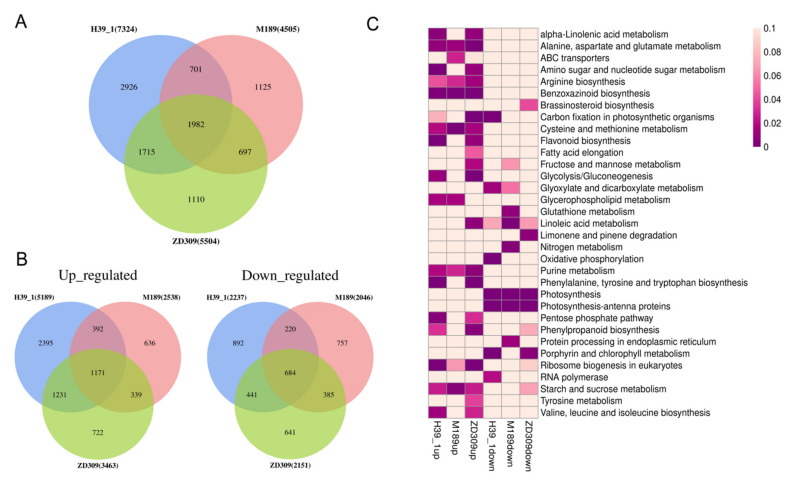
Maize is an important cereal crop but is sensitive to heat stress, which significantly restricts its grain yield. To explore the molecular mechanism of maize heat tolerance, a heat-tolerant hybrid ZD309 and its parental lines (H39_1 and M189) were subjected to heat stress, followed by transcriptomic and metabolomic analyses. After six-day-heat treatment, the growth of ZD309 and its parental lines were suppressed, showing dwarf stature and rolled leaf compared with the control plants. ZD309 exhibited vigorous growth; however, M189 displayed superior heat tolerance. By transcriptomic and metabolomic analysis, hundreds to thousands of differentially expressed genes (DEGs) and metabolites (DEMs) were identified. Notably, the female parent H39 shares more DEGs and DEMs with the hybrid ZD309, indicating more genetic gain derived from the female instead of the male. A total of 299 heat shock genes detected among three genotypes were greatly aggregated in sugar transmembrane transporter activity, plasma membrane, photosynthesis, protein processing in the endoplasmic reticulum, cysteine, and methionine metabolism. A total of 150 heat-responsive metabolites detected among three genotypes were highly accumulated, including jasmonic acid, amino acids, sugar, flavonoids, coumarin, and organic acids. Integrating transcriptomic and metabolomic assays revealed that plant hormone signal transduction, cysteine, and methionine metabolism, and α-linolenic acid metabolism play crucial roles in heat tolerance in maize. Our research will be facilitated to identify essential heat tolerance genes in maize, thereby contributing to breeding heat resistance maize varieties.
玉米是一种重要的谷类作物,但对热胁迫敏感,这显著限制了其籽粒产量。为了探究玉米耐热性的分子机制,对一个耐热杂交种ZD309及其亲本系(H39_1和M189)进行热胁迫处理,随后进行转录组和代谢组分析。经过6天的热处理后,ZD309及其亲本系的生长受到抑制,与对照植株相比表现出植株矮小和叶片卷曲。ZD309生长旺盛;然而,M189表现出更强的耐热性。通过转录组和代谢组分析,鉴定出数百到数千个差异表达基因(DEGs)和差异代谢物(DEMs)。值得注意的是,母本H39与杂交种ZD309共享更多的DEGs和DEMs,表明更多的遗传增益来自母本而非父本。在三种基因型中检测到的299个热休克基因在糖跨膜转运蛋白活性、质膜、光合作用、内质网中的蛋白质加工、半胱氨酸和蛋氨酸代谢中大量聚集。在三种基因型中检测到的150种热响应代谢物高度积累,包括茉莉酸、氨基酸、糖、黄酮类化合物、香豆素和有机酸。整合转录组和代谢组分析表明,植物激素信号转导、半胱氨酸和蛋氨酸代谢以及α-亚麻酸代谢在玉米耐热性中起关键作用。我们的研究将有助于鉴定玉米中重要的耐热基因,从而为培育耐热玉米品种做出贡献。