
机械研磨法制备的四砷二硒化物AsSe合金纳米结构的微观结构与热物理特性
Microstructure and Thermophysical Characterization of Tetra-Arsenic Biselenide AsSe Alloy Nanostructured by Mechanical Milling.
作者信息
Shpotyuk Oleh, Kozdras Andrzej, Shpotyuk Yaroslav, Yang Guang, Lukáčová Bujňáková Zdenka
机构信息
Faculty of Mathematics and Natural Sciences, Jan Dlugosz University in Czestochowa, 13/15, al. Armii Krajowej, 42-200 Czestochowa, Poland.
O.G. Vlokh Institute of Physical Optics, Ivan Franco National University of Lviv, 23, Dragomanov Str., 79005 Lviv, Ukraine.
出版信息
Materials (Basel). 2025 May 22;18(11):2422. doi: 10.3390/ma18112422.
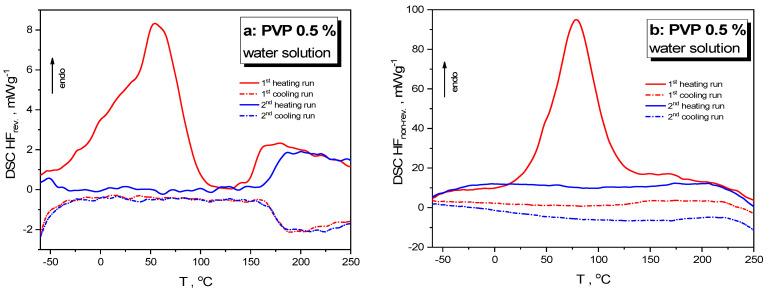
Nanomilling-driven effects on polyamorphic transitions are examined in tetra-arsenic biselenide AsSe alloy, which is at the boundary of the glass-forming region in the As-Se system, using multifrequency temperature-modulated DSC-TOPEM technique, supported by X-ray powder diffraction (XRPD) and micro-Raman spectroscopy analysis. As shown by XRPD analysis, this alloy reveals a glassy-crystalline nature due to rhombohedral As and cubic AsO (arsenolite) inclusions, which especially grew after milling in a PVP (polyvinylpyrrolidone) water solution. At the medium-range structure level, nanomilling-driven changes are revealed as the disruption of intermediate-range ordering and enhancement of extended-range ordering. The generalized molecular-to-network amorphization trend in this alloy is confirmed by the microstructure response revealed in the broadened and obscured features in micro-Raman scattering spectra collected for nanomilled specimens. Thermophysical heat-transfer phenomena are defined by molecular-to-network polyamorphic transformations activated under nanomilling. The domination of thioarsenide-type AsSe entities in this alloy results in an abnormous nanomilling-driven network-enhanced glass transition temperature increase. The nanomilled alloys become notably stressed owing to the destruction of molecular thioarsenide and incorporation of their remnants into the newly polymerized arsenoselenide network. This effect is more pronounced in AsSe alloy subjected to dry nanomilling, while it is partly counterbalanced when this alloy is additionally subjected to wet milling in a PVP water solution, accompanied by the stabilization of the AsSe/PVP nanocomposite.
利用多频温度调制DSC-TOPEM技术,并辅以X射线粉末衍射(XRPD)和显微拉曼光谱分析,研究了纳米研磨对四砷化二硒(AsSe)合金多晶型转变的影响。该合金处于As-Se系统玻璃形成区域的边界。XRPD分析表明,由于菱形砷和立方砷(毒石)夹杂物的存在,这种合金呈现出玻璃态-晶态的性质,尤其是在聚乙烯吡咯烷酮(PVP)水溶液中研磨后,夹杂物会特别生长。在中程结构水平上,纳米研磨驱动的变化表现为中程有序的破坏和长程有序的增强。通过对纳米研磨样品收集的显微拉曼散射光谱中变宽和模糊的特征所揭示的微观结构响应,证实了该合金中普遍存在的分子到网络的非晶化趋势。热物理传热现象由纳米研磨激活的分子到网络的多晶型转变所定义。该合金中硫代砷化物型AsSe实体的主导地位导致了纳米研磨驱动的网络增强玻璃化转变温度异常升高。由于分子硫代砷化物的破坏以及其残余物并入新聚合的砷硒化物网络,纳米研磨后的合金明显受到应力作用。这种效应在干式纳米研磨的AsSe合金中更为明显,而当该合金在PVP水溶液中进行额外的湿式研磨时,这种效应会部分被抵消,同时伴随着AsSe/PVP纳米复合材料的稳定化。


 Zotero 插件