Muratkhan Marat, Zhainagul Kakimova, Svetlana Kamanova, Toimbayeva Dana, Temirova Indira, Tazhina Sayagul, Khamitova Dina, Saule Saduakhasova, Tultabayeva Tamara, Bulashev Berdibek, Ospankulova Gulnazym
Department of Food Technology and Processing Products, Technical Faculty, Saken Seifullin Kazakh Agrotechnical Research University, Zhenis Avenue, 62, Astana 010011, Kazakhstan.
Department of Food Production Technology and Biotechnology, The Engineering-Technological Faculty, Shakarim University, Glinka 20A, Semey 071412, Kazakhstan.
Foods. 2025 Jun 5;14(11):2001. doi: 10.3390/foods14112001.
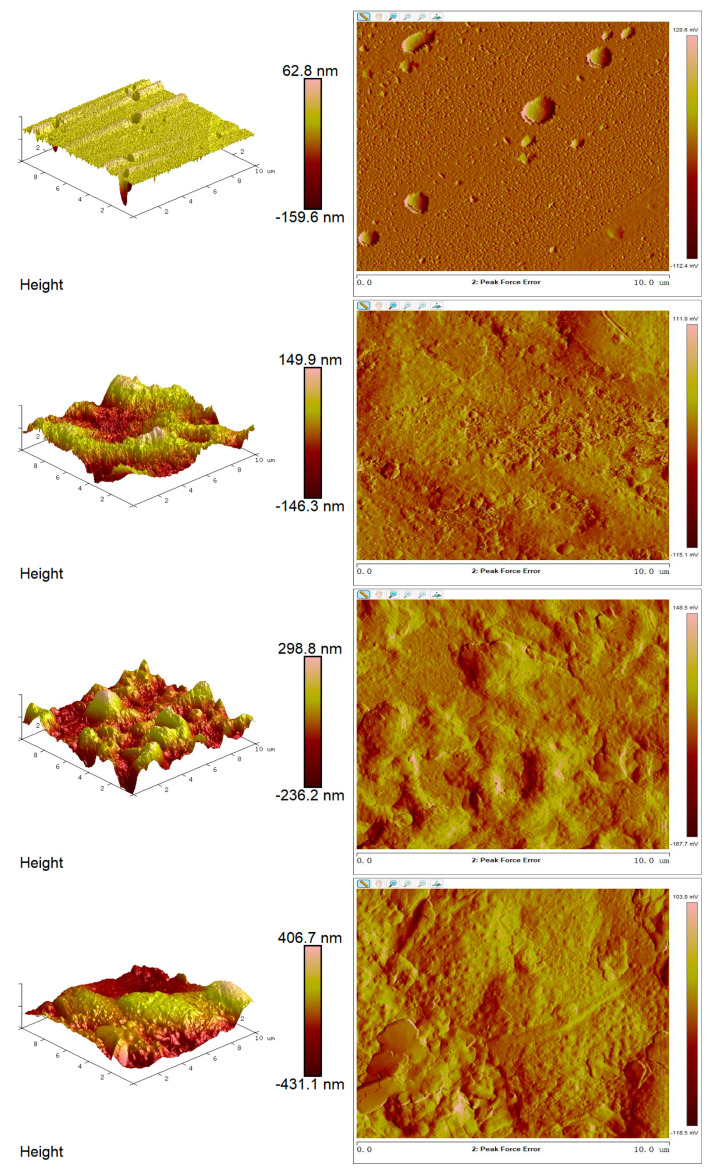
This study aimed to design and optimize an edible antimicrobial film incorporating thermally modified starches using a systematic experimental approach. A comprehensive analysis of six starch types-both native and dry heat-modified-was conducted to evaluate their gelatinization clarity, freeze-thaw stability, microstructure (CLSM), and in vitro digestibility. Corn and cassava starches were selected as optimal components based on their physicochemical performance. A series of single-factor experiments and a Box-Behnken design were employed to assess the influence of starch concentration, gelatinization time, glycerol, and chitosan content on film properties including tensile strength, elongation at break, water vapor permeability (WVP), and transparency. The optimized formulation (5.0% starch, 28.2 min gelatinization, 2.6% glycerol, 1.4% chitosan) yielded a transparent (77.64%), mechanically stable (10.92 MPa tensile strength; 50.0% elongation), and moisture-resistant film. Structural and thermal analyses (SEM, AFM, DSC, TGA) confirmed the film's homogeneity and stability. Furthermore, the film exhibited moderate antioxidant activity and antibacterial efficacy against and . These findings demonstrate the feasibility of using dry heat-modified Kazakhstani starches to develop sustainable antimicrobial packaging materials. However, further studies are needed to explore sensory attributes, long-term storage performance, and compatibility with different food matrices.
本研究旨在采用系统实验方法设计并优化一种包含热改性淀粉的可食用抗菌薄膜。对六种淀粉类型(天然淀粉和干热改性淀粉)进行了全面分析,以评估它们的糊化透明度、冻融稳定性、微观结构(共聚焦激光扫描显微镜)和体外消化率。基于玉米淀粉和木薯淀粉的理化性能,将它们选为最佳成分。采用一系列单因素实验和Box-Behnken设计,评估淀粉浓度、糊化时间、甘油和壳聚糖含量对薄膜性能(包括拉伸强度、断裂伸长率、水蒸气透过率(WVP)和透明度)的影响。优化配方(5.0%淀粉、28.2分钟糊化时间、2.6%甘油、1.4%壳聚糖)得到了一种透明(77.64%)、机械稳定(拉伸强度10.92 MPa;伸长率50.0%)且防潮的薄膜。结构和热分析(扫描电子显微镜、原子力显微镜、差示扫描量热法、热重分析法)证实了薄膜具有均匀性和稳定性。此外,该薄膜表现出适度的抗氧化活性以及对[具体菌种1]和[具体菌种2]的抗菌功效。这些研究结果证明了使用干热改性的哈萨克斯坦淀粉开发可持续抗菌包装材料的可行性。然而,还需要进一步研究来探索其感官特性、长期储存性能以及与不同食品基质的相容性。