Friesen L L, Gerrard J M
Am J Pathol. 1985 Oct;121(1):79-87.
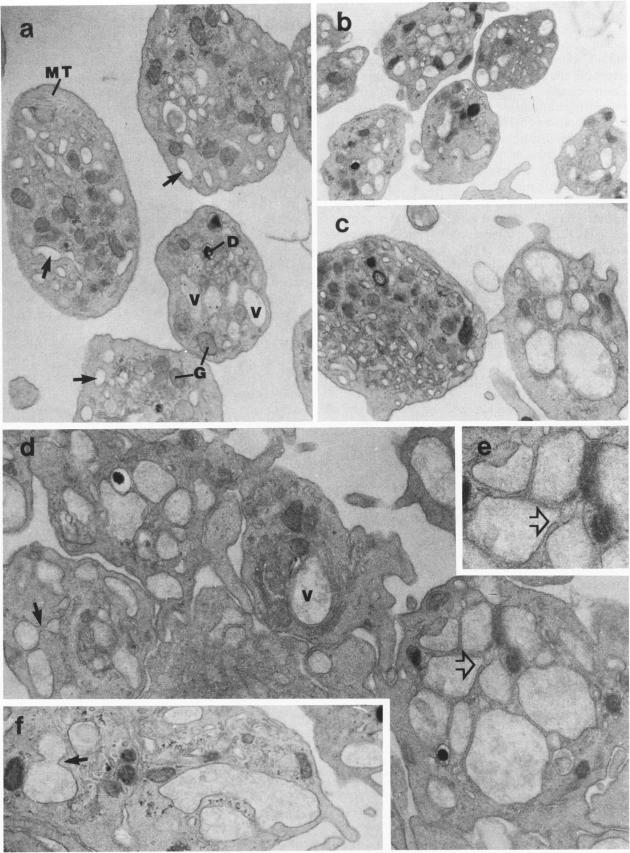
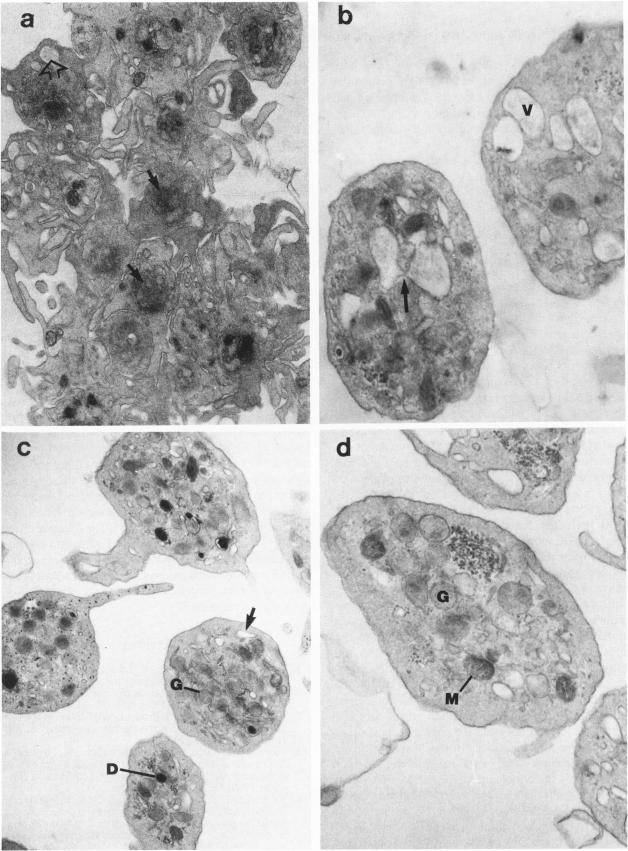
1-oleoyl-2-acetylglycerol (OAG), an activator of protein kinase C and a synthetic diglyceride, was used in an investigation of the role of diglycerides in platelet stimulus-activation coupling. OAG (20-100 micrograms/ml) added to platelets resulted in rapid phosphorylation of the 47,000-dalton protein as well as a gradual dose dependent disappearance of alpha granules and dense bodies and the appearance of vacuolar structures containing remnants of granule matrix material. These morphologic changes occurred more slowly than the phosphorylation of 47K, which suggests that if these are related the phosphorylated 47K serves to activate some other mechanism, which is ultimately responsible for the changes observed. These results are most consistent with the role for the phosphorylation of 47K to promote granule labilization. Myosin light chain (MLC) phosphorylation also occurred. An absence of granule centralization suggests that MLC phosphorylation by protein kinase C may not trigger effective actin-myosin contraction.
1-油酰基-2-乙酰甘油(OAG)是一种蛋白激酶C激活剂及合成甘油二酯,被用于研究甘油二酯在血小板刺激-激活偶联中的作用。添加到血小板中的OAG(20 - 100微克/毫升)导致47,000道尔顿蛋白快速磷酸化,以及α颗粒和致密体逐渐出现剂量依赖性消失,并出现含有颗粒基质材料残余物的空泡结构。这些形态学变化比47K磷酸化发生得更慢,这表明如果它们相关,磷酸化的47K可激活其他一些机制,这些机制最终导致了所观察到的变化。这些结果与47K磷酸化促进颗粒不稳定化的作用最为一致。肌球蛋白轻链(MLC)也发生了磷酸化。颗粒未集中表明蛋白激酶C介导的MLC磷酸化可能不会触发有效的肌动蛋白-肌球蛋白收缩。