
国际胰腺外科学研究组和荷兰胰腺癌研究组的胰腺特异性危险因素分类在预测Whipple手术中临床相关术后胰瘘方面的相关性。
Relevance of the International Study Group of Pancreatic Surgery and the Dutch Pancreatic Cancer Group Classifications of Pancreas-Specific Risk Factors in Predicting Clinically Relevant Postoperative Pancreatic Fistula in the Whipple Procedure.
作者信息
Karki Saurav, Kandel Bishnu, Sharma Deepak, Koirala Nishnata, Lakhey Paleswan Joshi
机构信息
Department of Surgical Gastroenterology, Tribhuvan University Teaching Hospital, Maharajgunj Medical Campus, Institute of Medicine, Kathmandu, NPL.
出版信息
Cureus. 2025 May 13;17(5):e84051. doi: 10.7759/cureus.84051. eCollection 2025 May.
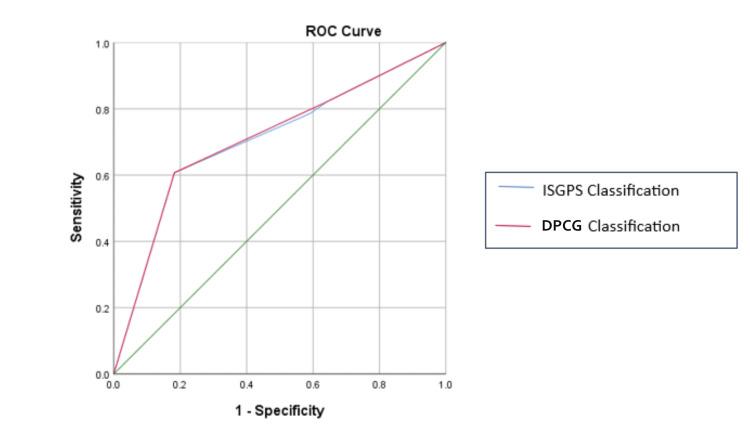
Background The International Study Group of Pancreatic Surgery (ISGPS)introduced a four-tier classification system, including pancreatic texture and pancreatic duct diameter, to aid the risk stratification of clinically relevant postoperative pancreatic fistula. The Dutch Pancreatic Cancer Group (DPCG) validated the ISGPS risk classification and proposed a three-tier classification system. This study was conducted to compare the clinically relevant postoperative pancreatic fistula rate among two classification systems. Methods This study was conducted by a retrospective review of the prospectively maintained data of 165 patients who underwent pancreaticoduodenectomy, also known as the Whipple Procedure, between 2015 and 2024 in a single unit of the Department of Surgical Gastroenterology at Tribhuvan University Teaching Hospital, Kathmandu, Nepal. The preoperative, intraoperative, and postoperative variables were analyzed to assess the relevance of the two classifications to predict clinically relevant postoperative pancreatic fistula. Results Ampullary carcinoma was the most common indication of pancreaticoduodenectomy (47.3%, n=78). Fifty patients (30.3%) had a main pancreatic duct diameter ≤3 mm, and 62.4% (n=103) had soft pancreatic texture. Twenty-eight patients (17.0%) developed clinically relevant postoperative pancreatic fistula, 44 (26.7%) had major complications (Clavien Dindo ≥3), and in-hospital mortality was seen in 13 (7.9%). Main pancreatic duct diameter ≤3 mm (36.0% vs 8.7%, P: <0.001), blood loss ≥500 ml (21.4% vs 7.5%, P: 0.027), and non-pancreatic pathology (21.5% vs 4.5%, P: 0.010) were significantly associated with clinically relevant postoperative pancreatic fistula but main pancreatic duct diameter ≤3 mm (OR: 7.313, P: 0.007, 95%CI: 1.462-12.124) was the only independent predictor. The rate of clinically relevant postoperative pancreatic fistula was significantly different in the subclasses in both the ISGPS and the DPCG classifications, being highest in Type D (40.5%, n=17). Both the classification systems showed similar predictivity for clinically relevant postoperative pancreatic fistula, with similar area under the curve, 0.707 for the ISGPS classification and 0.710 for the DPCG classification. Conclusion This study showed that the Type D (as per the ISGPS classification) or the two-risk-factor group (as per the DPCG classification) has the highest rate of postoperative complications after pancreaticoduodenectomy. On further analysis of the classification of pancreas-specific risk factors, including pancreatic texture and main pancreatic duct diameter, according to the ISGPS and DPCG classification systems, predictive accuracy was similar for clinically relevant postoperative pancreatic fistula; however, the DPCG classification with the simpler three-tier system is easier to apply in practice.
背景 国际胰腺外科学研究组(ISGPS)引入了一种四级分类系统,包括胰腺质地和胰管直径,以辅助临床相关术后胰瘘的风险分层。荷兰胰腺癌研究组(DPCG)对ISGPS风险分类进行了验证,并提出了一种三级分类系统。本研究旨在比较两种分类系统中临床相关术后胰瘘的发生率。方法 本研究通过回顾性分析2015年至2024年在尼泊尔加德满都特里布万大学教学医院外科胃肠病学单一科室接受胰十二指肠切除术(又称惠普尔手术)的165例患者的前瞻性维护数据进行。分析术前、术中和术后变量,以评估两种分类对预测临床相关术后胰瘘的相关性。结果 壶腹癌是胰十二指肠切除术最常见的适应证(47.3%,n = 78)。50例患者(30.3%)主胰管直径≤3 mm,62.4%(n = 103)胰腺质地柔软。28例患者(17.0%)发生临床相关术后胰瘘,44例(26.7%)发生严重并发症(Clavien Dindo≥3级),13例(7.9%)出现院内死亡。主胰管直径≤3 mm(36.0%对8.7%,P:<0.001)、失血≥500 ml(21.4%对7.5%,P:0.027)和非胰腺病变(21.5%对4.5%,P:0.010)与临床相关术后胰瘘显著相关,但主胰管直径≤3 mm(OR:7.313,P:0.007,95%CI:1.462 - 12.124)是唯一的独立预测因素。ISGPS和DPCG分类的亚组中临床相关术后胰瘘的发生率有显著差异,D型最高(40.5%,n = 17)。两种分类系统对临床相关术后胰瘘的预测性相似,曲线下面积相似,ISGPS分类为0.707,DPCG分类为0.710。结论 本研究表明,D型(根据ISGPS分类)或双风险因素组(根据DPCG分类)在胰十二指肠切除术后并发症发生率最高。根据ISGPS和DPCG分类系统进一步分析胰腺特异性风险因素的分类,包括胰腺质地和主胰管直径,对临床相关术后胰瘘的预测准确性相似;然而,更简单的三级系统DPCG分类在实践中更易于应用。
 Zotero 插件