Rhee Jongeun, Michalski Adrian M, Kuliszewski Margaret Gates, Musco Jamie, Adler Catherine T, Xie Shuai, Friesen Melissa C, Insaf Tabassum, Purdue Mark P
Occupational and Environmental Epidemiology Branch, Division of Cancer Epidemiology and Genetics, National Cancer Institute, Rockville, MD, USA.
Bureau of Environmental & Occupational Epidemiology, New York State Department of Health, Albany, NY, USA; Birth Defects Registry, New York State Department of Health, Albany, NY, USA.
Environ Int. 2025 Jul;201:109600. doi: 10.1016/j.envint.2025.109600. Epub 2025 Jun 10.
Residential buildings with a co-located dry-cleaning facility (CL-DC) can have substantially higher indoor tetrachloroethylene concentrations than buildings without a CL-DC. We conducted a case-control study to investigate associations between early-life indoor tetrachloroethylene exposure from CL-DCs and risks of childhood cancers (overall, acute lymphoblastic leukemia) and birth defects.
We linked records between the New York City (NYC) Bureau of Vital Statistics and the New York State Cancer Registry and Birth Defects Registry to identify cases of childhood cancers (n = 5,334) and birth defects (n = 171,553) diagnosed among children born in NYC between 1988 and 2016, and controls without these conditions (n = 596,599). We identified CL-DC exposure by mapping addresses from birth certificates and DC permits involving tetrachloroethylene use to building footprints, and modeled tetrachloroethylene concentrations using measurement data from a survey of NYC CL-DCs. Using unconditional logistic regression, we computed odds ratios (ORs) and 95 % confidence intervals (CIs) relating study endpoints to CL-DC exposure.
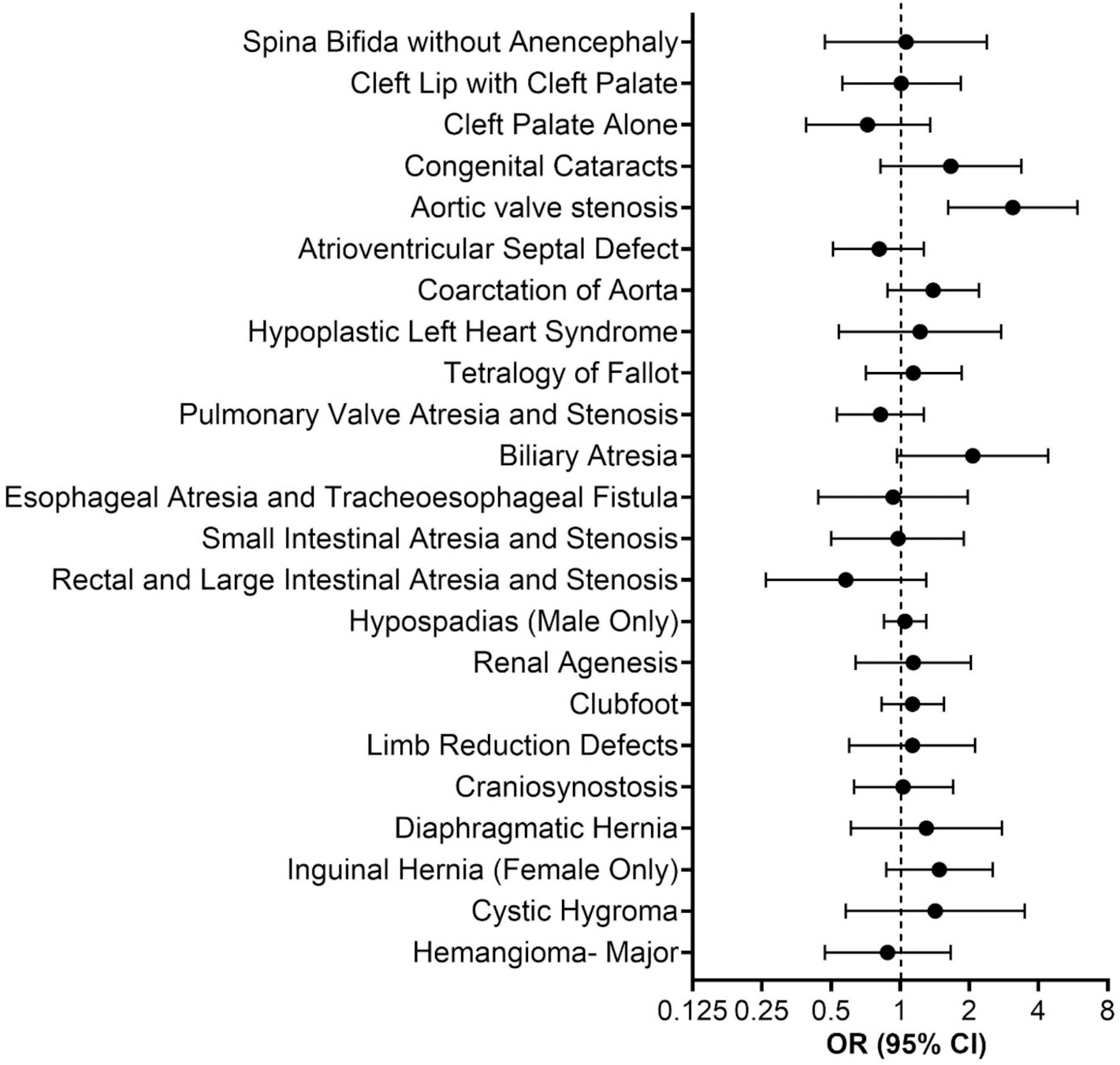
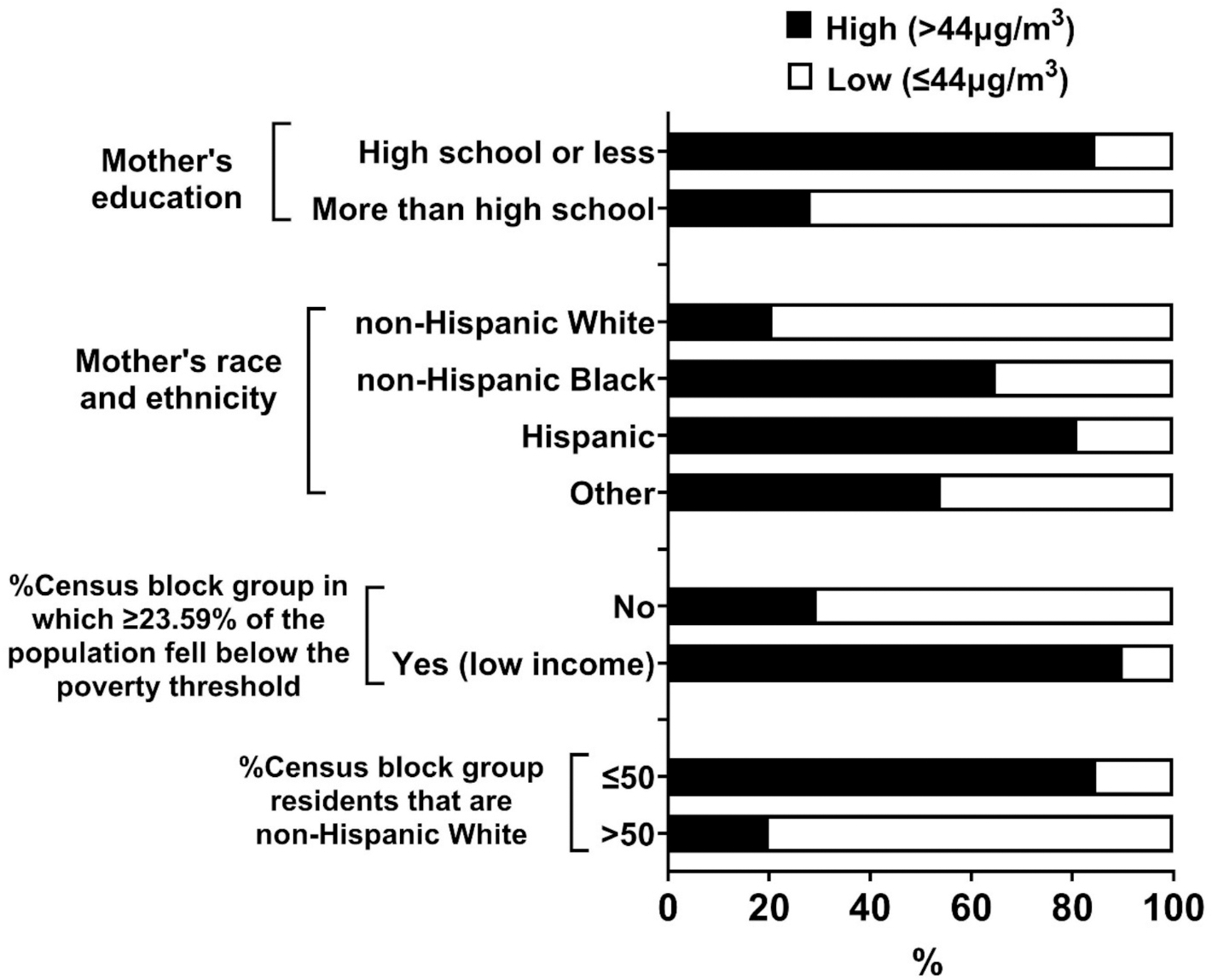
Living in a building with a CL-DC at birth was associated with aortic valve stenosis (AVS; OR = 3.1, 95 % CI = 1.6, 5.9), with an exposure-response effect for predicted tetrachloroethylene concentration (≤44 μg/m: OR = 2.7, 95 % CI = 1.0, 7.4; >44 μg/m: OR = 3.9, 95 % CI = 1.6, 9.5) and stronger associations for children whose mother was non-White, less than college-educated, or lived at birth in majority non-White or poorer neighborhoods. We observed null findings for other endpoints.
In this first-ever case-control study, early-life tetrachloroethylene exposure from CL-DCs in residential buildings was associated with increased AVS risk. These findings warrant further investigation.
设有干洗设施(CL-DC)的住宅建筑内四氯乙烯浓度可能显著高于无CL-DC的建筑。我们开展了一项病例对照研究,以调查CL-DC导致的早年室内四氯乙烯暴露与儿童癌症(总体、急性淋巴细胞白血病)风险及出生缺陷之间的关联。
我们将纽约市(NYC)生命统计局与纽约州癌症登记处及出生缺陷登记处的记录相链接,以识别1988年至2016年在NYC出生的儿童中诊断出的儿童癌症病例(n = 5334)和出生缺陷病例(n = 171553),以及无这些疾病的对照(n = 596599)。我们通过将出生证明和涉及四氯乙烯使用的干洗许可证上的地址映射到建筑物占地面积来确定CL-DC暴露,并使用对NYC的CL-DC调查的测量数据对四氯乙烯浓度进行建模。使用无条件逻辑回归,我们计算了将研究终点与CL-DC暴露相关联的比值比(OR)和95%置信区间(CI)。
出生时居住在设有CL-DC的建筑中与主动脉瓣狭窄(AVS;OR = 3.1,95%CI = 1.6,5.9)相关,对于预测的四氯乙烯浓度存在暴露-反应效应(≤44μg/m:OR = 2.7,95%CI = 1.0,7.4;>44μg/m:OR = 3.9,95%CI = 1.6,9.5),并且对于母亲为非白人、未接受大学教育或出生时居住在多数为非白人或较贫困社区的儿童,关联更强。我们对其他终点未观察到显著结果。
在这项首例病例对照研究中,住宅建筑中CL-DC导致的早年四氯乙烯暴露与AVS风险增加相关。这些发现值得进一步研究。