Aragie Teshome Gebremeskel, Afework Mekbib
College of Health Sciences, Department of Anatomy, Woldia University, Woldia, Ethiopia.
College of Health Sciences, School of Medicine, Department of Anatomy, Addis Ababa University, Addis Ababa, Ethiopia.
J Health Popul Nutr. 2025 Jun 14;44(1):198. doi: 10.1186/s41043-025-00875-6.
Globally, reproductive-age women appear to be the major users of herbal products, particularly during pregnancy and breastfeeding. Despite safety concerns, lactating women in Ethiopia use herbal products to increase their milk supply or to treat ailments. Thus, the current study aimed to assess the prevalence of herbal medicine use and associated factors among lactating women visiting maternal and child health clinics at Woldia Comprehensive Specialized Hospital.
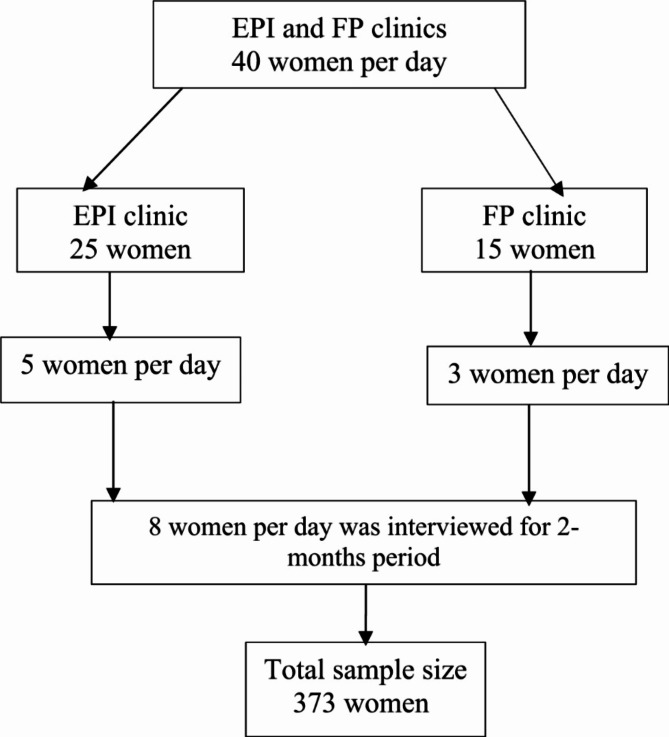
A cross-sectional study was conducted on 362 lactating women who visited the Expanded Program Immunization and Family Planning Clinics at Woldia Comprehensive Specialized Hospital from February 1 to April 30, 2023. The study participants were chosen using a systematic sampling method. Data were collected using a structured questionnaire through face-to-face interviews and entered using EPI-Data version 4.2.0. It was then analyzed using SPSS version 25. A binary logistic regression model was used to identify factors associated with the use of herbal medicine. Statistical significance was considered at a p-value of less than 0.05 in the final model. The findings were presented using texts, tables, and graphical representations.
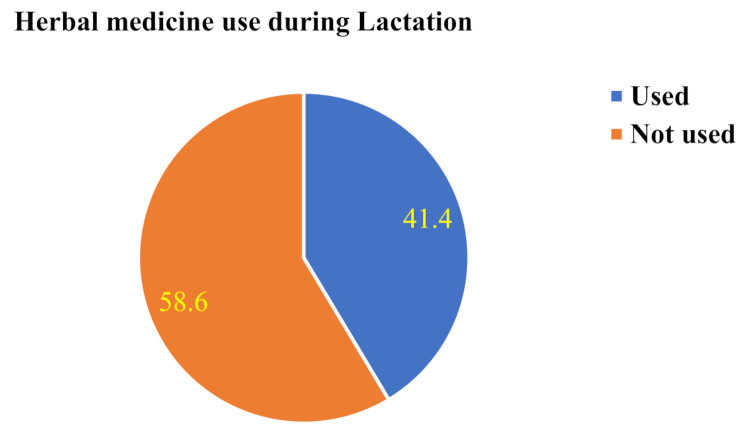
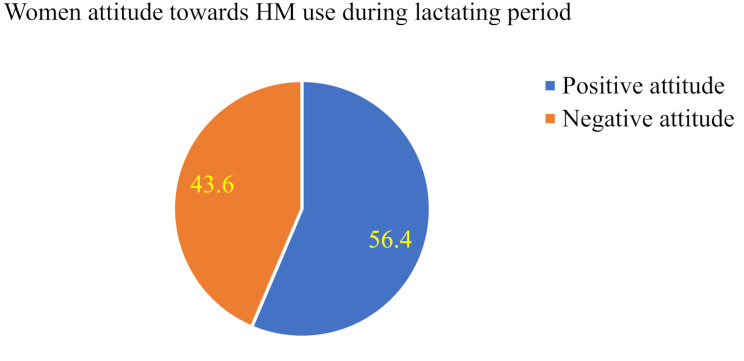
Out of 362 pregnant women who participated in this study, 150 (41.43%, 95% CI: 36.3, 46.5%) used herbal products during their lactating period. The most frequently used herbal products during lactation were Zingiber officinale 73 (48.6%), followed by Lepidium sativum 67 (44.6%), Ocimum lamifolium 60 (40%), and Linum usitatissimum 53 (35.3%). Among lactating mothers attending the clinics, factors associated with herbal medicine use included having a positive attitude toward herbal medicine use (AOR = 5.6; 95% CI = 3.1,9.9), having a history of using herbal products (AOR = 2.2; 95% CI = 1.2,3.9), lacking postpartum counseling (AOR = 2.6; 95% CI = 1.2,5.7), living further away from medical facilities (AOR = 2.8; 95% CI = 1.7, 4,8), and earning less than 5000 ETB per month (AOR = 3.5; 95% CI: 1.0, 12.2).
In the study area, herbal medicine use was a common practice among lactating mothers. Factors influencing this trend include women's attitudes toward herbal medicine, postpartum counseling, and their previous experiences with such remedies. Therefore, it is crucial to prioritize efforts aimed at shifting the perceptions of reproductive women regarding herbal medicine use and to enhance postpartum counseling. Further, it is essential to emphasize the potential risks of certain herbal medicines, especially those with unknown safety profiles, as they can significantly impact the health of the women and breastfeeding infants.
在全球范围内,育龄妇女似乎是草药产品的主要使用者,尤其是在怀孕和哺乳期。尽管存在安全担忧,但埃塞俄比亚的哺乳期妇女仍使用草药产品来增加乳汁分泌或治疗疾病。因此,本研究旨在评估在沃尔迪亚综合专科医院母婴健康诊所就诊的哺乳期妇女中使用草药的患病率及相关因素。
对2023年2月1日至4月30日期间在沃尔迪亚综合专科医院扩大免疫规划和计划生育诊所就诊的362名哺乳期妇女进行了一项横断面研究。研究参与者采用系统抽样方法选取。通过面对面访谈使用结构化问卷收集数据,并使用EPI-Data 4.2.0版本录入。然后使用SPSS 25版本进行分析。采用二元逻辑回归模型确定与使用草药相关的因素。在最终模型中,p值小于0.05被认为具有统计学意义。研究结果通过文字、表格和图表展示。
在参与本研究的362名孕妇中,有150名(41.43%,95%可信区间:36.3%,46.5%)在哺乳期使用了草药产品。哺乳期最常使用的草药产品是生姜73例(48.6%),其次是独行菜67例(44.6%)、细叶罗勒60例(40%)和亚麻53例(35.3%)。在诊所就诊的哺乳期母亲中,与使用草药相关的因素包括对使用草药持积极态度(比值比[AOR]=5.6;95%可信区间=3.1,9.9)、有使用草药产品的历史(AOR=2.2;95%可信区间=1.2,3.9)、缺乏产后咨询(AOR=2.6;95%可信区间=1.2,5.7)、居住距离医疗设施较远(AOR=2.8;95%可信区间=1.7,4.8)以及每月收入低于5000埃塞俄比亚比尔(AOR=3.5;95%可信区间:1.0,12.