von Essen Fredrika, Maluka Stephen, Peter Kamuzora, Kapologwe Ntuli, San Sebastian Miguel, Hurtig Anna-Karin, Mazen Baroudi
Department of Epidemiology and Global Health, Umeå University, Umea, Sweden
Dar es Salaam University College of Education, Dar es Salaam, Tanzania, United Republic of.
BMJ Glob Health. 2025 Jun 15;10(6):e015753. doi: 10.1136/bmjgh-2024-015753.
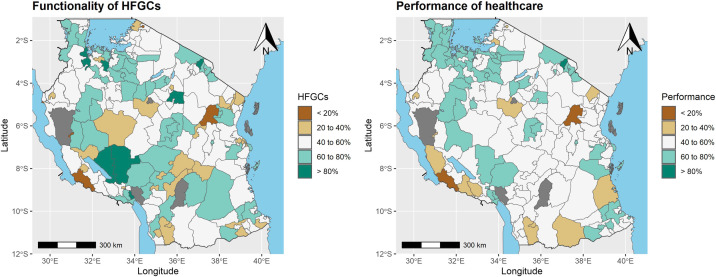
Accountability is crucial for improved functionality of health systems and can be ensured through community participation in health governance. To engage the community in the governance of the local health system, health facility governing committees (HFGCs) have been implemented in several low-income and middle-income countries including Tanzania. However, the effect of HFGCs on health system performance is not well studied. The aim of this study was to investigate the relationship between the functionality of the HFGCs and health system performance in 180 districts of mainland Tanzania, and to assess whether this relationship varies between dispensaries, health centres and hospitals.
We conducted an ecological study in which the studied outcome was health system performance. The main independent variable was functionality of HFGCs, that is, to what extent these committees reflect the concerns of and connect back to the community. Other explanatory variables included staff availability, location of the facility, gender of the manager of the facility and ownership of the facility. Data on all of the variables were retrieved from the Star Rating Assessment of 2017/2018, measured as mean proportions of all facilities in the districts. The analyses included linear regression for all facility levels combined, as well as for the levels of facility separated (dispensaries, health centres and hospitals).
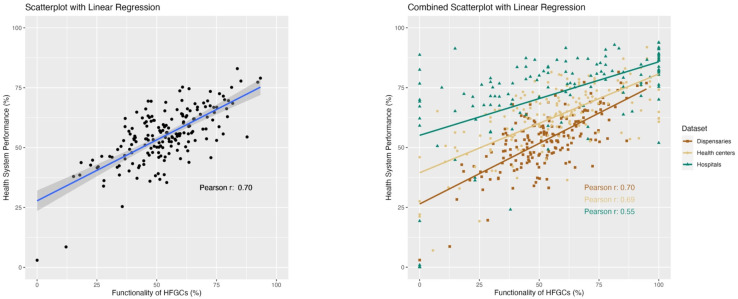
We found a positive relationship between the functionality of the HFGCs and health system performance (β=0.53; 95% CI=0.47 to 0.60). The relationship was stronger for dispensaries (β=0.56; 95% CI=0.50 to 0.63) compared to health centres (β=0.39; 95% CI=0.33 to 0.44) and hospitals (β=0.23; 95% CI=0.15 to 0.31).
Districts that have functional HFGCs tend to have better health system performance than others. This relationship is stronger in dispensaries compared to health centres and hospitals. Therefore, we believe the district authorities should allocate resources to strengthen the HFGCs.
问责制对于改善卫生系统的功能至关重要,可通过社区参与卫生治理来确保。为使社区参与地方卫生系统的治理,包括坦桑尼亚在内的几个低收入和中等收入国家已实施了卫生设施管理委员会(HFGCs)。然而,HFGCs对卫生系统绩效的影响尚未得到充分研究。本研究的目的是调查坦桑尼亚大陆180个地区HFGCs的功能与卫生系统绩效之间的关系,并评估这种关系在诊所、卫生中心和医院之间是否存在差异。
我们进行了一项生态研究,其中研究结果是卫生系统绩效。主要自变量是HFGCs的功能,即这些委员会在多大程度上反映社区的关切并与社区建立联系。其他解释变量包括工作人员可用性、设施位置、设施经理的性别和设施所有权。所有变量的数据均从2017/2018年星级评估中获取,以各地区所有设施的平均比例衡量。分析包括对所有设施级别合并进行线性回归,以及对分开的设施级别(诊所、卫生中心和医院)进行线性回归。
我们发现HFGCs的功能与卫生系统绩效之间存在正相关关系(β=0.53;95%置信区间=0.47至0.60)。与卫生中心(β=0.39;95%置信区间=0.33至0.44)和医院(β=0.23;95%置信区间=0.15至0.31)相比,诊所的这种关系更强(β=0.56;95%置信区间=0.50至0.63)。
拥有功能健全的HFGCs的地区往往比其他地区具有更好的卫生系统绩效。与卫生中心和医院相比,这种关系在诊所中更强。因此,我们认为地区当局应分配资源以加强HFGCs。