Liang Shihao, Shao Xiaoya, Meng Xueqiong, Cui Ying, Sun Chuanyue, Sun Jie, Zhang Binghui, Shen Guomin, Qin Ling, Yang Haiping, Chen Yixiang
Henan International Joint Laboratory of Thrombosis and Hemostasis, School of Basic Medical Sciences, Henan University of Science and Technology, Luoyang, China.
The Second Affiliated Hospital, Henan University of Science and Technology, Luoyang, China.
Front Pharmacol. 2025 May 30;16:1612916. doi: 10.3389/fphar.2025.1612916. eCollection 2025.
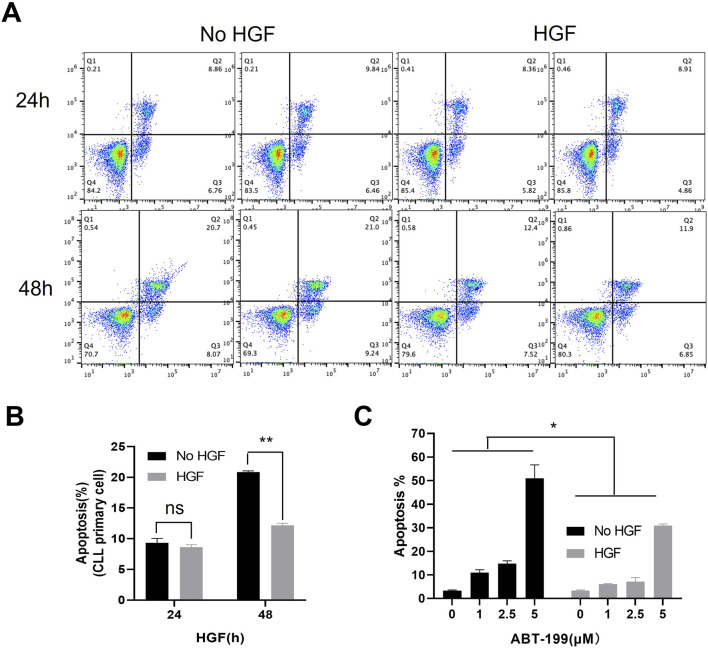
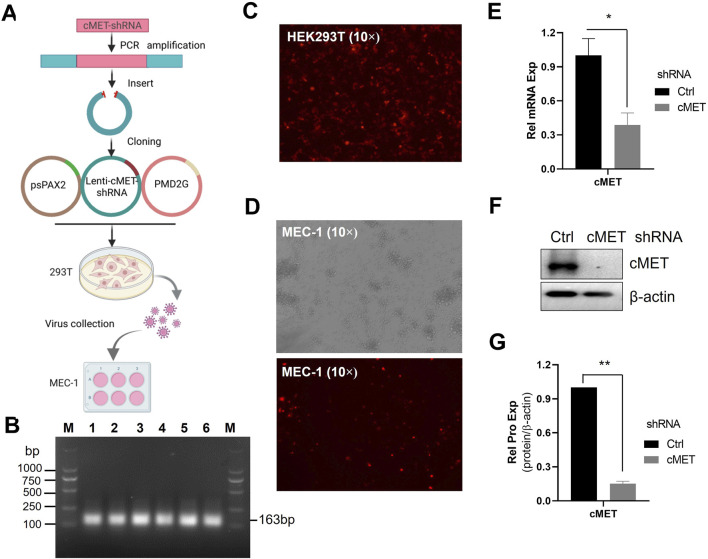
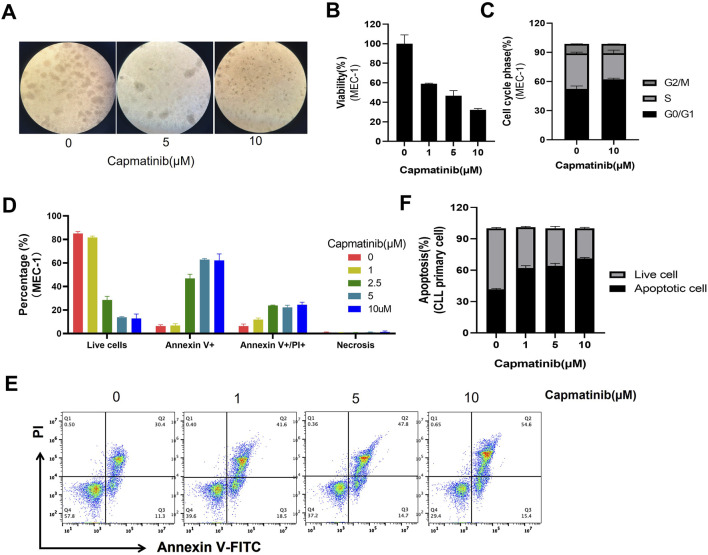
Despite significant advances in understanding the occurrence, progression and treatment of chronic lymphocytic leukemia (CLL), there remains a need to explore novel mechanisms and therapeutic strategies. In this study, we discovered that hepatocyte growth factor (HGF), a cytokine highly expressed by bone marrow mesenchymal stem cells within the microenvironment, activates the AKT, ERK and STAT3 signaling pathways, promotes the expression of anti-apoptotic proteins BCL-2, MCL-1, and BCL-xL, thereby enhancing CLL cell survival and resistance to both natural and ABT-199-induced apoptosis. Knockdown of c-MET, the unique receptor for HGF, using lentivirus-mediated shRNA, significantly attenuated the activation of these pro-survival signaling pathways and downregulated the expression of anti-apoptotic proteins in the BCL-2 family. Consequently, this inhibited CLL cell proliferation and promoted apoptosis. Similarly, pharmacological targeting of the HGF/c-MET pathway with the inhibitor capmatinib markedly suppressed the activation of pro-survival signaling pathways, reduced the expression of anti-apoptotic proteins, inhibited cell proliferation, arrested cell cycle at G0/G1 stage, induced apoptosis, and enhanced the pro-apoptotic effect of ABT-199. In summary, this study highlights the critical role of HGF/c-MET axis in CLL cell survival and demonstrates that targeting this pathway holds therapeutic potential for the treatment of CLL.
尽管在理解慢性淋巴细胞白血病(CLL)的发生、进展和治疗方面取得了重大进展,但仍有必要探索新的机制和治疗策略。在本研究中,我们发现肝细胞生长因子(HGF),一种由微环境中的骨髓间充质干细胞高度表达的细胞因子,激活AKT、ERK和STAT3信号通路,促进抗凋亡蛋白BCL-2、MCL-1和BCL-xL的表达,从而增强CLL细胞的存活能力以及对自然凋亡和ABT-199诱导凋亡的抗性。使用慢病毒介导的短发夹RNA(shRNA)敲低HGF的唯一受体c-MET,可显著减弱这些促存活信号通路的激活,并下调BCL-2家族中抗凋亡蛋白的表达。因此,这抑制了CLL细胞的增殖并促进了凋亡。同样,用抑制剂卡马替尼对HGF/c-MET通路进行药理学靶向,可显著抑制促存活信号通路的激活,降低抗凋亡蛋白的表达,抑制细胞增殖,使细胞周期停滞在G0/G1期,诱导凋亡,并增强ABT-199的促凋亡作用。总之,本研究突出了HGF/c-MET轴在CLL细胞存活中的关键作用,并表明靶向该通路对CLL治疗具有潜在的治疗价值。