Assis Marcelo, Rennó Ana Claudia Muniz, Andrés Juan, Longo Elson
Department of Biosciences, Federal University of São Paulo (UNIFESP), Santos, SP 11015-020, Brazil.
Department of Analytical and Physical Chemistry, University Jaume I (UJI), Castelló 12071, Spain.
ACS Omega. 2025 May 28;10(22):22323-22346. doi: 10.1021/acsomega.5c00524. eCollection 2025 Jun 10.
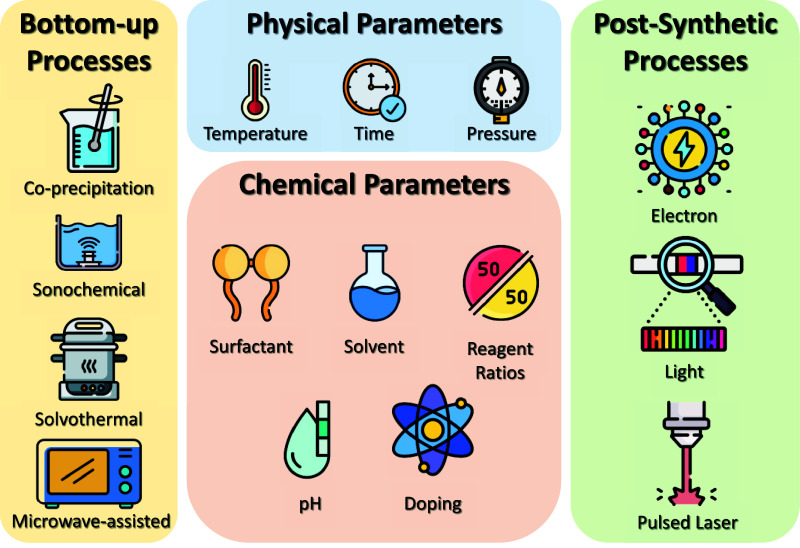
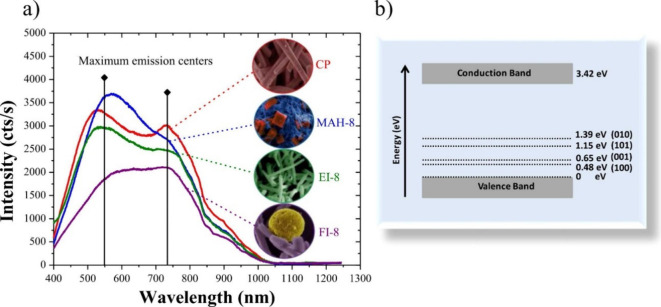
Since the mid-20th century, the interaction between light and inorganic semiconductors plays not only a key role in numerous fascinating phenomena but also provides the physical foundations for the development of many modern technologies focused on health, environmental, and energy solutions. Among these materials, silver-based bimetallic semiconductors have garnered attention due to their enhanced functional properties, which are controlled by the presence and distribution of structural and electronic defects. These defects directly impact key physicochemical properties, making them essential for the development of materials with improved functionalities. Modifying synthetic and postsynthetic parameters is crucial for controlling the type, density, and distribution of these defects in materials. However, achieving precise control of these defects remains a challenge and requires a deeper understanding of the relationship between synthetic conditions and defect formation. This work provides a comprehensive review of how modifications in synthesis methods influence material properties, with a particular focus on understanding their impact on material defects. Specifically, this study examines silver-based bimetallic semiconductors, including AgWO, AgMoO, and AgCrO. Additionally, strategies involving advanced defect characterization techniques such as photoluminescence spectroscopy (PL), X-ray photoelectron spectroscopy (XPS), electron paramagnetic resonance (EPR), and positron annihilation lifetime spectroscopy (PALS) are discussed, as these methods are gaining prominence in defect analysis. By exploring the interplay between synthetic control and its impact on defects in these materials, this study highlights the critical role of defect engineering in advancing the application potential of silver-based bimetallic semiconductors.
自20世纪中叶以来,光与无机半导体之间的相互作用不仅在众多引人入胜的现象中起着关键作用,而且为许多专注于健康、环境和能源解决方案的现代技术发展提供了物理基础。在这些材料中,银基金属双半导体因其增强的功能特性而受到关注,这些特性由结构和电子缺陷的存在和分布所控制。这些缺陷直接影响关键的物理化学性质,使其成为开发具有改进功能材料的关键。修改合成和合成后参数对于控制材料中这些缺陷的类型、密度和分布至关重要。然而,实现对这些缺陷的精确控制仍然是一个挑战,需要更深入地了解合成条件与缺陷形成之间的关系。这项工作全面回顾了合成方法的修改如何影响材料性能,特别关注理解它们对材料缺陷的影响。具体而言,本研究考察了银基金属双半导体,包括AgWO、AgMoO和AgCrO。此外,还讨论了涉及先进缺陷表征技术的策略,如光致发光光谱(PL)、X射线光电子能谱(XPS)、电子顺磁共振(EPR)和正电子湮没寿命谱(PALS),因为这些方法在缺陷分析中越来越重要。通过探索合成控制与其对这些材料中缺陷的影响之间的相互作用,本研究强调了缺陷工程在提升银基金属双半导体应用潜力方面的关键作用。