Mohammed Haitham S, Hosny Eman N, Sawie Hussein G, Khadrawy Yasser A
Biophysics Department, Faculty of Science, Cairo University, Giza, Egypt.
Medical Physiology Department, National research Centre, Giza, Egypt.
Neurochem Res. 2025 Jun 16;50(4):203. doi: 10.1007/s11064-025-04447-2.
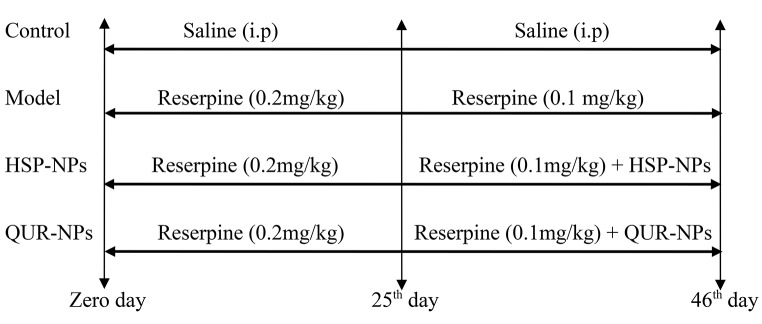
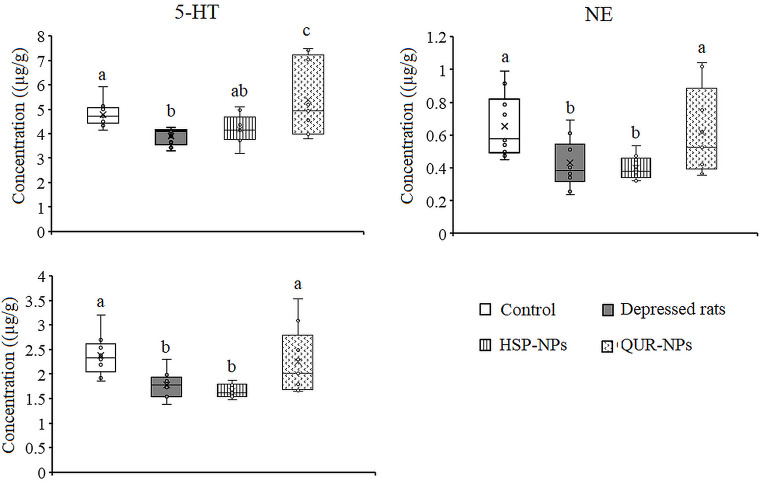
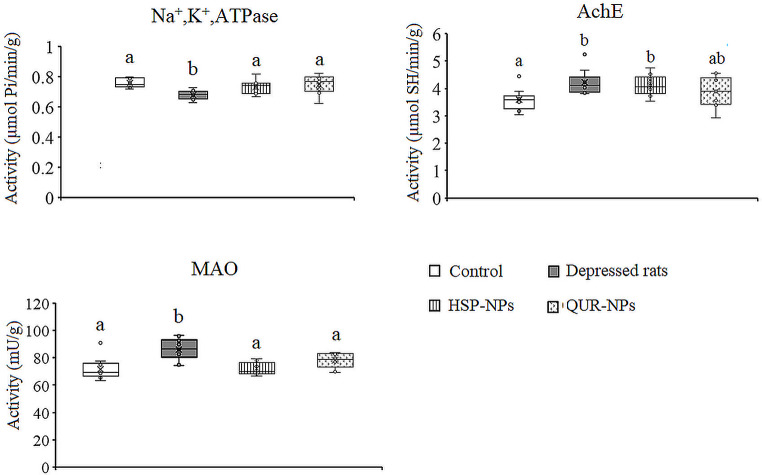
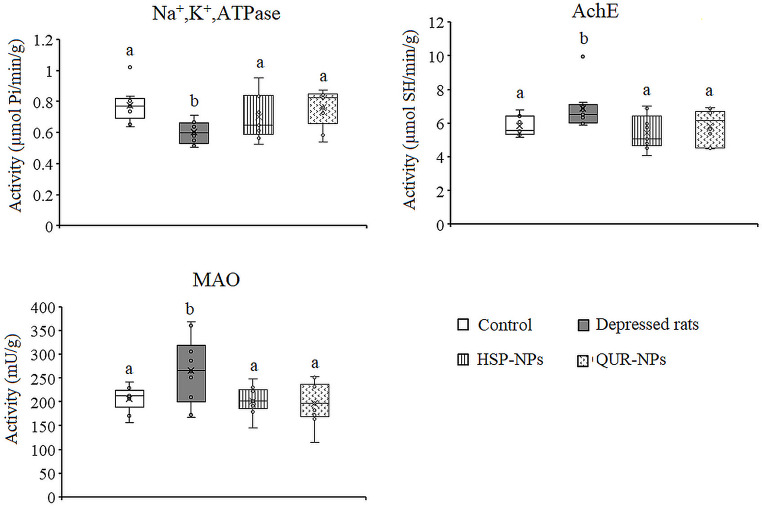
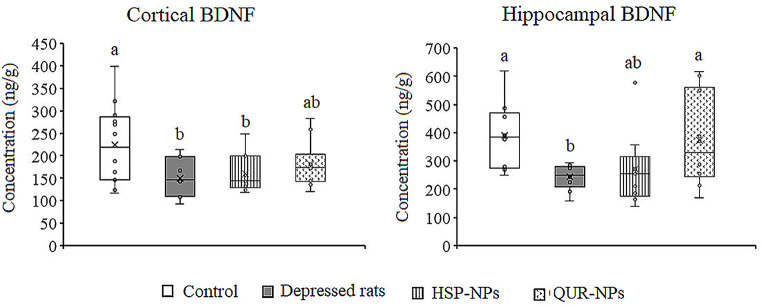
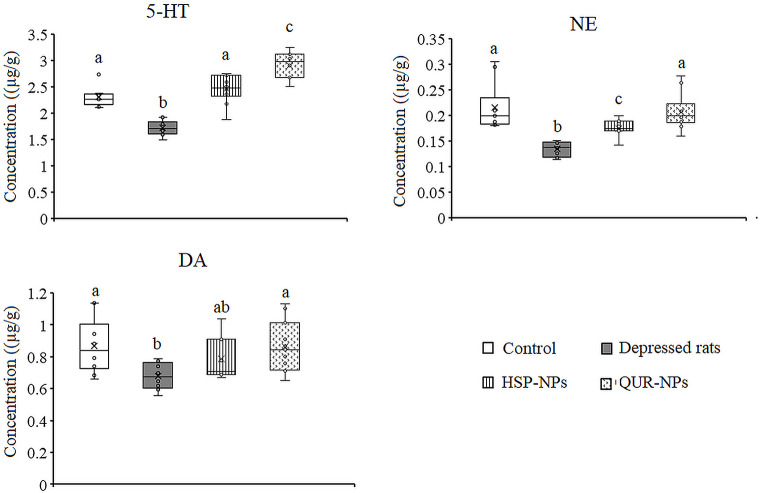
Natural remedies have emerged as promising alternative or complementary therapies for combating depression. This study aimed to investigate the effects of hesperidin (HSP-NPs) and quercetin (QUR-NPs) nanoparticles on oxidative stress markers, enzyme activities, brain-derived neurotrophic factor, and monoamine levels in the cortex and hippocampus of a reserpine-induced rat model of depression. The depression model was established by administering reserpine (0.2 mg/kg) to the animals for 25 days. On the 26 rats were administered i.p. with reserpine (0.1 mg/kg) and oral isotonic saline solution for another 21 days. Following reserpine administration, the animals exhibited a significant reduction in nitric oxide (NO), reduced glutathione (GSH), brain-derived neurotrophic factor (BDNF), serotonin (5-HT), norepinephrine (NE), and dopamine (DA) levels. Additionally, a significant decrease in Na, K,ATPase activity and a significant increase in acetylcholinesterase (AchE) and monoamine oxidase (MAO) activity were observed in the cortex and hippocampus as compared to the control group of animals. Treatment with either HSP-NPs and QUR-NPs for 14 days mitigated the oxidative stress in the cortex and hippocampus. The treatments restored the changes Na, K,ATPase, and MAO, AchE activities in the two brain regions. Notably, QUR-NPs was superior in alleviating the adverse changes induced by reserpine concerning monoamines and BDNF levels. These findings highlight the therapeutic potential of HSP-NPs and QUR-NPs in mitigating the underlying etiology of depressive symptoms rat model. Further investigations are warranted to exploAuthorre the potential synergistic effects of hesperidin and quercetin when used in combination at different doses and treatment durations.
天然疗法已成为对抗抑郁症的有前景的替代或补充疗法。本研究旨在调查橙皮苷(HSP-NPs)和槲皮素(QUR-NPs)纳米颗粒对利血平诱导的大鼠抑郁症模型的皮质和海马中氧化应激标志物、酶活性、脑源性神经营养因子和单胺水平的影响。通过给动物连续25天注射利血平(0.2mg/kg)建立抑郁症模型。在第26天,给26只大鼠腹腔注射利血平(0.1mg/kg)并口服等渗盐溶液,持续另外21天。注射利血平后,动物的一氧化氮(NO)、还原型谷胱甘肽(GSH)、脑源性神经营养因子(BDNF)、血清素(5-HT)、去甲肾上腺素(NE)和多巴胺(DA)水平显著降低。此外,与对照组动物相比,在皮质和海马中观察到钠钾ATP酶活性显著降低,乙酰胆碱酯酶(AchE)和单胺氧化酶(MAO)活性显著增加。用HSP-NPs和QUR-NPs治疗14天可减轻皮质和海马中的氧化应激。这些治疗恢复了两个脑区钠钾ATP酶、MAO和AchE活性的变化。值得注意的是,QUR-NPs在减轻利血平诱导的单胺和BDNF水平的不良变化方面更具优势。这些发现突出了HSP-NPs和QUR-NPs在减轻大鼠抑郁症模型抑郁症状潜在病因方面的治疗潜力。有必要进一步研究探索橙皮苷和槲皮素在不同剂量和治疗持续时间联合使用时的潜在协同作用。