Hasan Syed, Khatri Nabeel, Rahman Zainab N, Menezes Amanda A, Martini Joud, Shehjar Faheem, Mujeeb Numa, Shah Zahoor A
Department of Pharmacology and Experimental Therapeutics, College of Pharmacy and Pharmaceutical Sciences, The University of Toledo, 3000 Arlington Avenue, Toledo, OH 43614, USA.
Department of Medicinal and Biological Chemistry, The University of Toledo, 3000 Arlington Avenue, Toledo, OH 43614, USA.
Brain Sci. 2023 Aug 29;13(9):1258. doi: 10.3390/brainsci13091258.
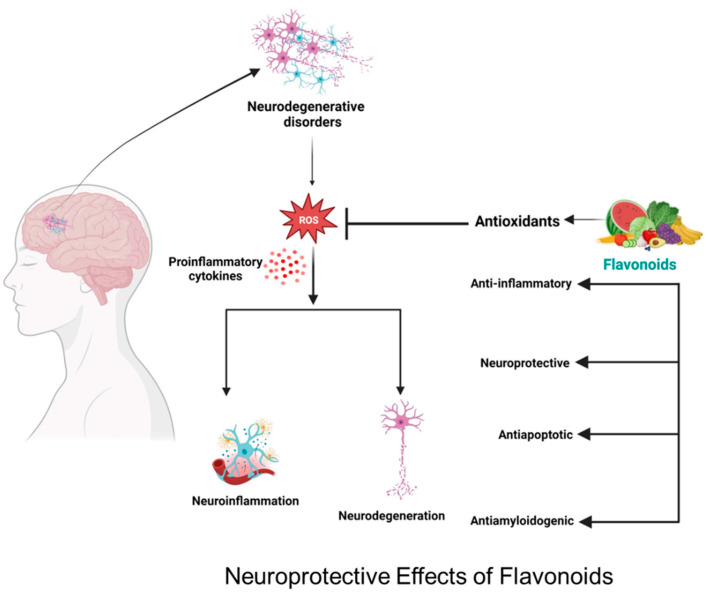
Flavonoids are a large subgroup of polyphenols known to be sourced from over 6000 natural products, including fruits, vegetables, bark, and herbs. Due to their antioxidant properties, flavonoids have been implicated as a therapy source for many diseases and conditions, including inflammation, vasculitis, venous insufficiency, and hemorrhoids. Currently, some flavonoids are being researched for their antioxidant ability concerning neuroprotection. These flavonoids can penetrate the blood-brain barrier and, depending on the specific flavonoid, retain adequate bioavailability in certain brain regions. Further data suggest that flavonoids could have a strong anti-inflammatory effect in the brain, which not only could be a robust therapeutic source for known neuroinflammatory diseases such as Alzheimer's Disease or Parkinson's Disease but also could be a therapeutic source for ischemic or hemorrhagic conditions such as a stroke. While flavonoid toxicity exists, they are relatively safe and non-invasive drugs from natural origins. As such, exploring the known mechanisms and therapies may highlight and establish flavonoid therapy as a viable source of therapy for stroke patients. As stated, many flavonoids are already being isolated, purified, and implemented in both in vitro and in vivo experiments. As these flavonoids proceed to clinical trials, it will be important to understand how they function as a therapy, primarily as antioxidants, and by other secondary mechanisms. This review aims to elucidate those mechanisms and explore the neuroprotective role of flavonoids.
黄酮类化合物是多酚类的一个大亚组,已知来源于6000多种天然产物,包括水果、蔬菜、树皮和草药。由于其抗氧化特性,黄酮类化合物被认为是多种疾病和病症的治疗来源,包括炎症、血管炎、静脉功能不全和痔疮。目前,一些黄酮类化合物因其对神经保护的抗氧化能力而正在被研究。这些黄酮类化合物可以穿透血脑屏障,并且根据具体的黄酮类化合物,在某些脑区保持足够的生物利用度。进一步的数据表明,黄酮类化合物在大脑中可能具有强大的抗炎作用,这不仅可能是已知神经炎症性疾病如阿尔茨海默病或帕金森病的强大治疗来源,也可能是缺血性或出血性病症如中风的治疗来源。虽然存在黄酮类化合物毒性,但它们是相对安全且非侵入性的天然来源药物。因此,探索已知的机制和疗法可能会突出并确立黄酮类化合物疗法作为中风患者可行的治疗来源。如前所述,许多黄酮类化合物已经在体外和体内实验中被分离、纯化和应用。随着这些黄酮类化合物进入临床试验,了解它们作为一种疗法的作用机制非常重要,主要是作为抗氧化剂以及通过其他次要机制。这篇综述旨在阐明这些机制并探索黄酮类化合物的神经保护作用。