Kim Jiyeong, Pacheco Juan Pablo Gonzalez, Golden Ashleigh, Aboujaoude Elias, van Roessel Peter, Gandhi Aayushi, Mukunda Pavithra, Avanesyan Tatevik, Xue Haopeng, Adeli Ehsan, Kim Jane Paik, Saggar Manish, Stirman Shannon Wiltsey, Kuhn Eric, Supekar Kaustubh, Pohl Kilian M, Rodriguez Carolyn I
Stanford Center for Digital Health, Stanford School of Medicine, Stanford, CA USA.
Department of Psychiatry and Behavioral Sciences, Stanford School of Medicine, Stanford, CA USA.
Curr Treat Options Psychiatry. 2025;12(1):23. doi: 10.1007/s40501-025-00359-8. Epub 2025 Jun 14.
Obsessive-compulsive disorder (OCD) is a chronic and disabling condition, often leading to significant functional impairments. Despite its early onset, there is an average delay of 17 years from symptom onset to diagnosis and treatment, resulting in poorer outcomes. This systematic review aims to synthesize current findings on the application of AI in OCD, highlighting opportunities for early symptom detection, scalable therapy training, clinical decision support, novel therapeutics, computer vision-based approaches, and multimodal biomarker discovery.
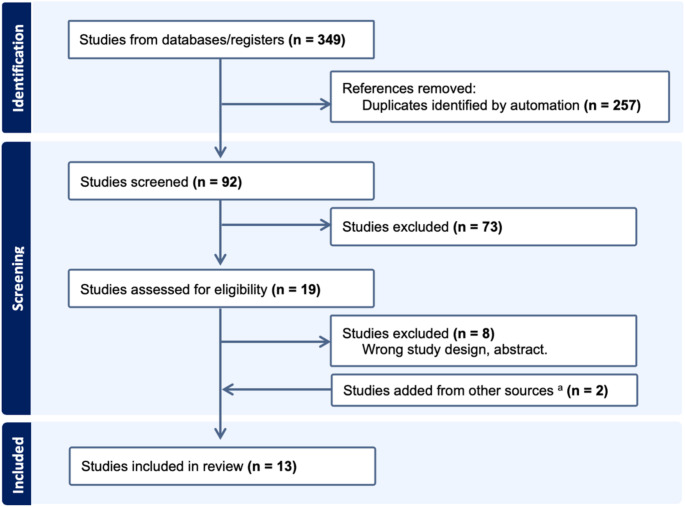
While previous reviews focused on biomarker-based OCD detection and treatment using machine learning (ML), the findings of the current review add information about novel applications of deep learning technology, specifically generative artificial intelligence (GenAI) and natural language processing (NLP). Among the included 13 articles, most studies (84.6%) utilized secondary data analyses, primarily through GenAI/NLP. Nearly 77% of these studies were published in the past two years, with high quality of evidence. The primary focus areas were enhancing treatment and management, and timely OCD detection (both 38.5%); followed by AI tool development for broader mental health applications.
AI technologies offer transformative potential for improvements related to OCD if diagnosis occurs earlier after onset; thereby lessening the consequential economic burden. Prioritizing investment in ethically sound AI research could significantly improve OCD outcomes in mental health care.
The online version contains supplementary material available at 10.1007/s40501-025-00359-8.
强迫症(OCD)是一种慢性致残性疾病,常导致严重的功能障碍。尽管其发病较早,但从症状出现到诊断和治疗平均延迟17年,导致预后较差。本系统综述旨在综合当前关于人工智能在强迫症中应用的研究结果,重点介绍早期症状检测、可扩展治疗训练、临床决策支持、新型治疗方法、基于计算机视觉的方法以及多模态生物标志物发现等方面的机会。
虽然以往的综述主要关注基于生物标志物的强迫症检测和机器学习治疗,但本次综述的结果补充了深度学习技术新应用的相关信息,特别是生成式人工智能(GenAI)和自然语言处理(NLP)。在纳入的13篇文章中,大多数研究(84.6%)采用二次数据分析,主要通过GenAI/NLP进行。其中近77%的研究在过去两年发表,证据质量较高。主要关注领域是加强治疗和管理以及及时检测强迫症(均为38.5%);其次是为更广泛的心理健康应用开发人工智能工具。
如果在发病后更早进行诊断,人工智能技术在改善强迫症方面具有变革潜力,从而减轻相应的经济负担。优先投资于符合伦理的人工智能研究可以显著改善心理健康护理中的强迫症治疗效果。
在线版本包含可在10. .1007/s40501-025-00359-8获取的补充材料。