Li Qian, Zhang Guofu, Li Xiating, Xu Shangzhi, Wang Huafang, Deng Jun, Cheng Zhipeng, Fan Fengjuan, Chen Shi, Yang Meng, Tang Liang V, Hu Yu
Institute of Haematology, Union Hospital, Tongji Medical College, Huazhong University of Science and Technology, Wuhan, Hubei, China.
Key Laboratory of Biological Targeted Therapy (Huazhong University of Science and Technology), Ministry of Education, Wuhan, Hubei, China.
EClinicalMedicine. 2025 Jun 5;84:103274. doi: 10.1016/j.eclinm.2025.103274. eCollection 2025 Jun.
There have been conflicting studies on the associations between cancer and cardiovascular disease (CVD) risk. The hypothesis of this meta-analysis was to investigate whether cancer survivors had an increased risk of CVD compared to those without cancer based on population-based cohort studies.
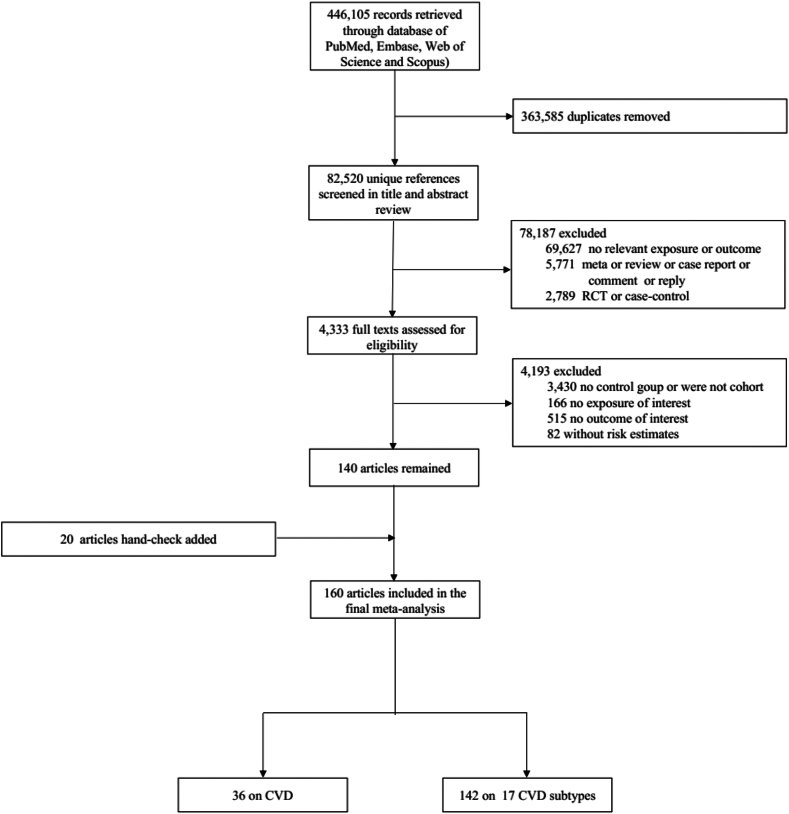
We did a systematic review and meta-analysis of prospective and retrospective cohort studies. We searched PubMed, Embase, Web of Science, and Scopus published in any language from January 1, 1990 to February 24, 2025. We included cancer survivors and non-cancer controls. The primary outcome was the risk of CVD. The secondary outcomes included 17 CVD subtypes (e.g., ischemic heart, cerebrovascular, and peripheral vascular disease). Effect estimates (hazards ratios, HRs) with 95% CIs were pooled. Subgroup analyses, sensitivity analyses and meta-regression were performed to explore the stability of the results and the sources of heterogeneity. The protocol of this review was registered in PROSPERO: CRD42024559349.
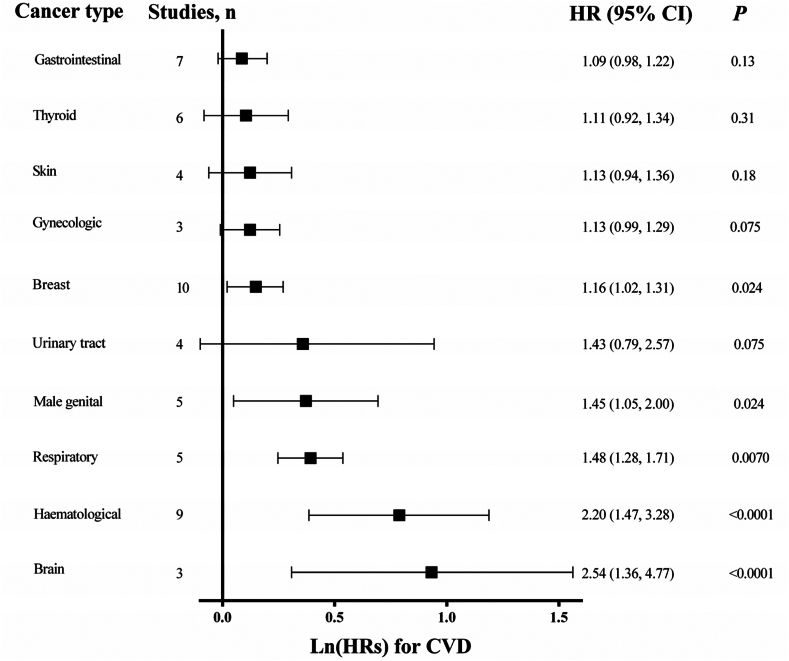
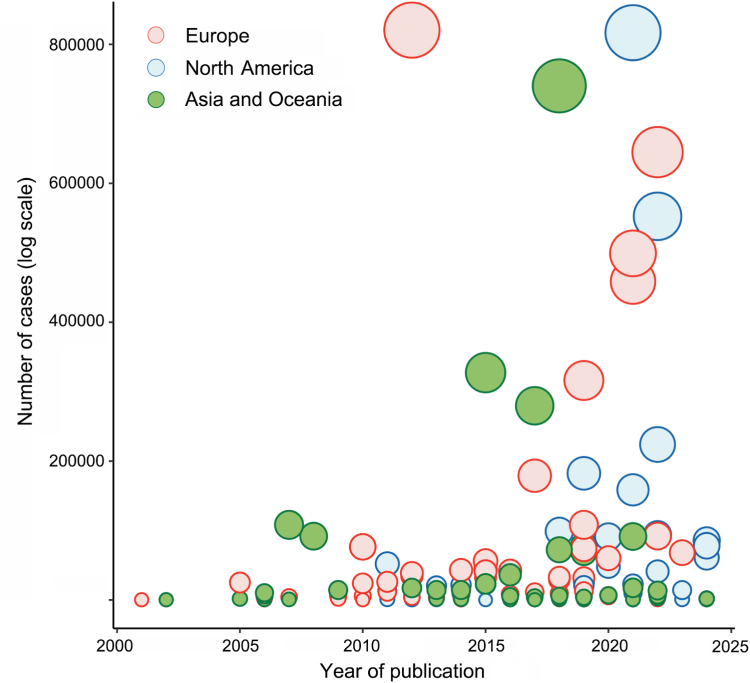
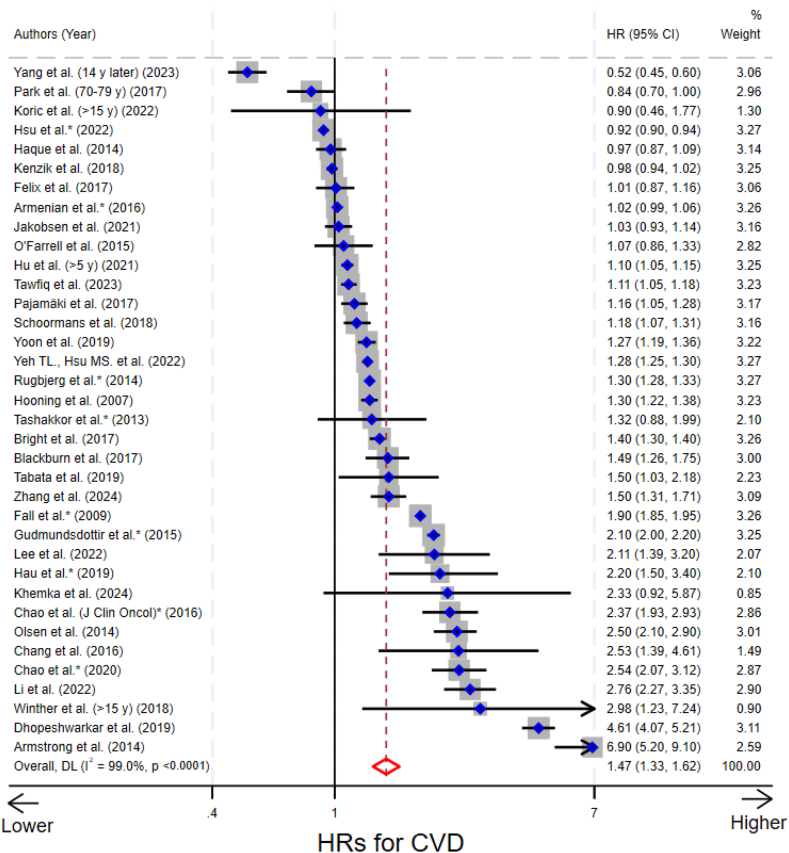
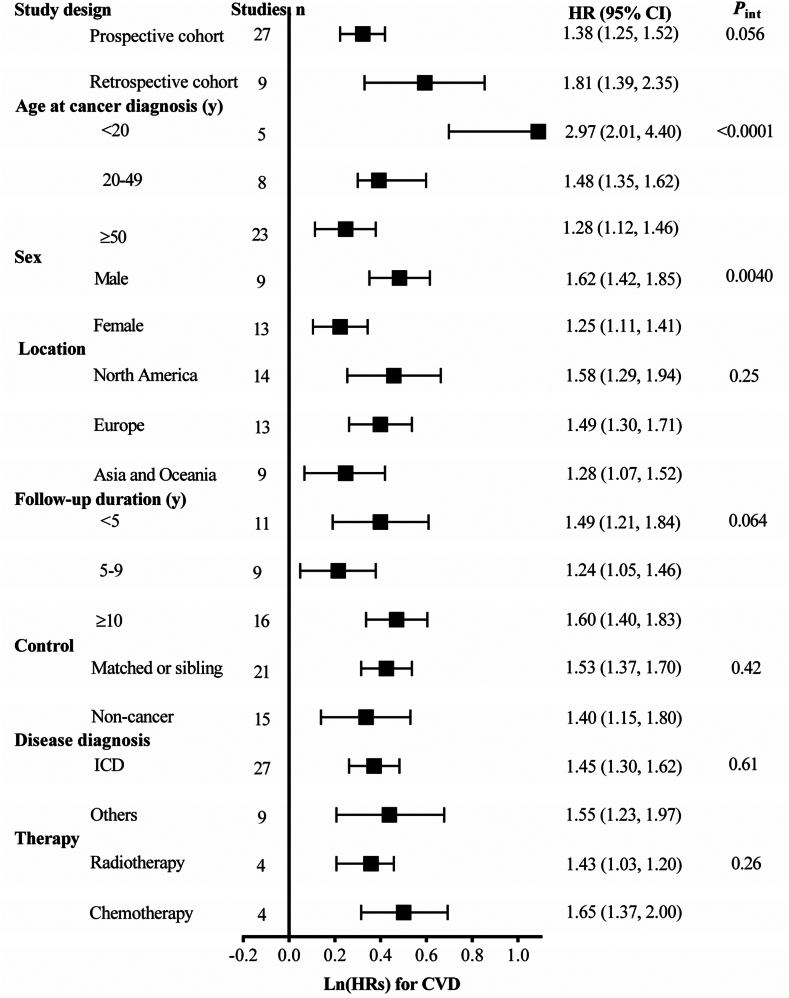
A total of 160 population-based cohort studies involving 49,395,865 participants (9,092,869 cancer survivors vs. 40,302,996 non-cancer controls) were identified. Overall, the HR for CVD in cancer survivors was 1.47 [95% CI, 1.33-1.62] compared with that in non-cancer controls. Cancer increased the risk of all 17 CVD subtypes, with cancer having the greatest effect on venous embolism, thrombosis or thrombophlebitis (HR, 3.07 [2.03-4.65]) and the least on ischemic heart disease (HR, 1.13 [1.03-1.24]). The increased risk of CVD was consistently shown in cancer survivors of brain, hematological, respiratory, male genital, and breast cancers, whereas no significant higher CVD risk was observed for other cancer types. Elevated risk of CVD was consistently shown in subgroup analyses of study design, age at cancer diagnosis, sex, location, follow-up duration, control, disease diagnosis, and therapy. Male and younger cancer survivors had elevated risk of CVD than female and older cancer survivors.
This meta-analysis provides an up-to-date comprehensive global overview that cancer survivors had increased risk of CVD and 17 CVD subtypes than non-cancer controls. CVD risk evaluation and management need to be prioritized in cancer survivors, particularly among male, younger, and specific cancer survivors (brain, hematological, respiratory, male genital, and breast). This study provides supporting evidence that may inform future updates to guidelines for CVD prevention in cancer survivors, highlighting its public health relevance.
The National Key R&D Program of China, the National Natural Science Foundation of China and the Young Elite Scientists Sponsorship Program by CAST.
关于癌症与心血管疾病(CVD)风险之间的关联,研究结果存在矛盾。本荟萃分析的假设是,基于人群队列研究,调查癌症幸存者相较于无癌症者患CVD的风险是否增加。
我们对前瞻性和回顾性队列研究进行了系统评价和荟萃分析。检索了1990年1月1日至2025年2月24日以任何语言发表在PubMed、Embase、Web of Science和Scopus上的文献。纳入了癌症幸存者和非癌症对照。主要结局是CVD风险。次要结局包括17种CVD亚型(如缺血性心脏病、脑血管疾病和外周血管疾病)。汇总了效应估计值(风险比,HRs)及95%置信区间。进行了亚组分析、敏感性分析和荟萃回归,以探讨结果的稳定性和异质性来源。本综述方案已在PROSPERO注册:CRD42024559349。
共纳入160项基于人群的队列研究,涉及49395865名参与者(9092869名癌症幸存者与40302996名非癌症对照)。总体而言,癌症幸存者患CVD的HR为1.47 [95% CI, 1.33 - 1.62],高于非癌症对照。癌症增加了所有17种CVD亚型的风险,其中对静脉栓塞、血栓形成或血栓性静脉炎的影响最大(HR,3.07 [2.03 - 4.65]),对缺血性心脏病的影响最小(HR,1.13 [1.03 - 1.24])。脑癌、血液系统癌症、呼吸系统癌症、男性生殖系统癌症和乳腺癌的幸存者患CVD的风险持续增加,但其他癌症类型未观察到显著更高的CVD风险。在研究设计、癌症诊断年龄、性别、部位、随访时间、对照、疾病诊断和治疗的亚组分析中,CVD风险升高均持续存在。男性和年轻癌症幸存者患CVD风险高于女性和老年癌症幸存者。
本荟萃分析提供了一份最新的全球综合概述表明癌症幸存者患CVD及17种CVD亚型的风险高于非癌症对照。癌症幸存者中需要优先进行CVD风险评估和管理,特别是男性、年轻者以及特定癌症幸存者(脑癌、血液系统癌症、呼吸系统癌症、男性生殖系统癌症和乳腺癌)中。本研究提供了支持性证据,可能为未来癌症幸存者CVD预防指南的更新提供参考,突出了其公共卫生意义。
国家重点研发计划项目、国家自然科学基金以及中国科协青年人才托举工程资助项目。