Tang Yingdan, Ye Jiazong, Xu Tingye, Sun Yuhuan, Meng Weiyang, Zhu Lielie, Jia Zhongheng, Wu Qian, Chen Daqing, Wu Fangfang
Emergency Department, The Second Affiliated Hospital and Yuying Children's Hospital, Wenzhou Medical University, Wenzhou, China.
Zhejiang Engineering Research Center for Innovation and Application of Intelligent Radiotherapy Technology, Zhejiang-Hong Kong Precision Theragnostic of Thoracic Tumors Joint Laboratory, Wenzhou Key Laboratory of Basic Science and Translational Research of Radiation Oncology, The Second Affiliated Hospital of Wenzhou Medical University, Wenzhou, Zhejiang, China.
J Cell Mol Med. 2025 Jun;29(12):e70590. doi: 10.1111/jcmm.70590.
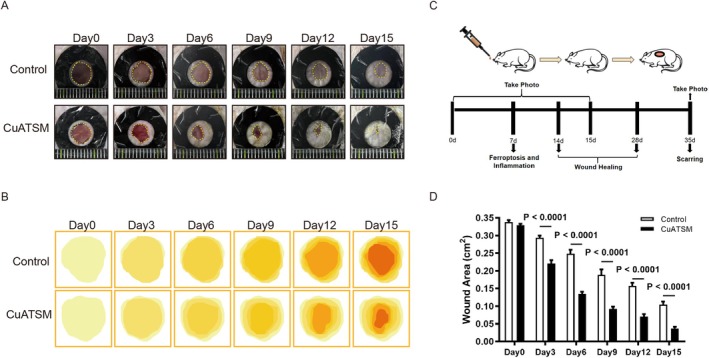
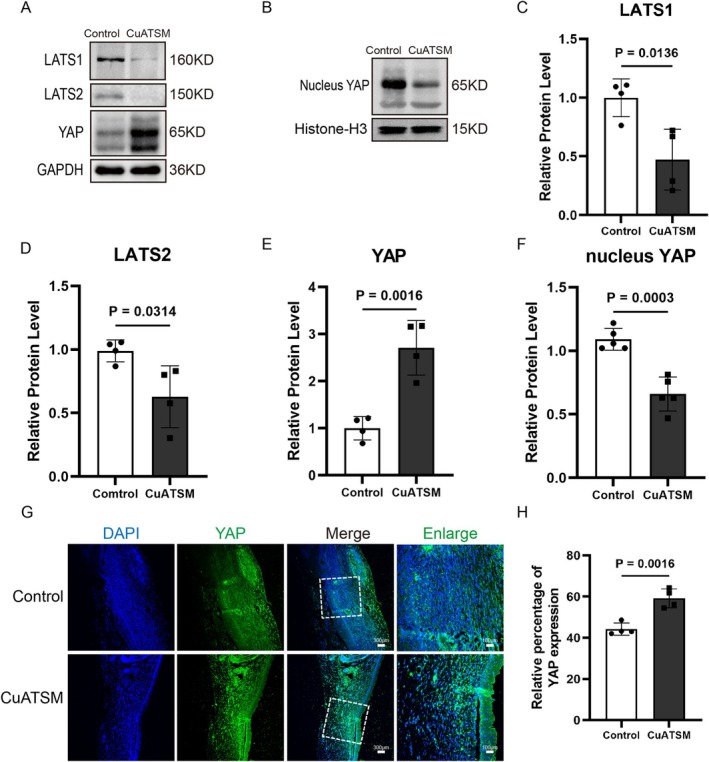
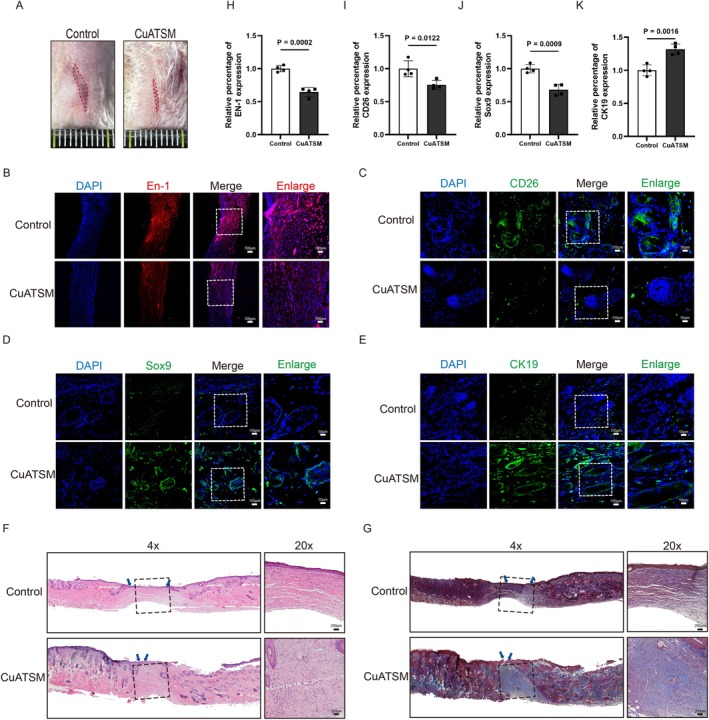
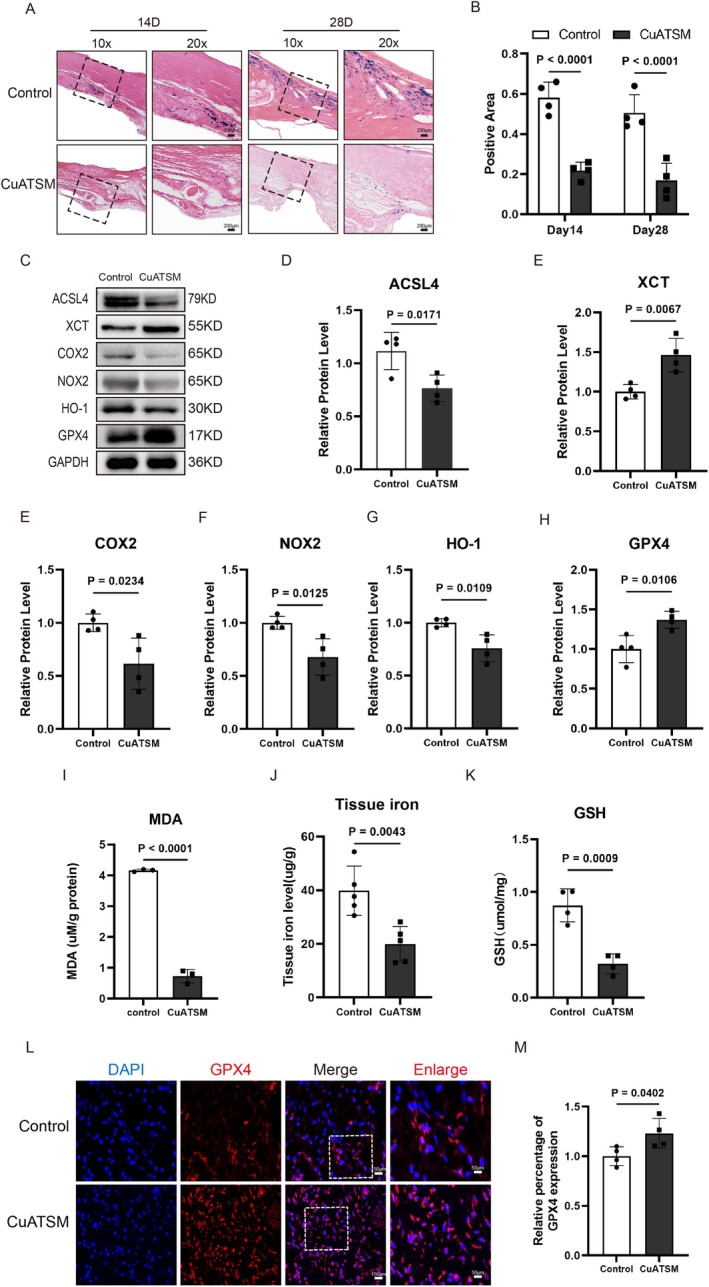
Skin wound healing is a complex biological process involving haemostasis, inflammation, proliferation/repair and remodelling. However, skin scarring, as one of the important stages in the healing process, can adversely affect the structure and function of related organs. Currently, effective treatments to address such scars remain insufficient. In this study, we established a full-thickness skin excision wound model using male ICR mice, which were randomly divided into a Control group and a CuATSM group. The CuATSM group received CuATSM (30 mg/kg) via gavage, with daily treatments continuing throughout the observation period. The Control group received an equivalent volume of 0.9% sodium chloride solution. Wound healing progression was evaluated through macroscopic photography, histological analyses, Western blotting and quantification of relevant biochemical markers at different healing stages. Our study reveals that CuATSM not only promotes rapid skin wound healing but also reduces scar formation in the late healing phase. Furthermore, our findings suggest that this effect is mediated through the ferroptosis-induced Hippo/YAP signalling pathway and macrophage polarisation. These findings highlight CuATSM as a promising therapeutic candidate for achieving scarless wound repair in clinical applications.
皮肤伤口愈合是一个复杂的生物学过程,涉及止血、炎症、增殖/修复和重塑。然而,皮肤瘢痕形成作为愈合过程中的重要阶段之一,会对相关器官的结构和功能产生不利影响。目前,针对此类瘢痕的有效治疗方法仍然不足。在本研究中,我们使用雄性ICR小鼠建立了全层皮肤切除伤口模型,将其随机分为对照组和CuATSM组。CuATSM组通过灌胃给予CuATSM(30mg/kg),在整个观察期内每日进行治疗。对照组给予等量的0.9%氯化钠溶液。通过宏观摄影、组织学分析、蛋白质免疫印迹法以及在不同愈合阶段对相关生化标志物进行定量分析来评估伤口愈合进程。我们的研究表明,CuATSM不仅能促进皮肤伤口快速愈合,还能减少愈合后期的瘢痕形成。此外,我们的研究结果表明,这种作用是通过铁死亡诱导的Hippo/YAP信号通路和巨噬细胞极化介导的。这些发现突出了CuATSM作为一种有前景的治疗候选物,可用于在临床应用中实现无瘢痕伤口修复。