Everaert Nicolas, Bové Thierry, Claus Isabelle, Czapla Jens, Martens Thomas, Philipsen Tine, François Katrien
Faculty of Medicine, Ghent University, Ghent, Belgium.
Department of Cardiac Surgery, Ghent University Hospital, Ghent, Belgium.
Aorta (Stamford). 2025 Feb;13(1):14-23. doi: 10.1055/s-0045-1809171. Epub 2025 Jun 17.
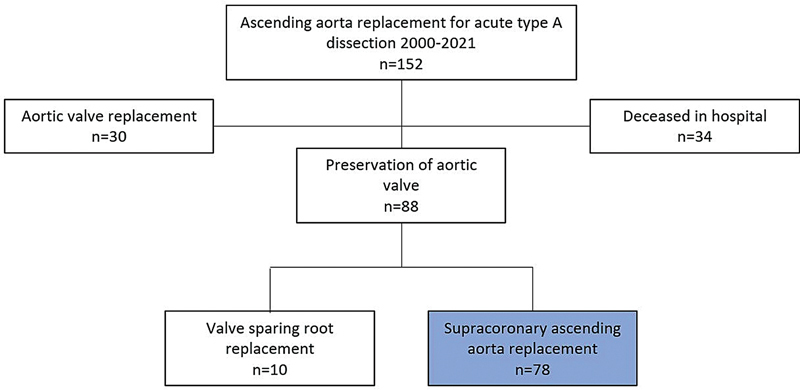
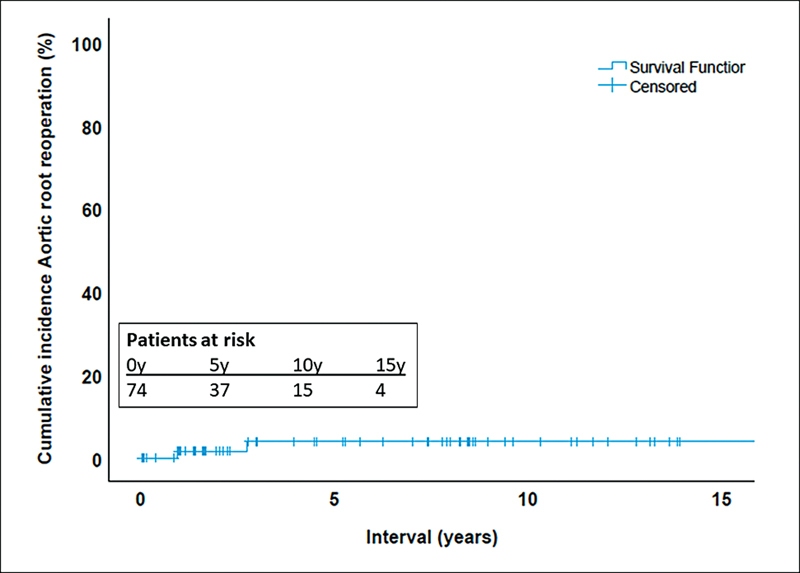
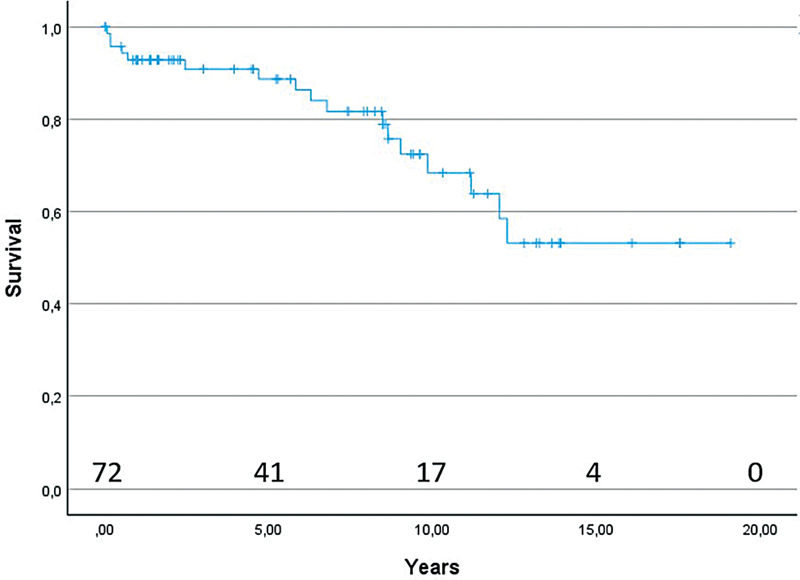
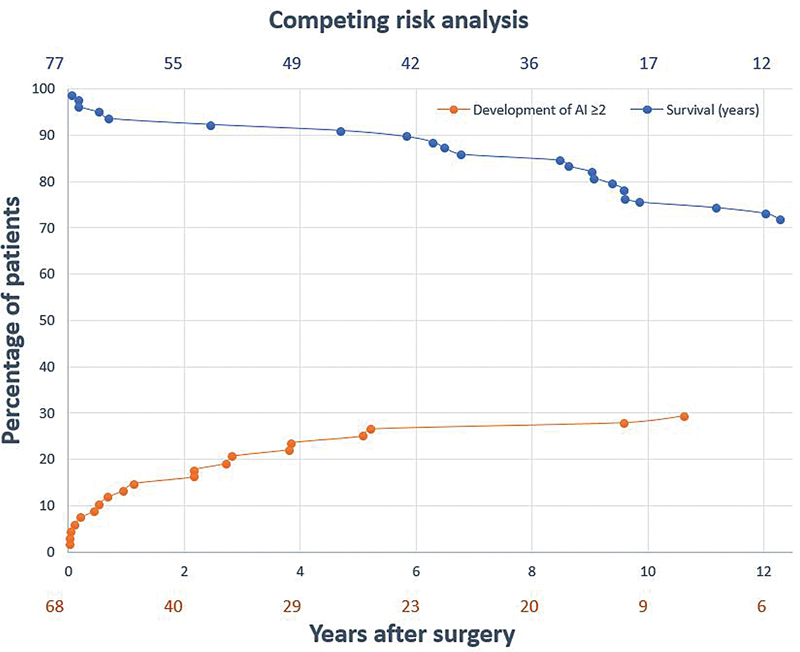
This study investigates the evolution of aortic valve function following supracoronary ascending aorta replacement (SCR) for acute type A aortic dissection (ATAAD). Factors contributing to aortic valve stability and progression of aortic valve insufficiency (AI) were examined.Patients who survived SCR for ATAAD between 2000 and 2021 were included. Univariable analyses to identify risk factors for AI grade ≥ 2 were performed, including anatomical parameters, perioperative findings, and follow-up root diameters. Evolution of aortic root dimensions was also investigated.Seventy-eight patients were included. AI grade ≥ 2 was observed in 20 (29.4%) patients during follow-up. Cumulative incidence of AI grade ≥ 2 was 4.7 ± 2.2%, 7.9 ± 3.4%, and 15.1 ± 5.5% at 1, 5, and 10 years, respectively. Aortic root reoperation was performed in three patients (4.0%) within 3 years of the index operation. Significant predictors of AI grade ≥ 2 included preoperative AI grade ≥2 ( = 0.037, odds ratio [OR] 1.46, 95% confidence interval [CI]: 1.02-2.09) and significant preoperative AI grade ≥ 2 in presence of at least two dissected sinuses ( = 0.039, OR: 2.88, 95% CI: 1.05-7.89). Diameters of the sinus of Valsalva ( < 0.001), sinotubular junction ( < 0.001), and ascending aorta graft ( < 0.001) increased over time. Absence of sinus of Valsalva ≥ 45 mm was 90.9, 84.9, and 80.3% at 1, 5, and 10 years, respectively.Preserving the aortic valve after ATAAD offers a viable long-term surgical option with a low need for proximal root reoperations in patients without aortic root dilatation. Significant preoperative AI, particularly in presence of extensive root dissection, are significant predictors of late AI grade ≥ 2, suggesting valve-sparing root replacement in these patients.
本研究调查了急性A型主动脉夹层(ATAAD)患者行冠状动脉上升主动脉置换术(SCR)后主动脉瓣功能的演变。研究了影响主动脉瓣稳定性和主动脉瓣关闭不全(AI)进展的因素。纳入了2000年至2021年间因ATAAD接受SCR且存活的患者。进行单因素分析以确定AI分级≥2的危险因素,包括解剖学参数、围手术期发现和随访时的根部直径。还研究了主动脉根部尺寸的演变。共纳入78例患者。随访期间,20例(29.4%)患者出现AI分级≥2。AI分级≥2的累积发生率在1年、5年和10年时分别为4.7±2.2%、7.9±3.4%和15.1±5.5%。3例患者(4.0%)在初次手术3年内接受了主动脉根部再次手术。AI分级≥2的显著预测因素包括术前AI分级≥2(P = 0.037,比值比[OR] 1.46,95%置信区间[CI]:1.02 - 2.09)以及在至少两个窦管交界区有明显解剖时术前AI分级≥2(P = 0.039,OR:2.88,95% CI:1.