Zhang Zhe, Lai Yunshi, Liu Xiaoyi, Ye Peiyi, Kong Yaozhong, Xie Chao
Department of Nephrology, The First People's Hospital of Foshan, Foshan, Guangdong, China.
Medicine (Baltimore). 2025 Jun 13;104(24):e42820. doi: 10.1097/MD.0000000000042820.
Systemic lupus erythematosus (SLE) is a complex autoimmune disease that affects various organs. Disease activity in SLE may diminish following the initiation of dialysis in patients with end-stage renal disease.
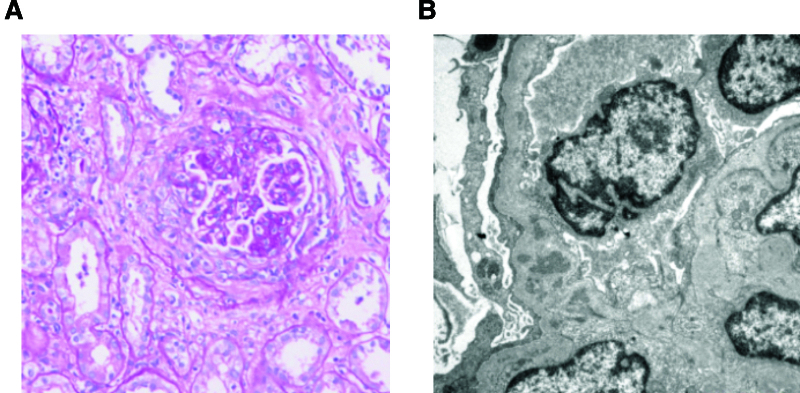
We report the case of a 69-year-old female patient with a prior diagnosis of IgA nephropathy who developed SLE characterized by severe thrombocytopenia after hemodialysis.
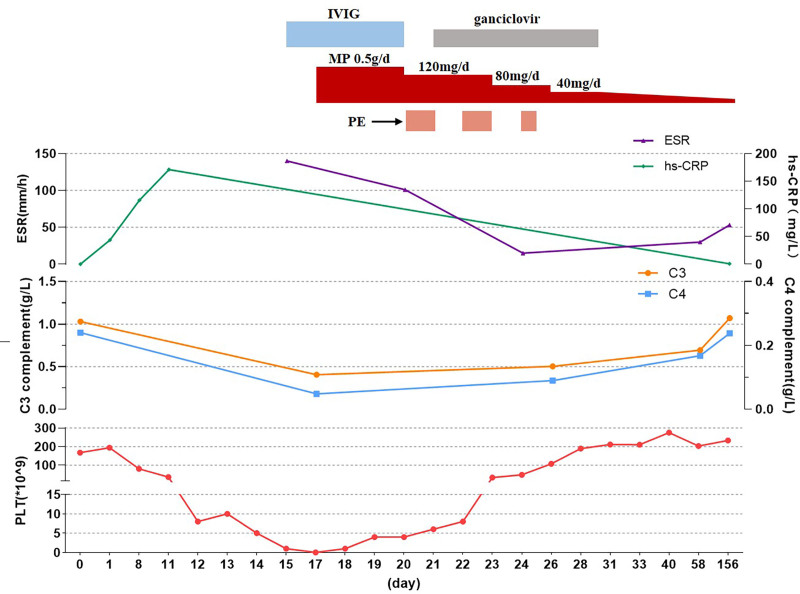
The patient presented with fever, rash, polyarthralgia, thrombocytopenia, hemolytic anemia, positive antinuclear antibodies, anti-nucleosome antibodies, anticardiolipin antibodies, anti-β2-glycoprotein I antibodies, and decreased complement C3 and C4 levels. She was diagnosed with SLE complicated by hematological damage and immune thrombocytopenia.
The treatment included an intravenous infusion of 5% human immunoglobulin at 20 g/day for 5 days combined with an intravenous infusion of methylprednisolone at 500 mg/day for 3 days. Plasma exchange therapy was conducted a total of 3 times.
The patient was discharged with methylprednisolone and hydroxychloroquine treatment. The platelet count was stable, antinuclear antibody, anti-nucleosome antibody, antiphospholipid antibody, Coombs test, and complement C3 and C4 levels were normal after discharge.
In patients with unexplained thrombocytopenia, the possibility of SLE should be considered even after hemodialysis initiation.
系统性红斑狼疮(SLE)是一种影响多个器官的复杂自身免疫性疾病。终末期肾病患者开始透析后,SLE的疾病活动可能会减弱。
我们报告一例69岁女性患者,既往诊断为IgA肾病,在血液透析后发生以严重血小板减少为特征的SLE。
患者出现发热、皮疹、多关节痛、血小板减少、溶血性贫血、抗核抗体、抗核小体抗体、抗心磷脂抗体、抗β2糖蛋白I抗体阳性,补体C3和C4水平降低。她被诊断为SLE并发血液学损害和免疫性血小板减少。
治疗包括静脉输注5%人免疫球蛋白,20g/天,共5天,联合静脉输注甲泼尼龙,500mg/天,共3天。共进行了3次血浆置换治疗。
患者出院时接受甲泼尼龙和羟氯喹治疗。出院后血小板计数稳定,抗核抗体、抗核小体抗体、抗磷脂抗体、库姆斯试验以及补体C3和C4水平均正常。
对于原因不明的血小板减少患者,即使在开始血液透析后也应考虑SLE的可能性。