Kramer Axel, Seifert Julia, Gruber Bernd, Abele-Horn Marianne, Arvand Mardjan, Blacky Alexander, Buerke Michael, Chaberny Iris, Deja Maria, Engelhart Steffen, Eschberger Dieter, Gerhardts Anja, Hedtmann Achim, Heider Julia, Jäkel Christian, Kalbe Peter, Luckhaupt Horst, Müller Wolfgang, Novotny Alexander, Papan Cihan, Piechota Hansjürgen, Pitten Frank-Albert, Reinecke Veronika, Scheithauer Simone, Schilling Dieter, Schulz-Schaeffer Walter, Sunderdiek Ulrich
German Society for General and Hospital Hygiene, Berlin, Germany.
German Trauma Society, Berlin, Germany.
GMS Hyg Infect Control. 2025 May 16;20:Doc20. doi: 10.3205/dgkh000549. eCollection 2025.
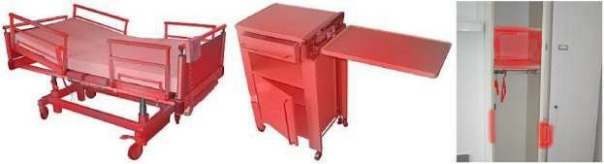
Hospitalized patients are often more susceptible to infection than healthy people due to their illness, the presence of devices and their reduced immune defenses. At the same time, potentially pathogenic pathogens, which are often characterized by antibiotic resistance, are released into the area close to the patient, including the bed. To prevent hospital beds from becoming a source of nosocomial infections, bed linen and hospital beds, including encasings or pillows and comforters, must be disinfected before reoccupation, in contrast to hotel beds. The guideline outlines the hygienic and ergonomic requirements for hospital beds, ensuring bed hygiene during the patient's stay and the principles of bed reprocessing, including organization, quality assurance and staff protection, in 40 recommendations.
由于患病、体内有医疗器械以及免疫防御能力下降,住院患者通常比健康人更容易感染。与此同时,具有抗生素耐药性这一常见特征的潜在致病病原体被释放到患者周围区域,包括病床周围。与酒店床铺不同,为防止医院病床成为医院感染源,床单和医院病床,包括床罩、枕头和被子,在重新使用前必须进行消毒。该指南在40条建议中概述了医院病床的卫生和人体工程学要求,确保患者住院期间的病床卫生以及病床再处理原则,包括组织、质量保证和工作人员保护。