Josephs Gerrit, Hitpass Lea, Truhn Daniel, Meister Franziska, Berres Marie-Luise, Luedde Tom, Jonigk Danny, Olde Damink Steven W M, Lang Sven Arke, Vondran Florian, Amygdalos Iakovos
Department of General, Visceral, Pediatric, and Transplantation Surgery, University Hospital RWTH Aachen, Aachen, Germany.
Department of Diagnostic and Interventional Radiology, University Hospital RWTH Aachen, Aachen, Germany.
Hepatobiliary Surg Nutr. 2025 Jun 1;14(3):411-422. doi: 10.21037/hbsn-24-121. Epub 2024 Sep 18.
In patients with colorectal liver metastases (CRLM), preoperative chemotherapy may increase resectability and survival outcomes. However, cytotoxic agents can also cause chemotherapy-associated liver injury (CALI), leading to increased rates of postoperative complications. This study evaluates the association between splenic hypertrophy (SH) after preoperative chemotherapy and postoperative liver-specific complications (LSC), in patients undergoing major liver resection for CRLM.
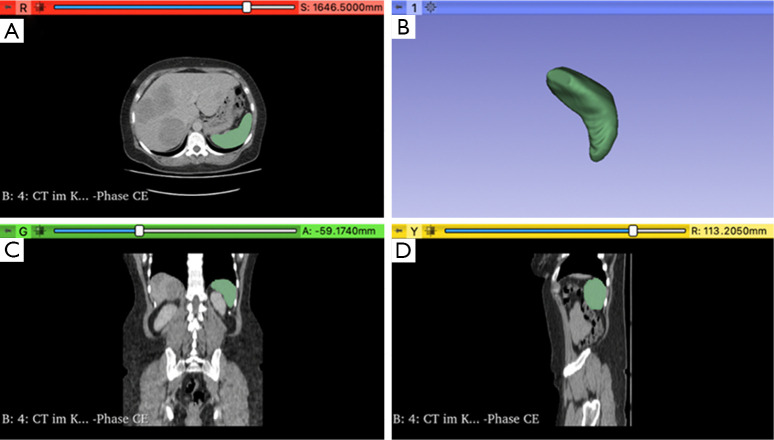
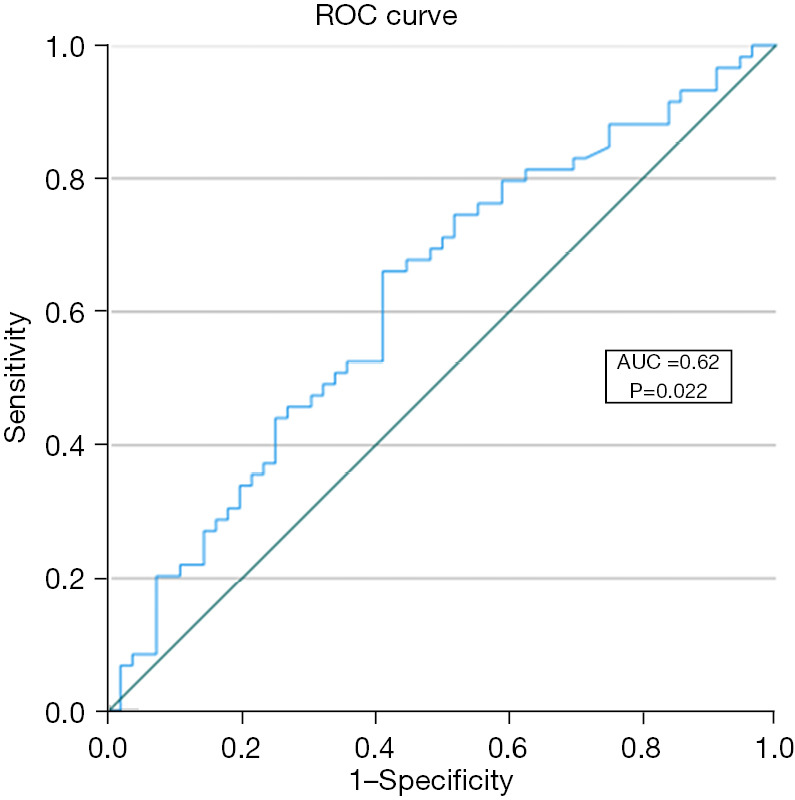
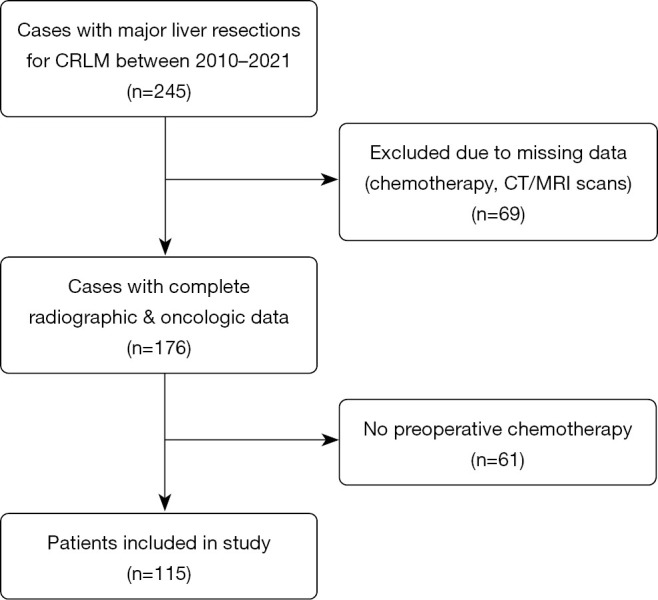
This retrospective study included patients who underwent major curative liver resection of CRLM following preoperative chemotherapy at the University Hospital RWTH Aachen (UH-RWTH) between 2010-2021. Patients with missing radiological images, incomplete data on chemotherapy regimens, or prior splenectomy were excluded. Volumetric measurements of the spleen were performed on preoperative computerized tomography (CT) and magnetic resonance imaging (MRI) images, using segmentation software (3D-Slicer). Receiver-operating characteristic (ROC) analysis was performed to determine the optimal SH cut-off for predicting postoperative LSC. Independent risk factors of postoperative LSC were examined using logistic regression.
A total of 115 patients were included in the study, of which 78 (68%) received oxaliplatin as part of their preoperative chemotherapy regimen. A threshold of 8.6% SH (Youden Index =0.25) was identified as predictive of postoperative LSC. Patients with SH >8.6% (n=62) received oxaliplatin significantly more often (84% 49%; P<0.001) and exhibited higher rates of liver fibrosis (72% 52%, P=0.03) and LSC (63% 38%, P=0.007). Multivariable logistic regression analysis identified SH >8.6% as an independent risk factor for LSC (odds ratio 2.86, 95% confidence interval: 1.104-7.402, P=0.03).
Preoperative SH may be a valuable predictor of postoperative LSC in patients undergoing major liver resection for CRLM, following chemotherapy. Further studies are necessary to investigate the impact on a larger cohort and find preventive strategies to mitigate and treat CALI.
在结直肠癌肝转移(CRLM)患者中,术前化疗可能会提高切除率并改善生存结局。然而,细胞毒性药物也可能导致化疗相关肝损伤(CALI),从而使术后并发症发生率增加。本研究评估了接受CRLM大肝切除手术的患者在术前化疗后脾肿大(SH)与术后肝脏特异性并发症(LSC)之间的关联。
这项回顾性研究纳入了2010年至2021年期间在亚琛工业大学医院(UH-RWTH)接受术前化疗后进行CRLM大根治性肝切除的患者。排除放射影像缺失、化疗方案数据不完整或既往有脾切除术的患者。使用分割软件(3D-Slicer)对术前计算机断层扫描(CT)和磁共振成像(MRI)图像进行脾脏容积测量。进行受试者操作特征(ROC)分析以确定预测术后LSC的最佳SH临界值。使用逻辑回归分析术后LSC的独立危险因素。
本研究共纳入115例患者,其中78例(68%)在术前化疗方案中使用了奥沙利铂。确定SH阈值为8.6%(约登指数=0.25)可预测术后LSC。SH>8.6%的患者(n=62)更常使用奥沙利铂(84%对49%;P<0.001),且肝纤维化发生率(72%对52%,P=0.03)和LSC发生率(63%对38%,P=0.007)更高。多变量逻辑回归分析确定SH>8.6%是LSC的独立危险因素(比值比2.86,95%置信区间:1.104-7.402,P=0.03)。
术前SH可能是CRLM患者化疗后接受大肝切除术后LSC的有价值预测指标。有必要进行进一步研究,以调查对更大队列的影响,并找到减轻和治疗CALI的预防策略。