Jing Yongfa, Yan Dongli
Department of Handan First Hospital, Handan, China.
Department of Hebei Runkang Medical Technology, Handan, China.
Front Physiol. 2025 Jun 3;16:1538733. doi: 10.3389/fphys.2025.1538733. eCollection 2025.
Irinotecan (CPT-11), a cornerstone chemotherapeutic agent for colorectal and pancreatic cancers, is limited by severe gastrointestinal toxicities, particularly diarrhea, which compromises treatment adherence and patient quality of life. Soy peptides (SPs), bioactive compounds with anti-inflammatory and prebiotic properties, have shown potential in enhancing intestinal barrier function. This study investigates SPs' protective effects against irinotecan-induced intestinal injury, focusing on microbiota modulation, immune regulation, and mucosal repair.
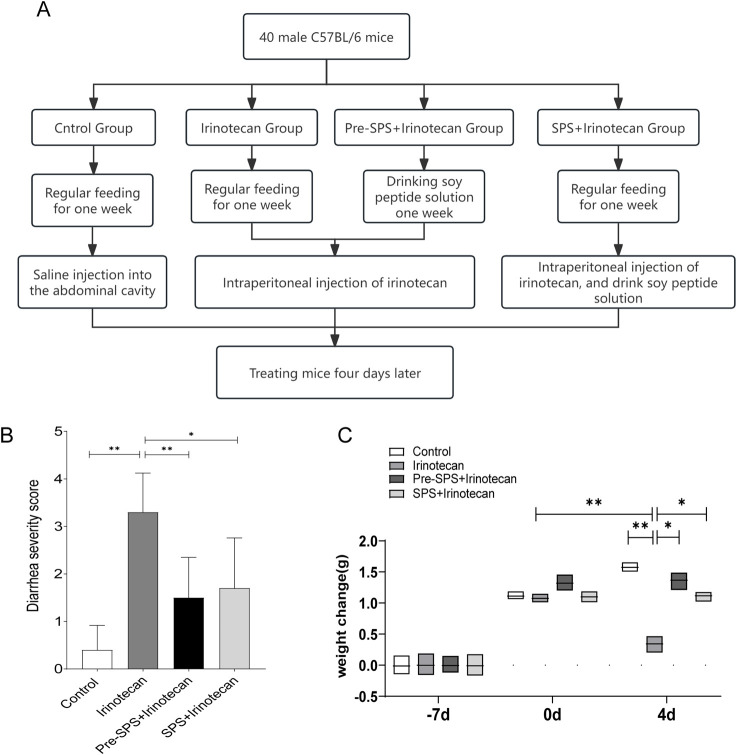
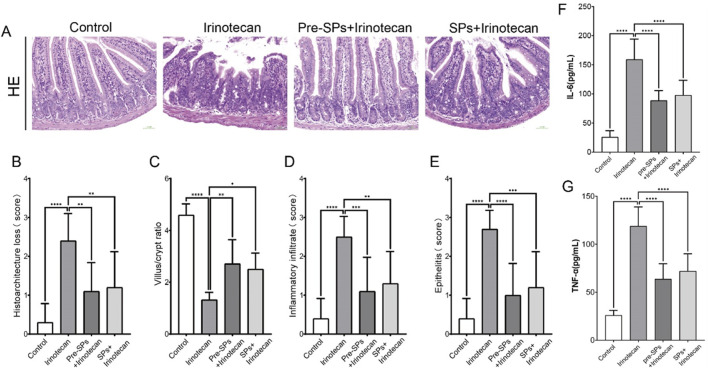
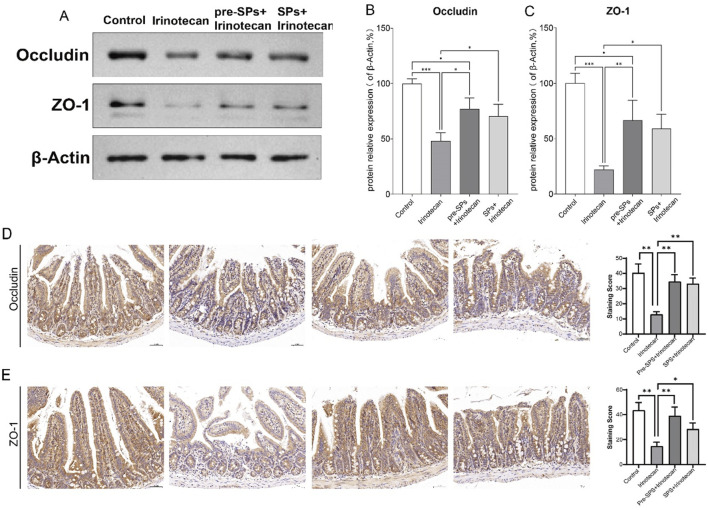
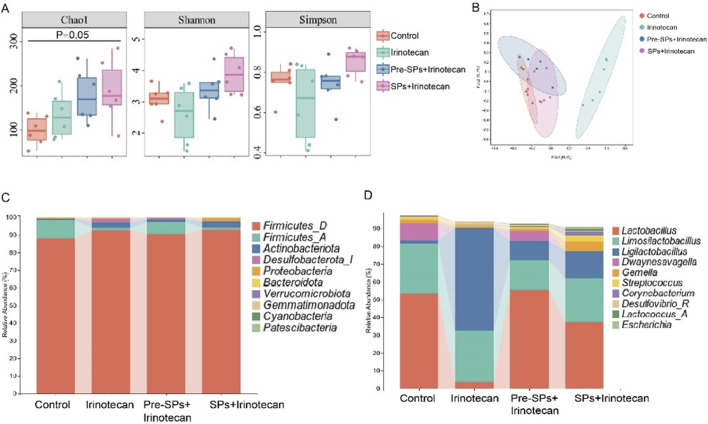
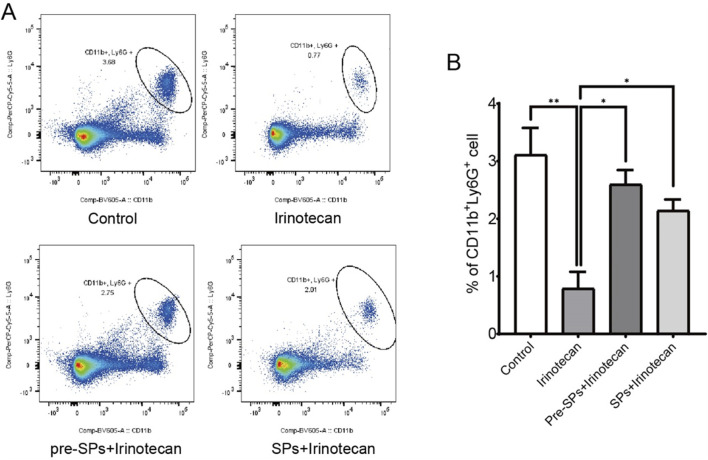
Female C57BL/6 mice were randomly divided into four groups (n = 10/group): Control, Irinotecan, Pre-SPs+ Irinotecan, and SPs+ Irinotecan. Diarrhea severity and body weight changes were monitored daily. Small intestinal injury was evaluated by hematoxylin and eosin (H&E) staining with epithelial damage scoring, while intestinal barrier integrity was assessed via Western blotting (WB) and immunohistochemistry. Serum levels of inflammatory cytokines (TNF-α and IL-6) were quantified using ELISA, and neutrophil infiltration was measured by flow cytometry. Fecal samples were subjected to 16S rRNA sequencing to analyze gut microbiota composition.
SPs intervention significantly reduced the incidence of diarrhea ( < 0.05) and attenuated body weight loss ( < 0.05) in mice. Histological analysis demonstrated that SPs restored intestinal architecture, as evidenced by reduced epithelial damage scores ( < 0.05), increased expression of tight junction proteins (occludin and ZO-1), and improved intestinal permeability ( < 0.05). Gut microbiota profiling revealed that irinotecan-induced dysbiosis was characterized by decreased α-diversity and enrichment of pathogenic taxa. SPs treatment restored microbial diversity and significantly elevated the abundance of beneficial genera, including and ( < 0.05). Immunological assays further indicated that SPs suppressed pro-inflammatory cytokine levels (TNF-α and IL-6, < 0.001) and reduced neutrophil infiltration ( < 0.05).
These findings suggest that soy peptides protect against irinotecan-induced intestinal toxicity through multiple mechanisms, including microbiota regulation, immune modulation, and intestinal barrier restoration, highlighting their potential as a therapeutic candidate for chemotherapy-induced intestinal damage.
伊立替康(CPT-11)是结直肠癌和胰腺癌的一种基石性化疗药物,但受到严重胃肠道毒性的限制,尤其是腹泻,这会影响治疗依从性和患者生活质量。大豆肽(SPs)是具有抗炎和益生元特性的生物活性化合物,已显示出增强肠道屏障功能的潜力。本研究调查了大豆肽对伊立替康诱导的肠道损伤的保护作用,重点关注微生物群调节、免疫调节和黏膜修复。
将雌性C57BL/6小鼠随机分为四组(每组n = 10):对照组、伊立替康组、预大豆肽+伊立替康组和大豆肽+伊立替康组。每天监测腹泻严重程度和体重变化。通过苏木精和伊红(H&E)染色及上皮损伤评分评估小肠损伤,同时通过蛋白质免疫印迹法(WB)和免疫组织化学评估肠道屏障完整性。使用酶联免疫吸附测定(ELISA)定量血清炎症细胞因子(TNF-α和IL-6)水平,并通过流式细胞术测量中性粒细胞浸润。对粪便样本进行16S rRNA测序以分析肠道微生物群组成。
大豆肽干预显著降低了小鼠腹泻的发生率(<0.05),并减轻了体重减轻(<0.05)。组织学分析表明,大豆肽恢复了肠道结构,上皮损伤评分降低(<0.05)、紧密连接蛋白(闭合蛋白和ZO-1)表达增加以及肠道通透性改善(<0.05)证明了这一点。肠道微生物群分析显示,伊立替康诱导的生态失调的特征是α多样性降低和致病菌群富集。大豆肽治疗恢复了微生物多样性,并显著提高了有益菌属的丰度,包括[具体菌属1]和[具体菌属2](<0.05)。免疫学检测进一步表明,大豆肽抑制了促炎细胞因子水平(TNF-α和IL-6,<0.001),并减少了中性粒细胞浸润(<0.05)。
这些发现表明,大豆肽通过多种机制预防伊立替康诱导的肠道毒性,包括微生物群调节、免疫调节和肠道屏障恢复,突出了它们作为化疗诱导的肠道损伤治疗候选药物的潜力。