Ke Zhiqiang, Ma Qianqian, Ye Xiaonan, Jin Yan, Wang Yanlin, Zhao Xinyuan, Su Zhengding
Protein Engineering and Biopharmaceuticals science, Hubei University of Technology, Wuhan, China.
Institute of Materia Medica, School of Pharmaceutical Sciences, Xinjiang University, Urumqi, China.
Microbiol Spectr. 2025 Aug 5;13(8):e0282824. doi: 10.1128/spectrum.02828-24. Epub 2025 Jun 18.
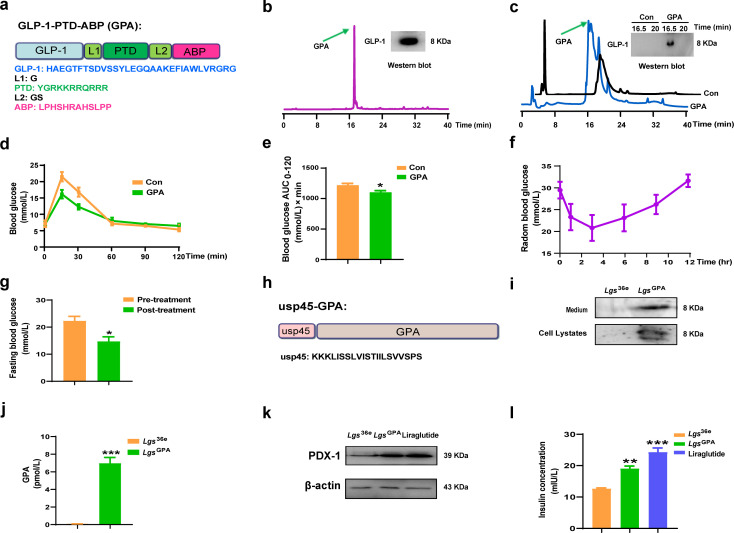
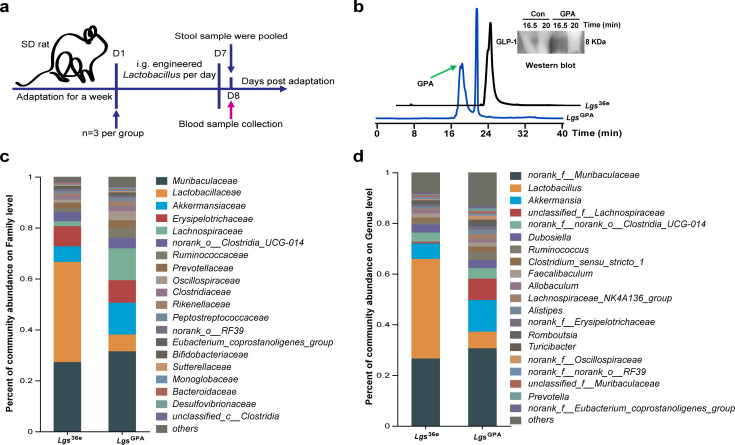
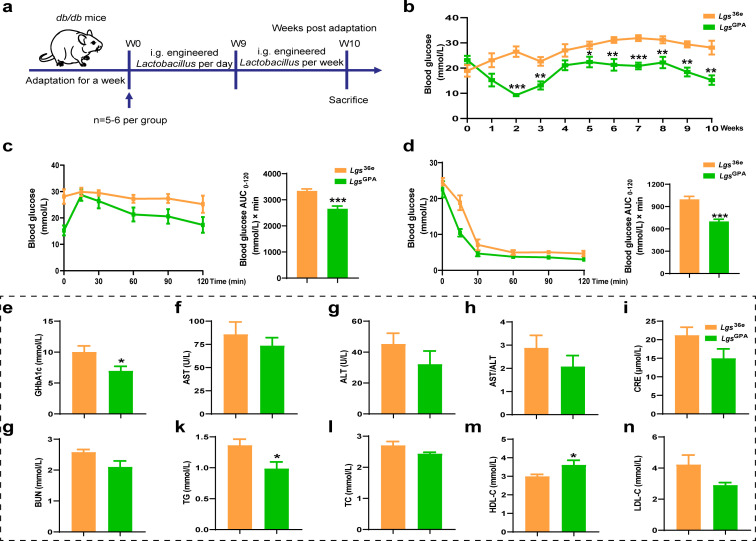
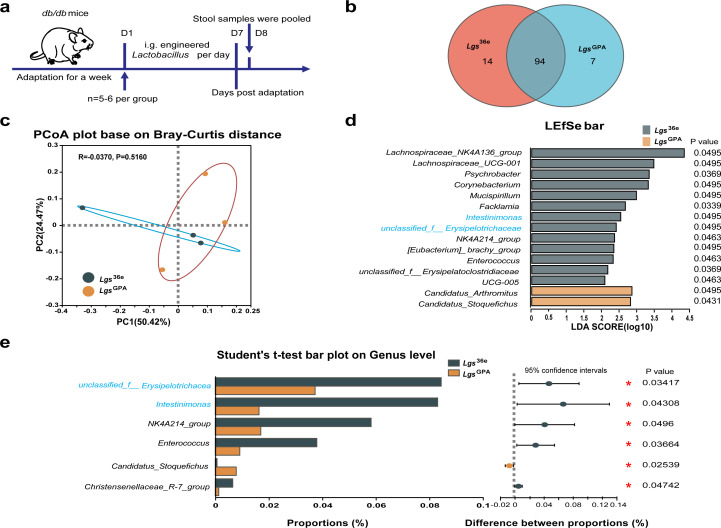
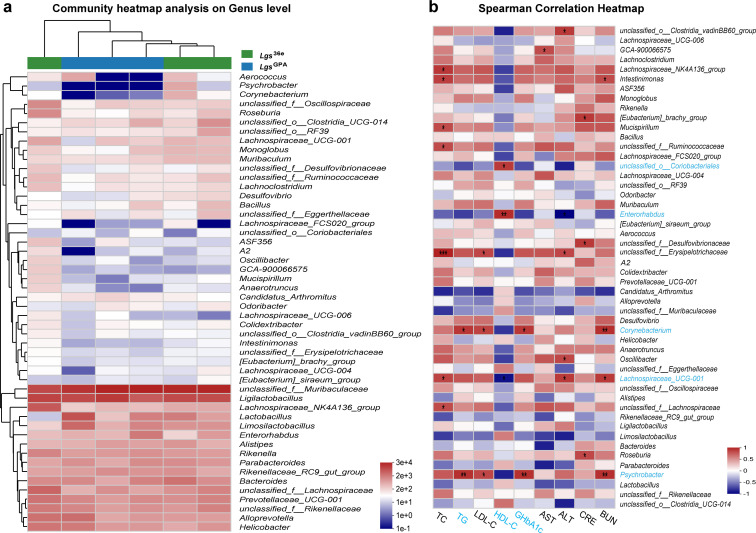
Glucagon-like peptide-1 (GLP-1) is an effective therapeutic peptide for the treatment of type 2 diabetes mellitus (T2DM). Here, we constructed an effective probiotic-based oral GLP-1 delivery system by engineering the probiotic strain of () to secrete GLP-1 fusion peptide, which combines GLP-1 with protein transduction domain (PTD) and a serum albumin binding peptide (ABP), GLP-1-PTD-ABP (GPA). The supernatants of cultures significantly upregulated the expression of PDX-1 and stimulated insulin release in Min6 cells. Daily oral administration of in mice significantly alleviated insulin resistance, hyperglycemia, and dyslipidemia. Simultaneously, the abundance of and was significantly reduced in mice, while the average abundance of increased in the SD rats. These findings demonstrate that the probiotic-based delivery system represents a versatile and effective strategy for the oral administration of therapeutic peptides. Collectively, our results highlight the potential of this probiotic-based approach as a promising therapeutic and preventive intervention for T2DM.IMPORTANCEIt is important to develop the oral delivery strategy for therapeutic peptides. Due to issues with patient adherence and the low oral bioavailability of current administration methods, researchers have been exploring oral delivery strategies for GLP-1 analogs for many years, including the use of advanced microbiome therapeutics (AMTs). AMTs offer the potential to use engineered microbes for innovative therapeutic applications, such as the oral delivery of GLP-1 analogs. Our approaches offer a general oral delivery strategy for therapeutic peptides. The probiotic-based approach represents a promising method for treating and preventing T2DM.
胰高血糖素样肽-1(GLP-1)是治疗2型糖尿病(T2DM)的一种有效治疗性肽。在此,我们通过改造()益生菌菌株以分泌GLP-1融合肽构建了一种有效的基于益生菌的口服GLP-1递送系统,该融合肽将GLP-1与蛋白转导域(PTD)和血清白蛋白结合肽(ABP)结合,即GLP-1-PTD-ABP(GPA)。()培养物的上清液显著上调了Min6细胞中PDX-1的表达并刺激了胰岛素释放。对小鼠每日口服()可显著减轻胰岛素抵抗、高血糖和血脂异常。同时,小鼠中()和()的丰度显著降低,而SD大鼠中()的平均丰度增加。这些发现表明,基于益生菌的递送系统是一种用于口服治疗性肽的通用且有效的策略。总体而言,我们的结果突出了这种基于益生菌的方法作为T2DM一种有前景的治疗和预防干预措施的潜力。重要性开发治疗性肽的口服递送策略很重要。由于患者依从性问题以及当前给药方法的口服生物利用度低,研究人员多年来一直在探索GLP-1类似物的口服递送策略,包括使用先进的微生物组疗法(AMT)。AMT提供了利用工程微生物进行创新治疗应用的潜力,例如口服递送GLP-1类似物。我们的方法为治疗性肽提供了一种通用的口服递送策略。基于益生菌的方法是治疗和预防T2DM的一种有前景的方法。