Kochenova Olga V, D'Alessandro Giuseppina, Pilger Domenic, Schmid Ernst, Richards Sean L, Garcia Marcos Rios, Jhujh Satpal S, Voigt Andrea, Gupta Vipul, Carnie Christopher J, Alex Wu R, Gueorguieva Nadia, Lam Simon, Stewart Grant S, Walter Johannes C, Jackson Stephen P
Department of Biological Chemistry and Molecular Pharmacology, Harvard Medical School, Blavatnik Institute, Boston, MA, 02115, USA.
Howard Hughes Medical Institute, Boston, MA, 02115, USA.
Nat Commun. 2025 Jun 18;16(1):5333. doi: 10.1038/s41467-025-60139-z.
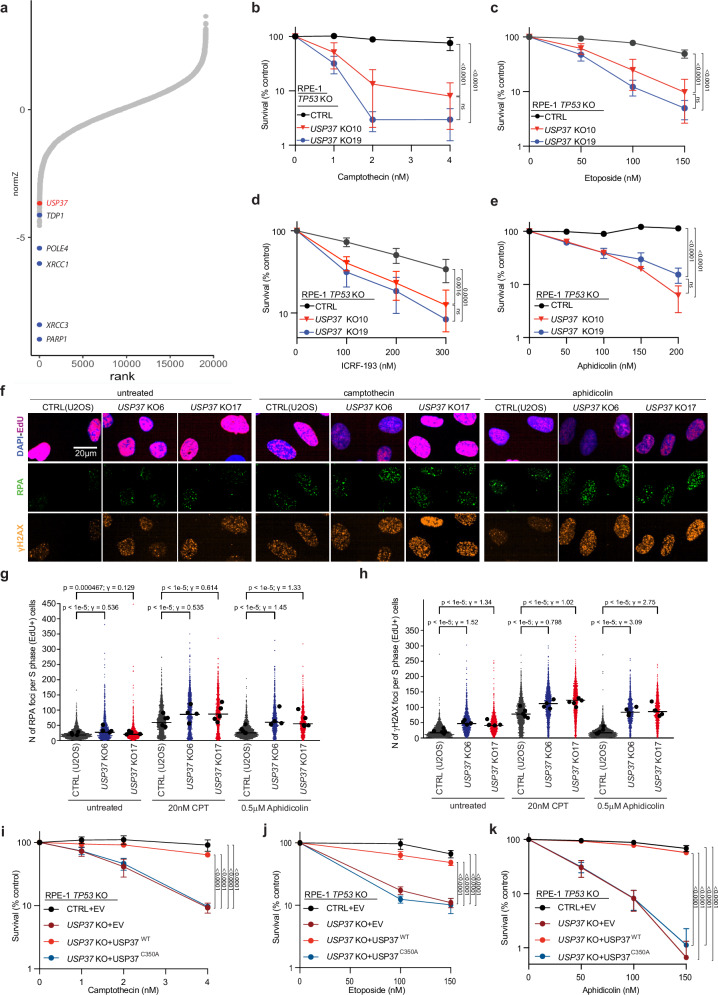
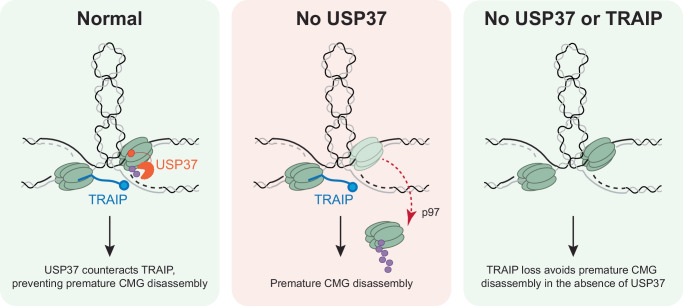
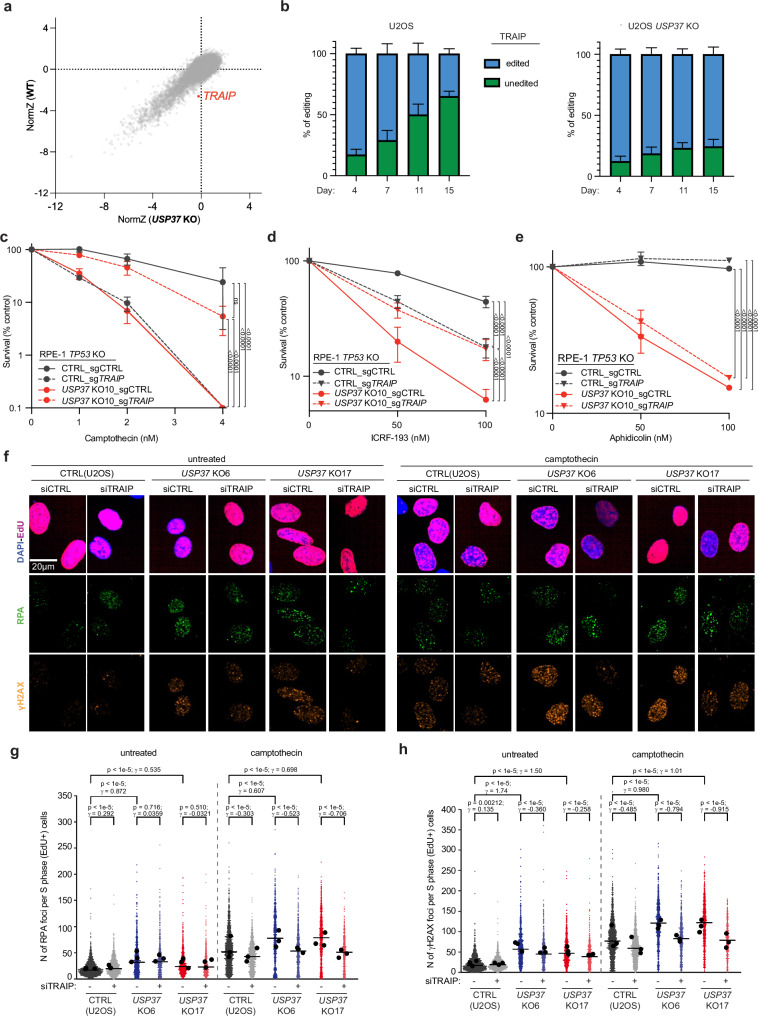
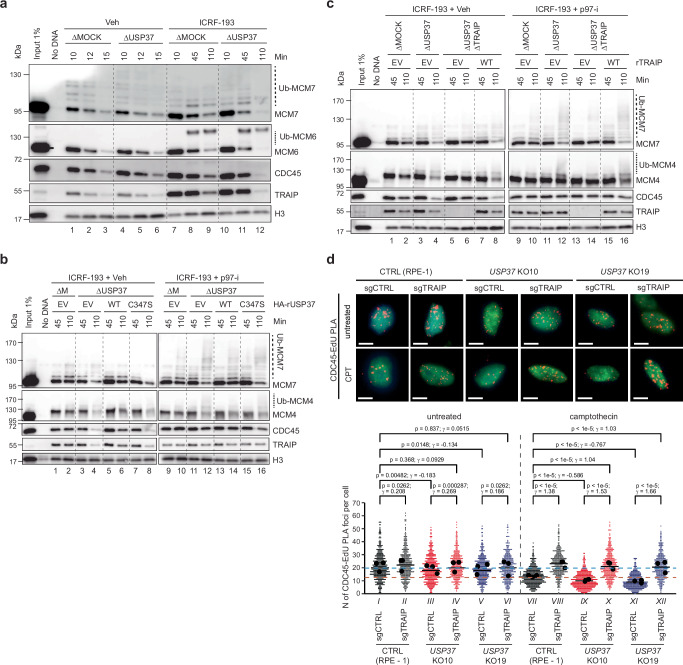
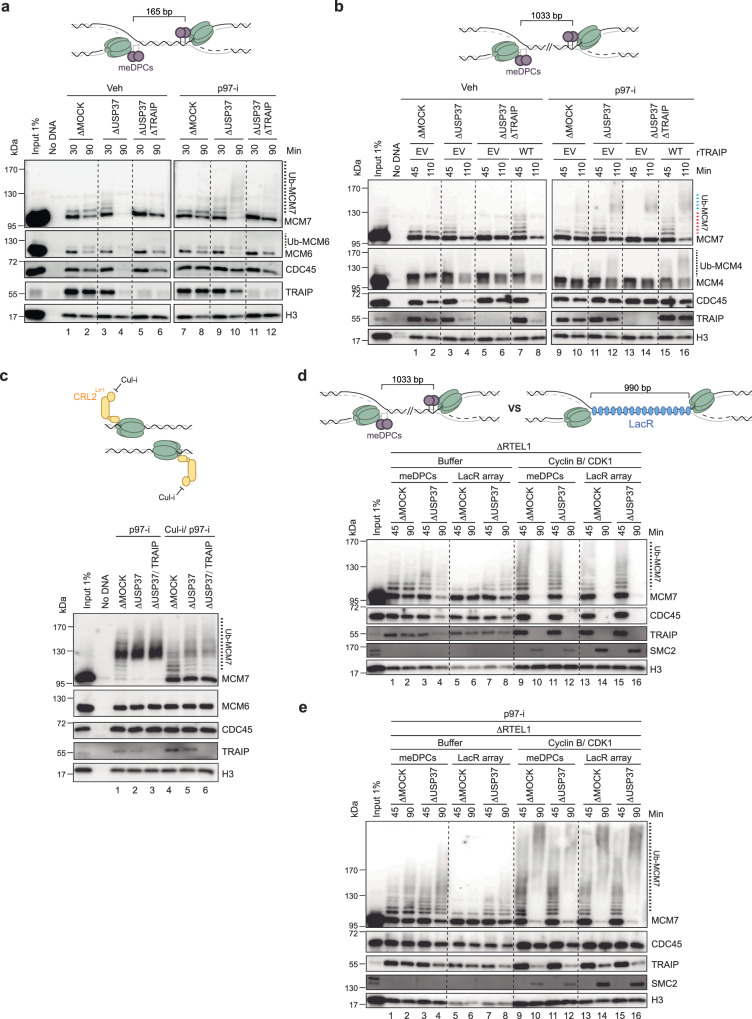
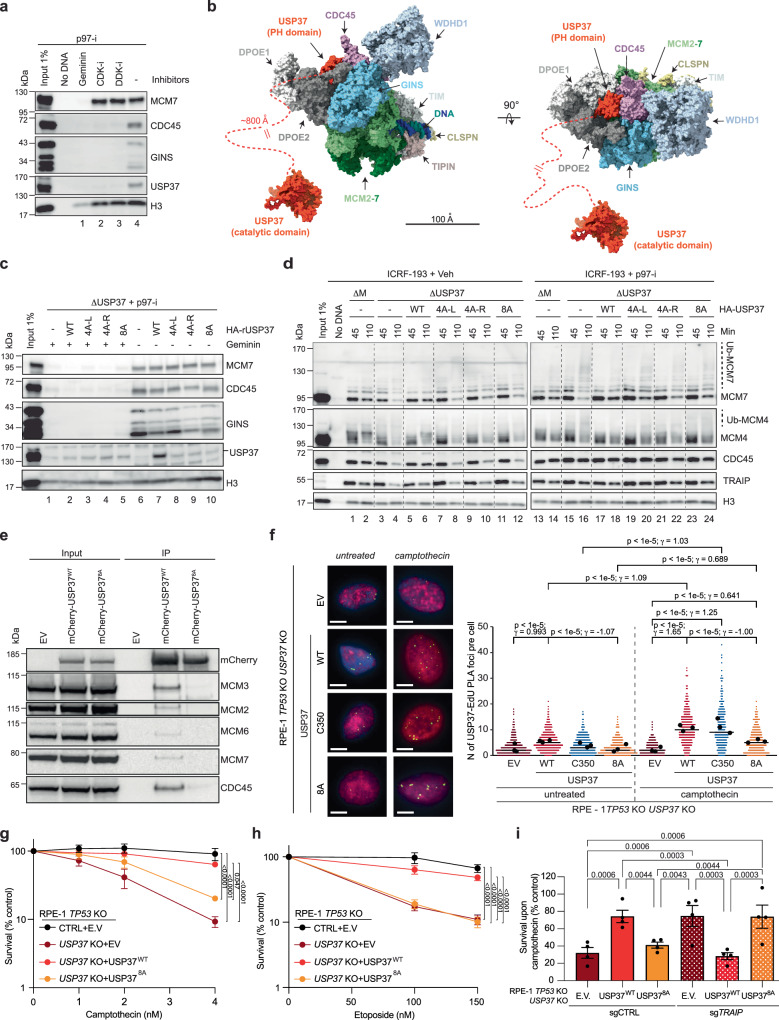
The eukaryotic replisome, which consists of the CDC45-MCM2-7-GINS (CMG) helicase, replicative polymerases, and several accessory factors, sometimes encounters proteinaceous obstacles that threaten genome integrity. These obstacles are targeted for removal or proteolysis by the E3 ubiquitin ligase TRAIP, which associates with the replisome. However, TRAIP must be carefully regulated to avoid inappropriate ubiquitylation and disassembly of the replisome. Here, we demonstrate that human cells lacking the de-ubiquitylating enzyme USP37 are hypersensitive to topoisomerase poisons and other replication stress-inducing agents. Furthermore, TRAIP loss rescues the hypersensitivity of USP37 knockout cells to topoisomerase inhibitors. In Xenopus egg extracts depleted of USP37, TRAIP promotes premature CMG ubiquitylation and disassembly when converging replisomes stall. Finally, guided by AlphaFold-Multimer, we discovered that binding to CDC45 mediates USP37's response to topological stress. We propose that USP37 protects genome stability by preventing TRAIP-dependent CMG unloading when replication stress impedes timely termination.
真核生物复制体由CDC45-MCM2-7-GINS(CMG)解旋酶、复制性聚合酶和几种辅助因子组成,有时会遇到威胁基因组完整性的蛋白质障碍。这些障碍会被与复制体相关的E3泛素连接酶TRAIP靶向清除或进行蛋白水解。然而,必须对TRAIP进行严格调控,以避免复制体发生不适当的泛素化和解聚。在此,我们证明,缺乏去泛素化酶USP37的人类细胞对拓扑异构酶毒物和其他诱导复制应激的试剂高度敏感。此外,TRAIP缺失可挽救USP37基因敲除细胞对拓扑异构酶抑制剂的超敏感性。在缺乏USP37的非洲爪蟾卵提取物中,当聚合的复制体停滞时,TRAIP会促进CMG过早泛素化和解聚。最后,在AlphaFold-Multimer的指导下,我们发现与CDC45的结合介导了USP37对拓扑应激的反应。我们提出,当复制应激阻碍及时终止时,USP37通过防止TRAIP依赖的CMG卸载来保护基因组稳定性。