Gu Pengfei, Xu Wenjian, Fan Xiaorui, Gao Qiang, Wei Yukun, Zhang Haojie, Cui Yuzhen, Han Yong
Department of Thyroid Surgery, Binzhou Medical University Hospital, Binzhou, Shandong 256603, P.R. China.
Oncol Lett. 2025 Jun 10;30(2):391. doi: 10.3892/ol.2025.15137. eCollection 2025 Aug.
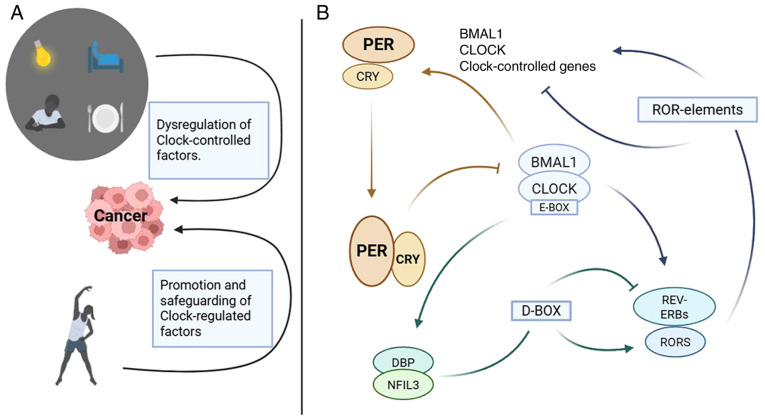
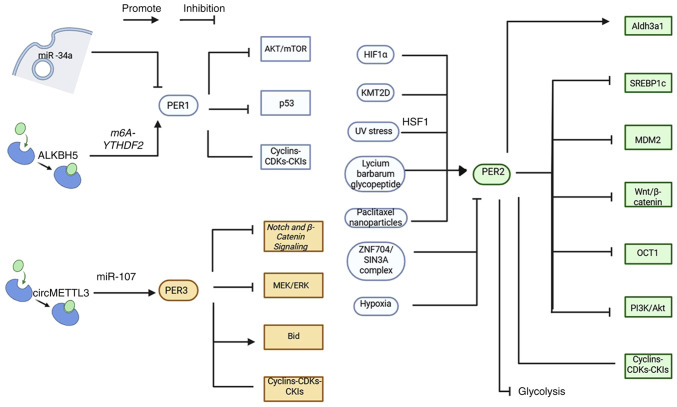
The circadian clock, which is based on 24-h cyclical changes in the external environment, can be detected in almost all cells and regulates several vital physiological processes. The circadian rhythm is disrupted in numerous individuals for several reasons, such as shift work, chronic jet lag, high fat intake and abnormal sleep patterns. Disruption of the circadian rhythm can increase the risk of cancer, affecting its development and treatment. The Period gene family is a core component of the circadian rhythm cycle, and the mechanisms by which its changes affect cancer progression are unclear. The present study reviewed the current research on the intricate relationship between disruption of the circadian clock, particularly focusing on the Period gene family, and its effect on the occurrence, progression and therapeutic approaches for cancer.
昼夜节律钟基于外部环境中24小时的周期性变化,几乎在所有细胞中都能被检测到,并调节着几个重要的生理过程。由于多种原因,如轮班工作、长期时差反应、高脂肪摄入和异常睡眠模式,许多人的昼夜节律被打乱。昼夜节律的紊乱会增加患癌风险,影响癌症的发展和治疗。周期基因家族是昼夜节律周期的核心组成部分,其变化影响癌症进展的机制尚不清楚。本研究综述了目前关于昼夜节律钟紊乱,特别是聚焦于周期基因家族,及其对癌症发生、发展和治疗方法影响的复杂关系的研究。