Chen Jianbai, Zhang Zhiming, Xu Gongquan, Tang Qisheng, Nie Zhiyong, Qiu Jianxin, Gao Xiaoping
Department of Urology, Tangdu Hospital, Fourth Military Medical University, Xi'An, Shaanxi, China.
Front Public Health. 2025 Jun 4;13:1606191. doi: 10.3389/fpubh.2025.1606191. eCollection 2025.
Perfluoroalkyl substances (PFAS), including perfluorooctane sulfonate (PFOS), are persistent environmental pollutants with potential nephrotoxic effects. Concurrently, sleep duration has been implicated in metabolic dysregulation, influencing kidney function. While individual studies have examined the effects of PFAS exposure and sleep duration on kidney health, their combined impact on kidney stone formation remains largely unexplored.
We conducted a cross-sectional study using data from the National Health and Nutrition Examination Survey (NHANES) 2013-2016. PFAS exposure was assessed through serum concentrations of multiple perfluoroalkyl compounds. Sleep duration was self-reported and categorized as <7 h or ≥7 h. Kidney stone status was determined through self-reported medical diagnoses. Multivariable logistic regression models were used to examine associations between PFAS exposure, sleep duration, and kidney stone formation, adjusting for demographic and lifestyle confounders. Non-restrictive cubic spline (RCS) analysis was employed to assess potential non-linear relationships.
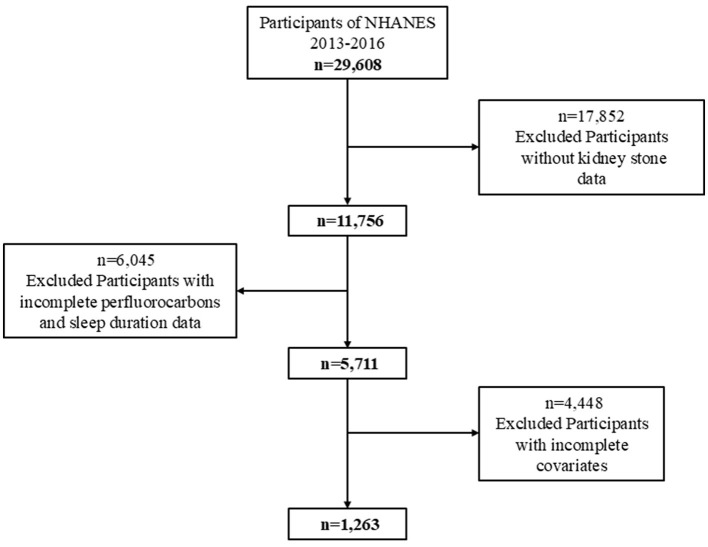
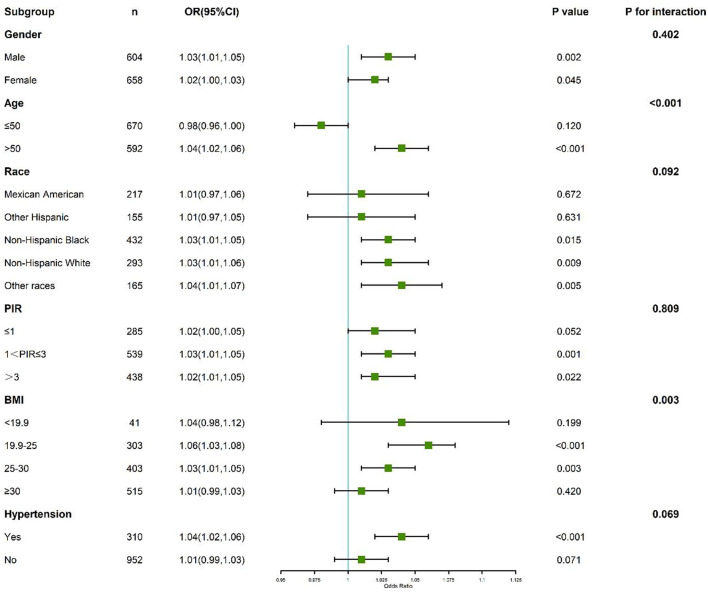
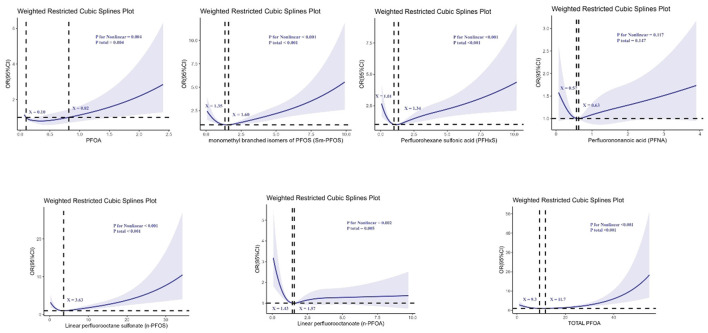
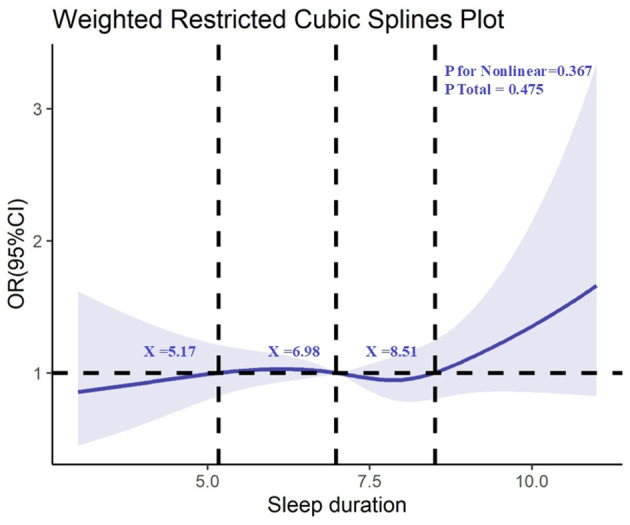
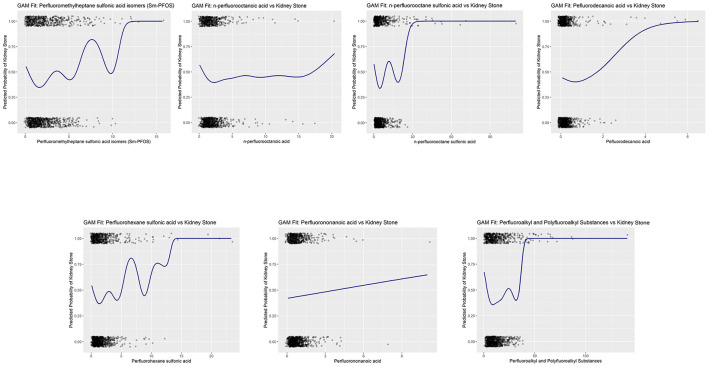
Among 1,263 participants, 551 (43.6%) reported a history of kidney stones. Higher serum concentrations of PFDE, PFHxS n-PFOS, and Sm-PFOS were significantly associated with increased odds of kidney stone formation ( < 0.05). Participants with sleep duration <7 h had a 1.03-fold higher risk of kidney stones (95% CI: 1.01-1.10, = 0.007). RCS analysis identified non-linear dose-response relationships for several PFAS compounds suggesting threshold effects. Interaction analysis revealed a synergistic effect between PFAS exposure and insufficient sleep, amplifying kidney stone risk.
Our findings suggest that both PFAS exposure and insufficient sleep independently contribute to kidney stone formation, with evidence of a combined exacerbating effect. These results underscore the importance of addressing environmental exposures and lifestyle factors in kidney stone prevention strategies.
全氟烷基物质(PFAS),包括全氟辛烷磺酸(PFOS),是具有潜在肾毒性作用的持久性环境污染物。同时,睡眠时间与代谢失调有关,会影响肾功能。虽然个别研究已经考察了PFAS暴露和睡眠时间对肾脏健康的影响,但它们对肾结石形成的综合影响在很大程度上仍未得到探索。
我们使用2013 - 2016年美国国家健康与营养检查调查(NHANES)的数据进行了一项横断面研究。通过多种全氟烷基化合物的血清浓度评估PFAS暴露情况。睡眠时间通过自我报告确定,并分为<7小时或≥7小时。肾结石状况通过自我报告的医学诊断确定。使用多变量逻辑回归模型来检验PFAS暴露、睡眠时间与肾结石形成之间的关联,并对人口统计学和生活方式混杂因素进行调整。采用非限制性立方样条(RCS)分析来评估潜在的非线性关系。
在1263名参与者中,551人(43.6%)报告有肾结石病史。较高的血清全氟癸烷磺酸(PFDE)、全氟己烷磺酸(PFHxS)、正构全氟辛烷磺酸(n-PFOS)和异构全氟辛烷磺酸(Sm-PFOS)浓度与肾结石形成几率增加显著相关(P<0.05)。睡眠时间<7小时的参与者患肾结石的风险高1.03倍(95%置信区间:1.01 - 1.10,P = 0.007)。RCS分析确定了几种PFAS化合物的非线性剂量反应关系,表明存在阈值效应。交互分析揭示了PFAS暴露与睡眠不足之间的协同效应,放大了肾结石风险。
我们的研究结果表明,PFAS暴露和睡眠不足均独立导致肾结石形成,并有联合加剧作用的证据。这些结果强调了在肾结石预防策略中应对环境暴露和生活方式因素的重要性。