Kono Rei, Ota Takashi, Kanno Yoshihiko, Miki Norihisa
Department of Mechanical Engineering, Keio University, Yokohama, Kanagawa, Japan.
Department of Nephrology, Tokyo Medical University, Shinjuku-ku, Tokyo, Japan.
PLoS One. 2025 Jun 20;20(6):e0324498. doi: 10.1371/journal.pone.0324498. eCollection 2025.
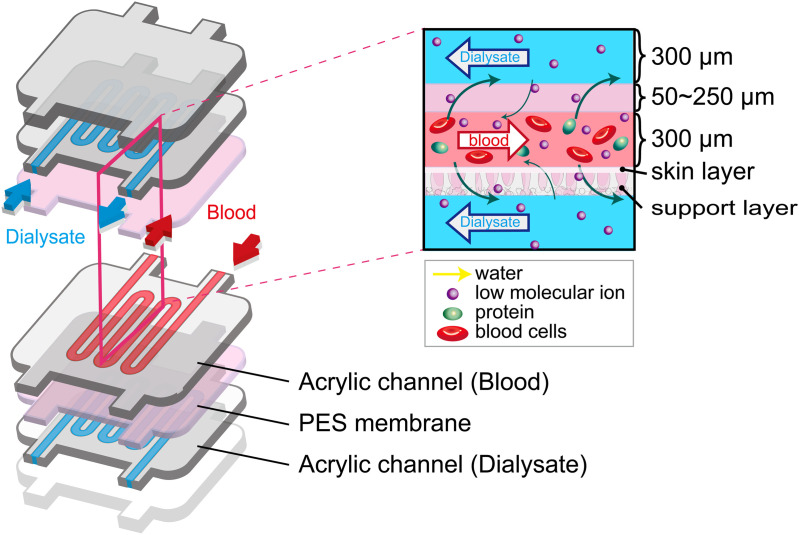
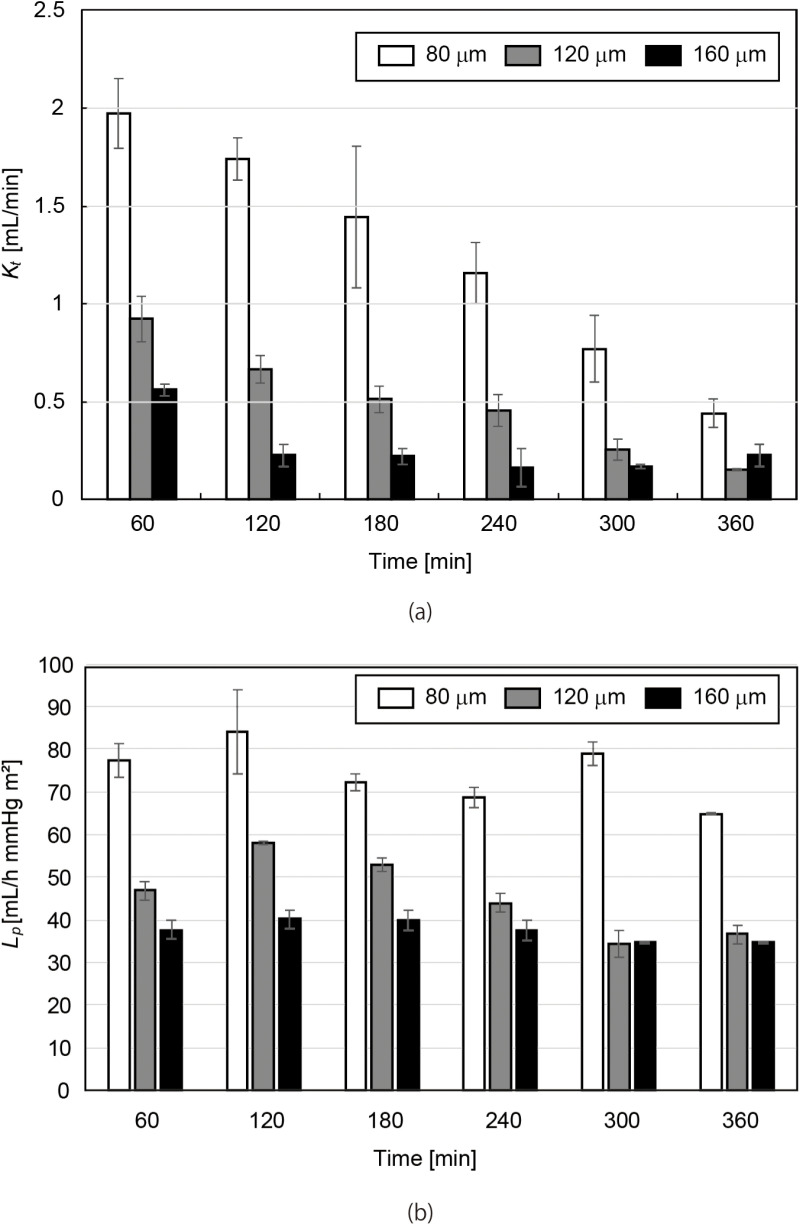
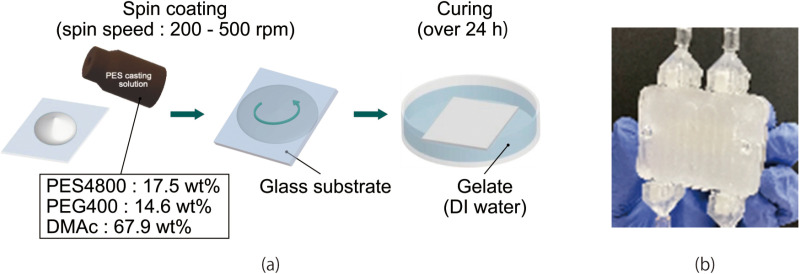
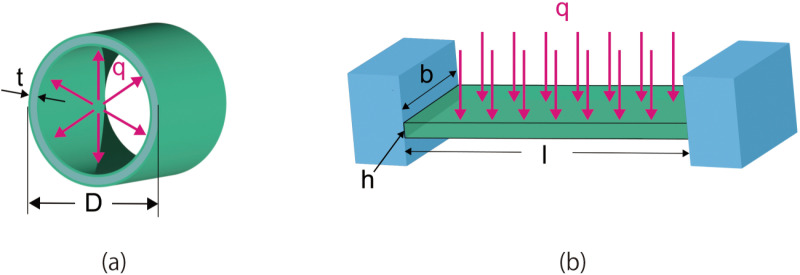
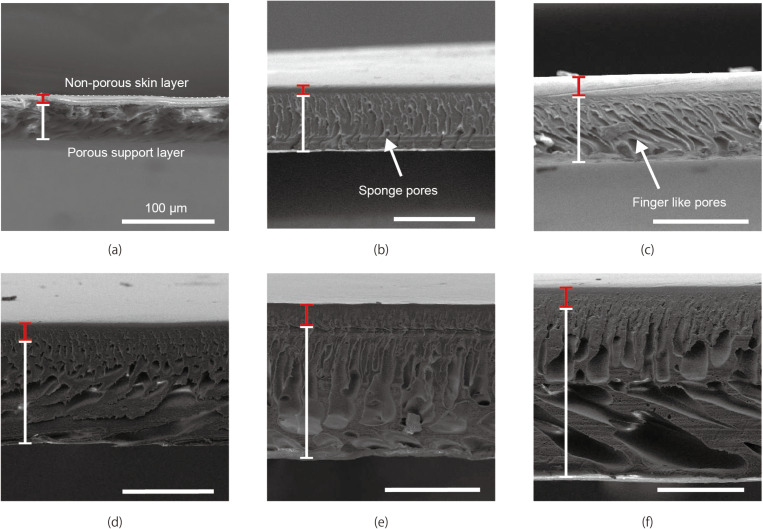
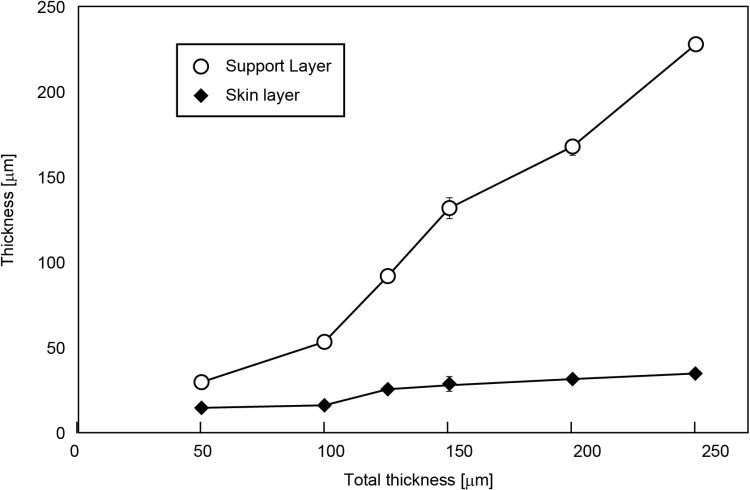
Multilayered hemodialysis devices enable blood flow without the need for an external pump, whereas hollow fiber-type devices require a pump due to significant pressure loss across the fibers. This highlights a key advantage of multilayered devices for implantable applications, where a simpler and lighter system reduces the burden on patients. This study investigates the mechanical strength and dialysis efficiency of polyether sulfone (PES) flat-sheet membranes for multilayered devices. PES membranes, with thicknesses ranging from 40 to 160 µm, were prepared using the liquid inversion method, with thickness controlled via spin coating. The mechanical strength of the membranes was tested following the ISO 8637-1:2017 protocol, and membranes thicker than 80 µm were experimentally verified to withstand pressures of up to 500 mmHg, making them suitable for dialysis applications. Furthermore, the study demonstrates the successful use of 80 µm membranes in both in vitro and ex vivo experiments with rats, identifying this thickness as optimal for multilayered dialysis devices.
多层血液透析装置无需外部泵就能实现血液流动,而中空纤维型装置由于纤维间存在显著压力损失则需要泵。这凸显了多层装置在植入式应用中的一个关键优势,即更简单、更轻便的系统可减轻患者负担。本研究调查了用于多层装置的聚醚砜(PES)平板膜的机械强度和透析效率。采用液相转化法制备了厚度在40至160 µm之间的PES膜,并通过旋涂控制厚度。按照ISO 8637-1:2017标准对膜的机械强度进行了测试,实验证明厚度大于80 µm的膜能够承受高达500 mmHg的压力,适用于透析应用。此外,该研究还表明80 µm的膜在大鼠体外和体内实验中均成功应用,确定此厚度为多层透析装置的最佳厚度。